
Distributed Military Simulation: Fusing Collective Intelligence with HLA Interoperability
Distributed Military Simulation Augmented by Computational Collective Intelligence
The paper presents a distributed military simulation framework that integrates the VBS2 virtual environment with the SSWSO Zlocien constructive simulator using the HLA standard. It introduces a "proxyderate" mechanism to bridge event-driven and real-time systems while incorporating novel Computational Collective Intelligence (CCI) models for civilian and insurgent behaviors in asymmetric urban warfare.
TL;DR
Modern urban warfare requires simulators that can model not just firepower, but the "mind of the crowd." This paper introduces a distributed architecture that bridges the VBS2 virtual trainer with the SSWSO Zlocien constructive simulator. By implementing a custom "proxyderate" and new behavior algorithms for civilian "Computational Collective Intelligence," the authors enable realistic training for asymmetric threats with minimal latency (under 4ms).
Background & Positioning
In the landscape of military tech, simulations are split: Virtual Simulations (like VBS2) handle individual soldier skills, while Constructive Simulations handle theater-level strategy. This work acts as a "SOTA bridge," solving the synchronization and behavioral realism gap that prevents these two worlds from working together in complex urban peacekeeping scenarios.
The Problem: The "Human Element" Gap
Most simulators treat civilians as static objects or simple AI with linear paths. In reality, urban environments are chaotic; crowds react to stress, panic, and transition between peaceful protest and violent disruption. Previous integration tools (like LVC Game) were "blind" to simulation time, making it impossible to sync a fast-paced virtual game with a logic-heavy constructive model without glitches.
Methodology: The Proxyderate & CCI Algorithms
The core innovation is two-fold: architectural and behavioral.
1. The Proxyderate Architecture
Instead of a simple gateway, the authors built a plugin-based federate that hooks into the VBS2 engine. It manages a logical simulation time, ensuring that events in the virtual world and the constructive world stay perfectly aligned, even if the hardware fluctuates.
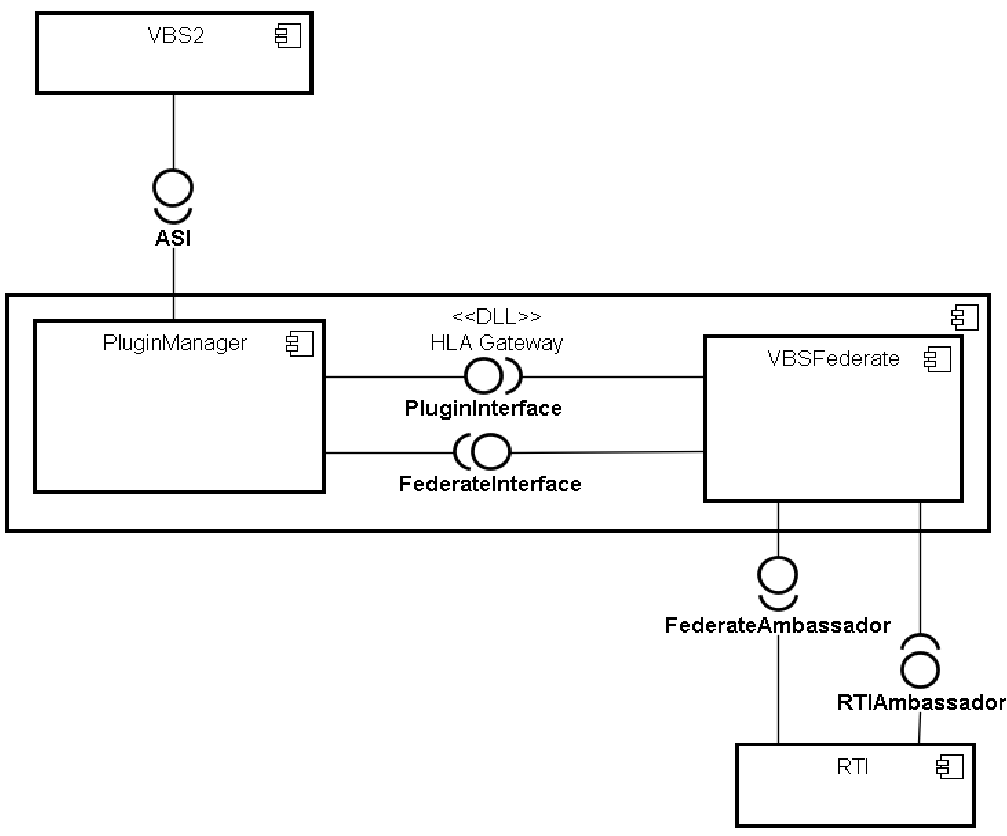 Fig 1: The Proxyderate structure bridging VBS2 and the HLA RTI.
2. Computational Collective Intelligence (CCI)
The authors didn't just move units; they gave them "mindsets" via SQF scripting:
- Anti-war Demonstration: Complex group movement with synchronized animations.
- Stress-Reaction Model: Units have a "vulnerability to panic" coefficient. When suppressed by fire, their stress levels (Lx) dictate whether they seek cover rationally or run blindly into danger.
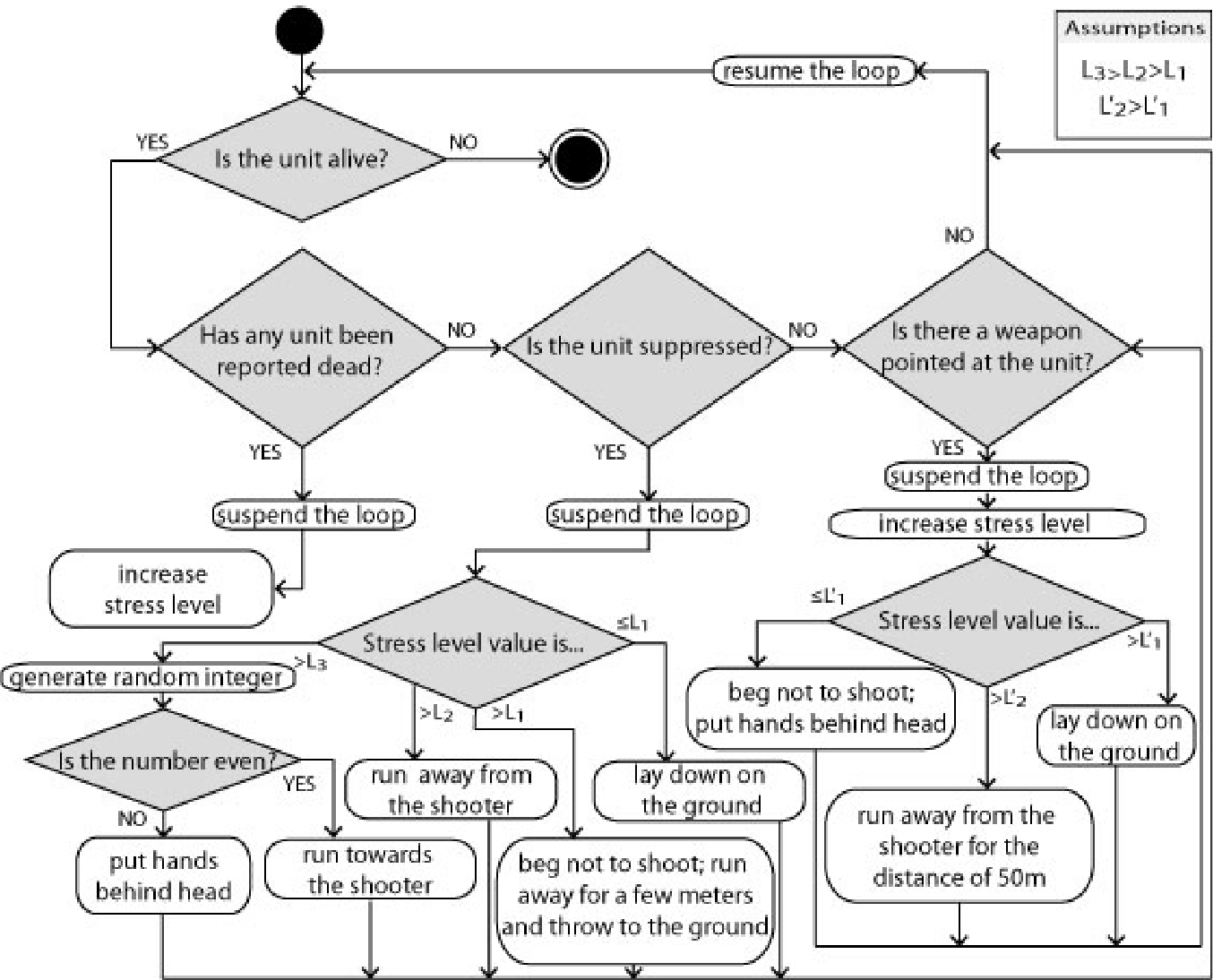 Fig 2: The state machine for stress-induced reactions in civilian units.
Experimental Validation
To prove this overhead doesn't "lag" the simulation, the team ran high-density tests with 200 active units.
| Metric | Without Proxyderate | With Proxyderate |
|---|---|---|
| Total Steps | 2000 | 2000 |
| Avg Interval | 0.055s | 0.059s |
| Avg Delay | N/A | 0.004s |
The result? A 4ms delay—well under the 10ms "blink" threshold where humans notice lag. This proves the system is viable for high-stakes, real-time tactical training.
Critical Insight & Future Outlook
The value here isn't just in the connectivity; it's in the Mapping Concept. By allowing different FOMs (Federation Object Models) to talk to each other, the authors have created a "Universal Translator" for military simulations.
Takeaway: As we move toward more autonomous battlefields, the ability to simulate "Collective Intelligence" will be the differentiator. While this paper focuses on civilians, the same framework could soon be used to model drone swarms or collaborative robot squads. The future of simulation is distributed, multi-resolution, and deeply psychological.