
DKA-Matching: Scaling Privacy-Preserving Subgraph Queries for Dynamic Social Networks
Distributed Subgraph Matching Privacy Preserving Method for Dynamic Social Network
The paper introduces a Distributed K-Automorphism (DKA) method and a distributed subgraph matching framework designed for privacy preservation in large-scale dynamic social networks. By leveraging a distributed architecture (Trinity) and an incremental matching algorithm, the system enables efficient cloud-based graph processing while preventing structural re-identification attacks.
TL;DR
This paper presents a distributed framework that allows users to perform subgraph matching on sensitive social network data stored in the cloud without compromising privacy. By combining a Distributed K-Automorphism (DKA) algorithm with a partial upload strategy and incremental matching, the authors achieve high query accuracy and significant reductions in both storage overhead and processing time for dynamic graphs.
Problem & Motivation: The Multi-Million Node Privacy Paradox
In the era of massive social networks, cloud platforms are essential for processing billions of edges. However, uploading raw graph data exposes sensitive user identities to structural attacks.
The current SOTA for structural privacy, k-automorphism, protects data by adding noise edges so that each vertex is indistinguishable from at least other vertices. While effective, it introduces two major bottlenecks:
- Computational Cost: Generating k-automorphic graphs for millions of nodes is extremely slow.
- Structural Bloat: Adding noise edges makes the graph larger, causing cloud-based subgraph matching to return "false positives" and consume excessive memory.
- Static Limitation: Social networks change every second. Re-running full privacy-preserving algorithms for every new link is unsustainable.
Methodology: Symmetry and Incremental Intelligence
1. Distributed K-Automorphism (DKA)
Instead of a centralized process, the authors utilize a multi-level label passing (MLP) algorithm to partition the graph and add noise edges in parallel across a cluster. This distributed approach ensures that the symmetric blocks are generated efficiently.
2. The "Partial Upload" Insight
The paper's most clever contribution is the realization that we don't need to upload the whole (the anonymized graph). Because is symmetric by design, the authors only upload the first block () and its one-hop neighbors.
- At the Client: We keep the "mapping table" (AVT).
- In the Cloud: We perform matching on the partial graph.
- Post-processing: The client uses the symmetry functions to reconstruct the full results and filters out the noise.
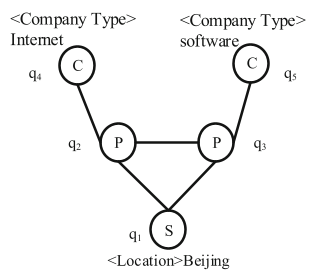 Figure 1: The partial upload scheme significantly reduces data transfer and cloud storage.
3. Dynamic Subgraph Matching (QSG Decomposition)
To handle updates, the query graph is decomposed into Query Subgraphs (QSGs)—two-level trees. When an edge is added or deleted in the social network, the system only re-evaluates the "Updated Unit" (vertices within distance of the change), rather than restarting the entire match.
Experimental Validation
Testing on the roadNet-CA and roadNet-PA datasets confirmed that the DKA algorithm scales linearly with .
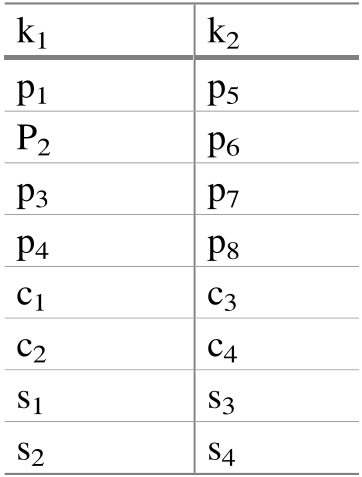 Figure 2: Example Alignment Vertex Table (AVT) used to maintain symmetry.
Key findings include:
- Space Savings: The partial upload method uses significantly less space than a full anonymized graph.
- Inference Speed: Subgraph matching remains fast even as the query complexity increases due to the efficient QSG decomposition.
- Dynamic Efficiency: The incremental approach outperformed static re-matching significantly, especially during edge deletions.
Critical Analysis & Conclusion
Takeaway
The integration of distributed computing (via Trinity) with structural symmetry theory provides a robust pathway for secure social network analytics. The ability to "reconstruct" truth from a partial, anonymized cloud segment is a powerful paradigm for future privacy-enhancing technologies.
Limitations
- Label Generalization: The method relies on grouping labels (e.g., Shanghai/Beijing City). If the label groups are too broad, the matching utility might drop significantly.
- Manual Labeling: The experimental setup used manually generated labels, which may not perfectly capture the entropy of real-world sensitive attributes.
Future Work
The authors suggest that this framework could be extended to weighted graphs and more complex graph patterns, potentially bridging the gap between differential privacy and structural anonymity in graph databases.