
Scaling Collaboration: Distributed Task Allocation in Social Networks
Distributed Task Allocation in Social Networks (extended abstract)
This paper introduces the Social Task Allocation Problem (STAP), a novel framework where agents are embedded in a non-fully connected social graph and must allocate tasks using only local resources. The authors propose the Greedy Distributed Allocation Protocol (GDAP), which achieves near-optimal performance across small-world, random, and scale-free networks while maintaining polynomial scalability.
TL;DR
In the world of multi-agent systems, the "everyone talks to everyone" assumption is a bottleneck. This paper introduces the Social Task Allocation Problem (STAP), proving that when agents are restricted to helping only their "friends" or "partners" in a network, the problem remains NP-hard. To solve it, the authors propose a Greedy Distributed Allocation Protocol (GDAP) that mimics market competition locally, achieving near-linear scalability and high efficiency.
Background & Motivation: Moving Beyond the "Complete Market"
Traditional task allocation research often ignores the underlying structure of agent relationships. However, in supply chain formation or grid computing, an agent in New York doesn't realistically coordinate with every single agent in Singapore. They operate within Social Networks—structures defined by trust, proximity, or established business ties.
The authors argue that the "market" isn't a nebulous cloud but a "complex interrelated structure." The challenge: Can we find a global social welfare optimum when agents only know about their immediate neighbors?
The Core Problem: STAP Complexity
The authors formally define STAP, where:
- Managers own tasks.
- Contractors (neighbors) provide resources.
- Efficiency is the goal (maximizing total utility).
They provide a rigorous proof that STAP is NP-hard by reducing it from the Maximum Independent Set (MIS) problem. Crucially, they show that STAP cannot be approximated within a specific factor (), meaning heuristic approaches are not just a luxury—they are a mathematical necessity.
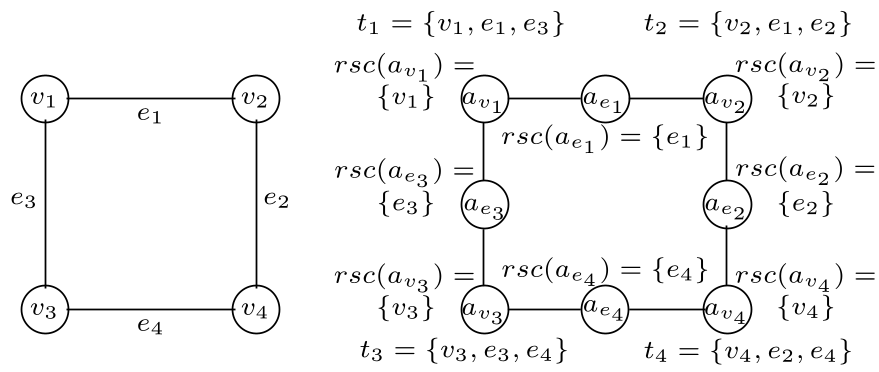 Figure 1: Mathematical proof showing how the Maximum Independent Set (MIS) problem maps to STAP, justifying the computational difficulty.
Methodology: The GDAP Protocol
The proposed Greedy Distributed Allocation Protocol (GDAP) avoids the exponential explosion of centralized solvers. Its logic is elegantly simple:
- Efficiency Ranking: Managers calculate for their tasks.
- Local Requests: Managers ask neighbors for help with their most "efficient" tasks first.
- Contractor Selection: Contractors receive multiple requests and offer resources to the task with the highest efficiency.
- Allocation: If a manager collects enough "bids" to satisfy a task, they finalize the deal and the task is removed from the pool.
The beauty of GDAP is its locality—no agent needs a global map of the network, yet the greedy priority on high-efficiency tasks tends to push the system toward a global optimum.
Experimental Insights: Why Topology Matters
The authors tested GDAP across three network types: Small-World, Random, and Scale-Free.
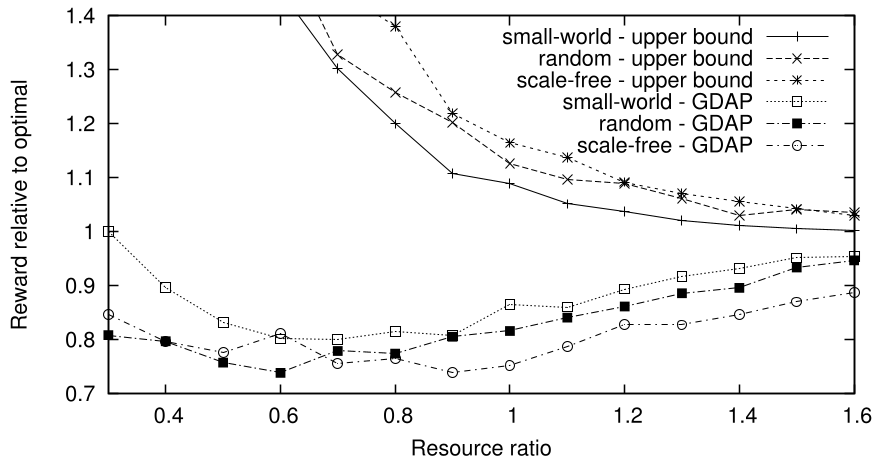 Figure 2: Performance Comparison. GDAP stays remarkably close to the Optimal (OPT) solution, especially as resources become more abundant.
Key Findings:
- Small-World Superiority: The protocol performs slightly better in small-world networks. Why? Because the "six degrees of separation" and high clustering ensure that resources are never too far from where they are needed.
- Scalability: While brute-force optimal solvers fail as the agent count enters the hundreds, GDAP’s runtime grows linearly.
- Skewed Benefits: Interestingly, if some tasks are "high value" (heterogeneous distribution), the greedy protocol performs better. The clear winner (high-reward task) emerges quickly, reducing resource contention.
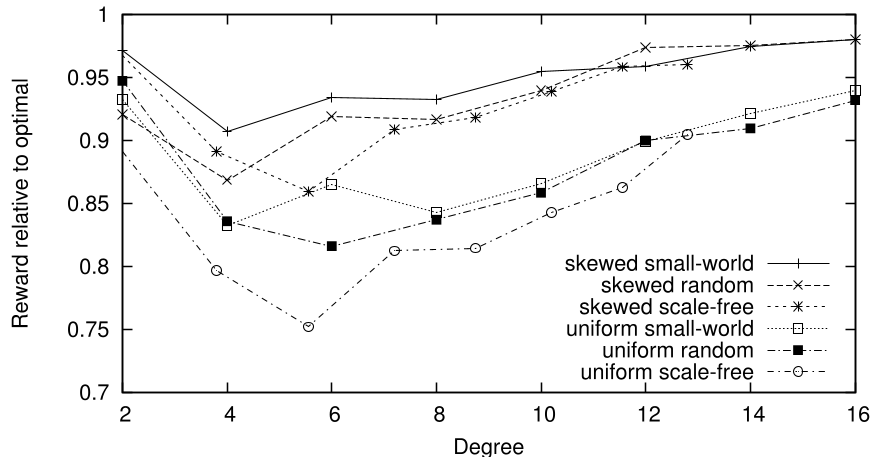 Figure 3: Run time of GDAP vs. Problem Size. The near-linear slope demonstrates its readiness for internet-scale applications.
Critical Insight & Future Outlook
This work demonstrates that Social Constraints are not just a limitation; they are a feature. By restricting the search space to local neighborhoods, we can solve massive allocation problems that would otherwise be intractable.
Limitations: The current model assumes agents are honest and follow the protocol. In competitive real-world markets, agents might lie about their resources or utility to gain an advantage.
Future Directions: Integrating Game Theory (to handle strategic agents) and Reputation Systems (to penalize bad actors) are the logical next steps for making STAP ready for the decentralized economy.