
Cooperative Task Allocation in CPS: Solving the Mystery of Uncertainty
Distributed Task Management in Cyber-Physical Systems: How to Cooperate Under Uncertainty?
This paper introduces a distributed task allocation framework for Cyber-Physical Systems (CPS) using multi-state stochastic cooperative games. The proposed method utilizes "Certainty Equivalence" and the "Strong Sequential Core" to allow autonomous agents to reach stable agreements under both stochastic task arrivals and unknown network states.
TL;DR
Managing a network of Cyber-Physical Systems (CPS) like autonomous drones or smart grids is a nightmare when you don't know what tasks will arrive or what the "weather" (network state) will be. This paper proposes a game-theoretic framework that allows CPS agents to agree on a task-sharing plan before the uncertainty is resolved. By using a "Strong Sequential Core" and "Walrasian Auctions," they ensure that no agent wants to break the agreement even after the truth comes out.
Background: The Chaos of the Unknown
In modern CPS, agents are heterogeneous—different CPUs, different battery levels, and different skills. Ideally, they should cooperate: if Node A is flooded with sensing tasks but Node B is idle, they should share the load. However, two major hurdles exist:
- Stochastic Arrival: Tasks (signals, computations) arrive randomly.
- State Uncertainty: The efficiency of an agent might depend on the "state" (e.g., solar power availability depends on weather), which is unknown during the negotiation phase.
Most prior work uses heuristics or assumes a central controller. This paper treats CPS agents as self-interested players in a Stochastic Cooperative Game.
Methodology: From Randomness to Certainty
1. The Strategy of Certainty Equivalence
The authors use a clever trick from economics: Deterministic Equivalence. By assuming agents are "risk-averse" (using exponential utility functions), they can calculate a "sure thing" value that is equivalent to a risky gamble. This transforms a messy stochastic game into a clean deterministic one.
2. The Strong Sequential Core (SSC)
The "Core" of a game is a state where no group of players wants to break away and form their own circle. In a two-stage setting, an agreement must be Strong Sequential:
- Ex-ante Stability: It looks good before the state is known.
- Ex-post Stability: It still looks good after the state is revealed.
3. Implementing the Market (Walrasian Auction)
How do you find this magical stable point? The authors prove that the SSC is equivalent to a Walrasian Equilibrium. They use a "tatonnement" (groping) process where a virtual price is assigned to tasks. Agents declare their demand based on price, and prices adjust until the "market clears"—exactly like a stock exchange for computing power.
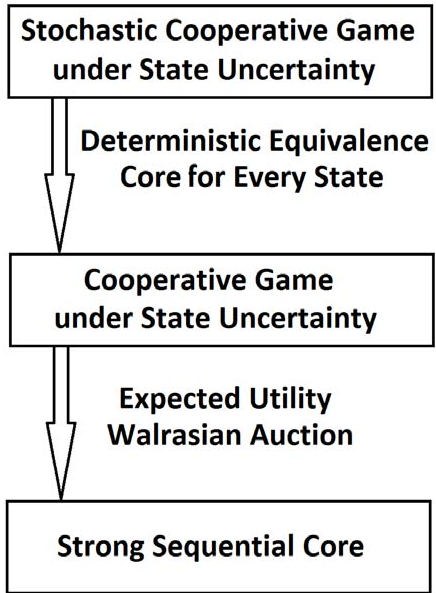 Figure 1: The workflow from stochastic task arrival to distributed agreement via auctions.
Experimental Proof: Does it actually work?
In a "Toy Example" involving small base stations (SBS), the authors simulated sunny and windy weather.
- Sunny State: SBS 1 has more solar panels and takes the computational lead.
- Windy State: SBS 2 (connected to wind turbines) takes over.
The beauty of the model is that the agents agreed on these "contingency plans" in advance.
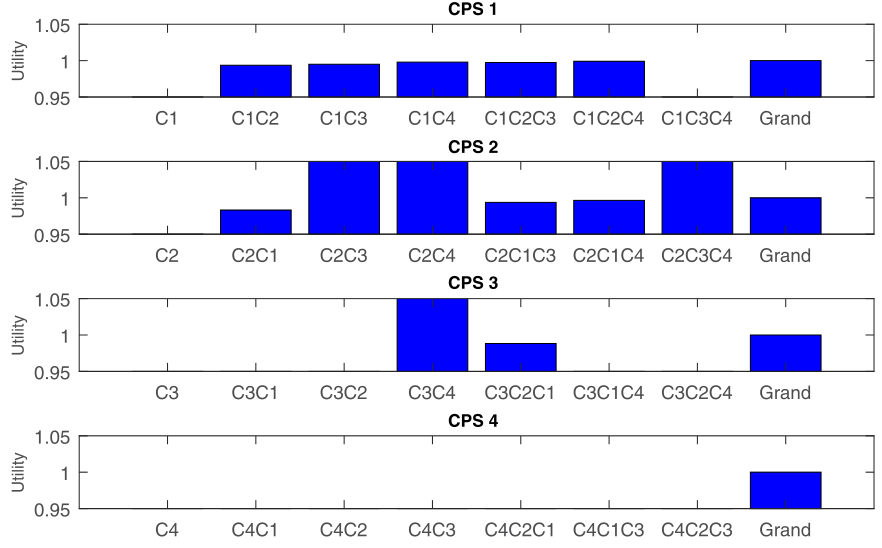 Figure 2: The proposed method outperforms standard baselines like Equal Allocation or Weighted Matching in terms of social welfare.
Critical Insight: Why This Matters
The fundamental contribution here is the Self-Enforcing nature of the solution. Because it lies in the "Strong Sequential Core," you don't need a "police" entity to make sure CPS nodes follow the rules. The math ensures that following the agreement is always in their own best interest.
Limitations
- Overhead: While the authors argue wireless broadcasting reduces overhead, the iterative nature of Walrasian auctions might be slow in ultra-low-latency 6G scenarios.
- Stationary States: The model assumes a finite set of known potential states. In highly dynamic environments, defining these states a priori is challenging.
Conclusion
Maghsudi and van der Schaar have successfully applied high-level economic theory to a gritty engineering problem. By treating network resource management as a market where uncertainty is "priced in," they've created a robust blueprint for future autonomous CPS cooperation.