
DSM: Solidifying Multi-Modality Clustering for the Chaos of Social Media
Distributional Similarity Model for Multi-modality Clustering in Social Media
This paper introduces the Distributional Similarity Model (DSM), a novel similarity measurement designed to enhance Multi-way Distributional Clustering (MDC) for Social Media User Generated Content (UGC). By incorporating positional and link information into contingency tables, the model achieves a more robust representation of multi-modal interactions.
TL;DR
Social Media data, or User Generated Content (UGC), is notoriously messy—short, informal, and fragmented across threads. This paper introduces the Distributional Similarity Model (DSM), which upgrades standard clustering algorithms by weighting the relationship between features (like Authors, Sentiments, and Entities) based on their physical and structural distance within a conversation. By moving beyond simple "co-occurrence" to "distributional similarity," the authors achieve a 5-7% gain in clustering accuracy.
Context: Beyond the "Bag of Words"
In the era of Web 2.0, clustering isn't just about grouping documents by word frequency. We want to know: Which authors share similar sentiments about specific products across different forum posts?
The traditional Multi-way Distributional Clustering (MDC) approach attempts this by simultaneous clustering of multiple modalities. However, it fails in the context of UGC. In a forum, a sentiment expressed in a "Reply" post often refers to an "Entity" mentioned only in the "Master" post. Standard algorithms see these as unrelated because they don't co-occur in the same document.
Methodology: The Geometry of a Conversation
The core insight of the Distributional Similarity Model (DSM) is that the relationship between two features should decay as the distance between them increases, whether that distance is measured in characters, sentences, or even "hops" between posts in a thread.
1. The Structure of UGC
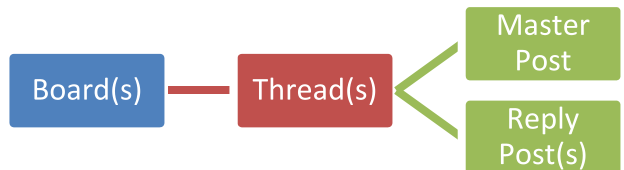
The authors model UGC as a hierarchical entity:
- Thread Level: Master posts and their parent/child reply links.
- Document Level: Titles, quotes, and content bodies.
- Intra-Document Level: Paragraphs and sentences.
2. The Weighting Formula
Instead of a simple +1 count in a contingency table, DSM uses an exponential function with a decay factor:
This formula ensures that when two features (e.g., "Apple iPhone" and "Happy") are in neighboring sentences, their similarity weight is maximized. If they are separated by multiple posts, the weight reflects a lower, yet still present, correlation.
3. Integrating with MDC
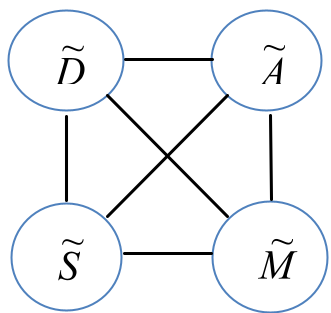
This DSM-weighted matrix is then fed into a pair-wise interaction graph where clusters are determined by maximizing Mutual Information.
Experiments & Results
The authors tested their model on two massive real-world datasets (65M posts) covering Consumer Electronics and Political Elections. They tracked five modalities: Document ID, Author, Sentiment, Mood, and Entity.
| Dataset | Test 1 (Full DSM) | Test 3 (Baseline) | Improvement |
|---|---|---|---|
| Mobile Phone | 71.2% | 66.1% | +5.1% |
| HK Election | 75.8% | 67.2% | +8.6% |
The results confirm that Inter-post weighting (connecting the master post to replies) is a major contributor to precision. Simply looking inside a single post (Intra-DSM) is better than the baseline, but the "Full DSM" which understands the thread structure is significantly superior.
Critical Insight & Conclusion
The DSM model proves that in semi-structured environments like social media, topology matters. By treating a forum thread as a single, distributed context rather than isolated documents, we can recover latent semantic links that simple "Bag of Words" models ignore.
Limitations: The weightings ( and values) were manually assigned in this study. The authors suggest that future work should involve automatic learning of these distance weights to adapt to different styles of social media (e.g., the difference between a long-form blog and a rapid-fire chat).
Future Outlook: This work lays the groundwork for temporal model extensions, which could track how multi-modal clusters (like public sentiment toward a brand) evolve over time.