
Balancing the Grid and the Thermostat: A New Framework for Human-Centered District Energy Management
A District Energy Management Based on Thermal Comfort Satisfaction and Real-Time Power Balancing
2015-09-11
Summary
Problem
Method
Results
Takeaways
Abstract
This paper proposes a hierarchical District Energy Management System (DEMS) for smart buildings that balances real-time power consumption with user thermal comfort. It introduces a two-tier optimization strategy addressing both public buildings via centralized management and private residential buildings through a distributed peer-to-peer negotiation framework.
## Executive Summary
**TL;DR**: Researchers have developed a hierarchical energy management system that ensures you don't have to freeze to save money. By utilizing high-efficiency Linear Programming (LP), the system optimizes HVAC usage across entire city districts, treating public and private buildings with tailored centralized and distributed strategies.
**Background**: This work sits at the intersection of Smart Grid stability and Building Automation. Unlike traditional "load shifting" that just moves energy use in time, this methodology focuses on **real-time redistribution** of energy rewards and penalties among neighboring buildings to minimize total district costs while strictly honoring thermal comfort indices (PMV/PPD).
## The Conflict: Efficiency vs. Comfort
The modern smart grid faces a paradox: to improve stability, it must reduce peak demand, yet modern occupants demand higher environmental quality. Most existing Building Energy Management Systems (BEMS) treat these as zero-sum games. Furthermore, the HVAC system—the largest energy consumer in buildings—is often neglected in favor of simpler "deferrable" loads like electric vehicle charging.
The authors identify three main gaps in current SOTA:
1. **Appliance Neglect**: HVAC loads are complex because they affect human comfort directly, unlike a dishwasher that can run anytime.
2. **Computational Bloat**: Using Mixed-Integer Linear Programming (MILP) handles complex constraints but fails in real-time district-level scaling.
3. **Ownership Models**: Public districts and private residential blocks require fundamentally different management logic—one centralized, the other collaborative and autonomous.
## Methodology: The Hierarchical Approach
The proposed architecture operates on three levels: District (DEMS), Building (BEMS), and Office/Home.
### 1. The BEMS Optimization (LP1)
Every building first solves its own local optimization. Using a thermal model that considers outdoor temperature and system efficiency ($\alpha$ and $\beta$ parameters), it calculates the power needed to stay above a "comfort set point."
$$T_{in}(t) = T_{in}(t-1) + \alpha(T_{out}(t) - T_{in}(t-1)) + \beta P_B(t)$$
### 2. Centralized for Public, Distributed for Private
The genius of the paper lies in how it handles "The Day After" the initial power assignment:
- **Public Buildings (Centralized)**: The DEMS collects penalty/reward data and reallocates power across the district to minimize the *collective* bill.
- **Private Buildings (Distributed)**: Using a graph-based communication network, buildings "negotiate" in pairs. If Building A has a surplus reward and Building B has a penalty, they trade to reach a more efficient economic equilibrium without a middleman.
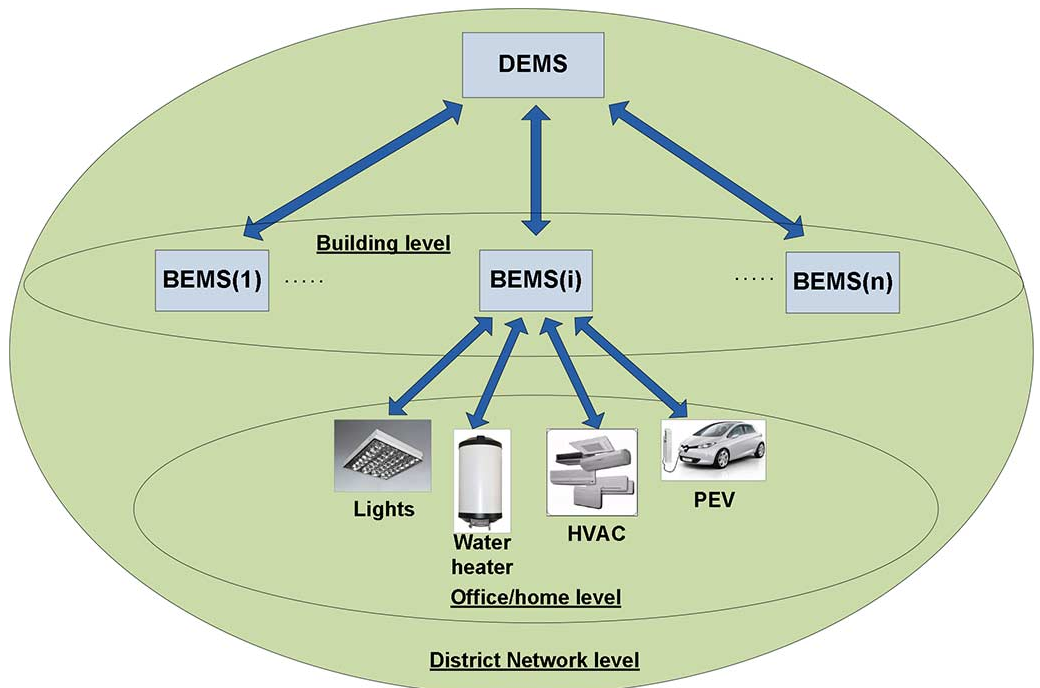
*Figure 1: The three-level hierarchical management structure.*
## Experimental Evidence: Success in Bari
The authors tested their system using real data from public and residential buildings in Bari, Italy.
### Centralized Synergy
For public buildings, the system balanced thermal efficiency across diverse structures. One building might have better insulation (thermal gradient) and can "lend" its power profile to a less efficient neighbor. This resulted in a **7% reduction** in the net cost gap between penalties and rewards across the district.
### Residential Autonomy
In the residential case study, five buildings used a peer-to-peer negotiation algorithm. The distributed approach allowed these entities to bargain autonomously, achieving "fairness" while reducing additional energy costs by up to **24%** for specific units.
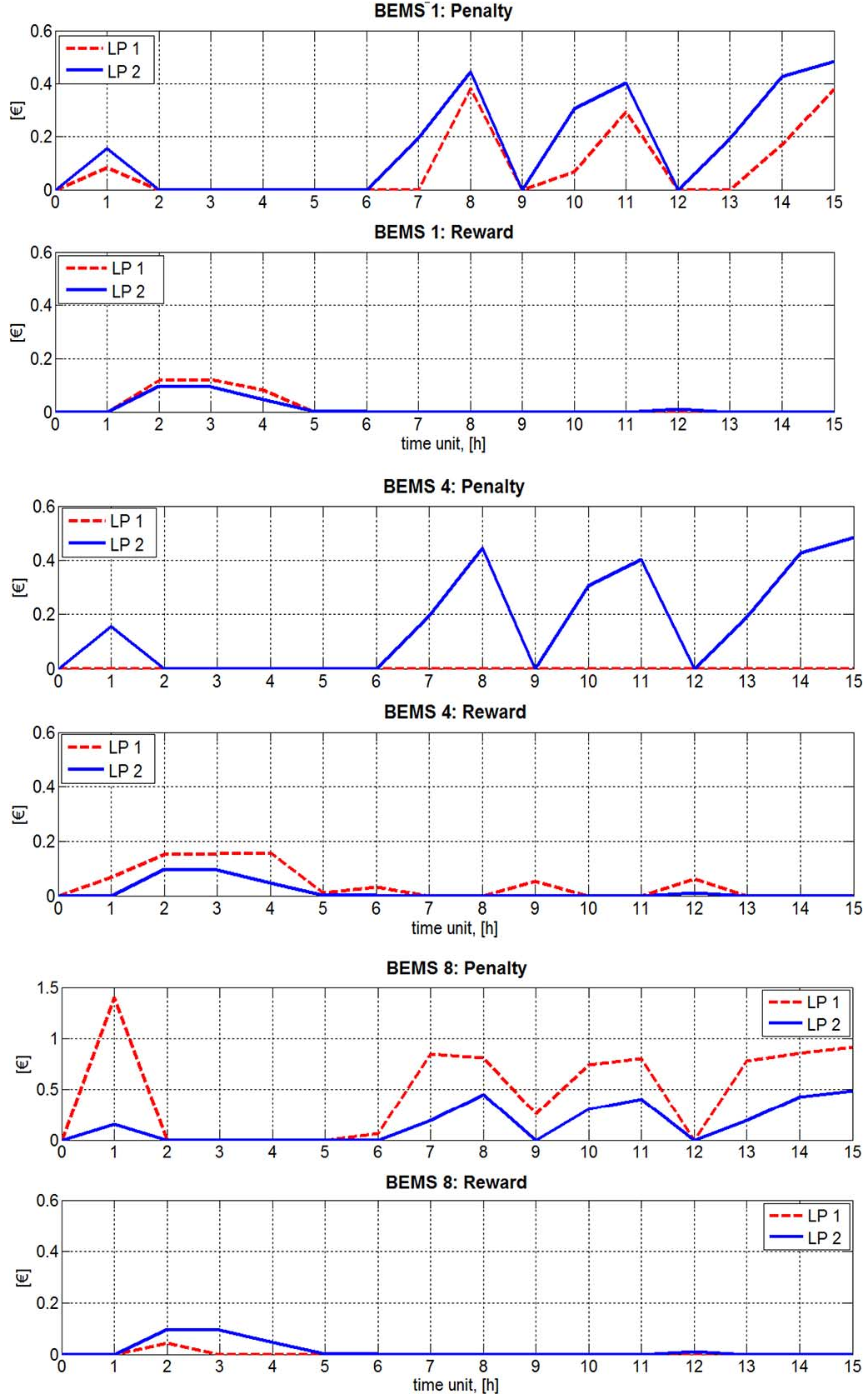
*Figure 2: Optimized power profiles demonstrating how buildings adjust to stay within comfort zones while managing costs.*
## Critical Analysis & Deep Insights
What sets this work apart is the **Mathematical Decoupling** of public and private interests. In optimization science, finding a "Fair" solution in a multi-agent system is notoriously difficult. This paper bypasses the complexity of cooperative game theory by using a series of simplified LP problems that guarantee convergence.
**Limitations**:
- **Static Parameters**: The model assumes thermal characteristics ($\alpha, \beta$) are constant, whereas in reality, they change with occupancy or wind speed.
- **Single Comfort Factor**: It only considers temperature. A truly human-centered system must eventually integrate humidity (air quality) and lighting (visual comfort).
## Future Outlook
As we move toward "Smart Cities," the ability to treat a neighborhood as a single, flexible energy organism—rather than a collection of isolated meters—is paramount. This research provides a robust template for the next generation of load aggregators who must navigate the fine line between grid economic incentives and the fundamental right to a comfortable living environment.