
Divide and Conquer: Why "Trust" is the Secret Ingredient in Secure Systems
Divide and Conquer: The Role of Trust and Assurance in the Design of Secure Socio−Technical Systems
This paper, "Divide and Conquer," formalizes the role of trust and assurance in designing secure socio-technical systems. It moves beyond technical solutions to address the "human element" by proposing a dual-strategy framework that balances rigid security enforcement (assurance) with social norms (trust).
TL;DR
Building a secure system is not just about writing bug-free code; it’s about ensuring the humans in the system actually use it as intended. This seminal paper argues that we must stop treating users as "the enemy" and start integrating Social Science into security design. By balancing Assurance (punishment/control) with Trust (shared values/reliability), organizations can create security that is both more dependable and cheaper to maintain.
The "Weakest Link" Fallacy
In the security industry, there’s a cynical old trope: "Security is only as good as its weakest link, and people are the weakest link."
However, the authors of this paper suggest that this mindset is the root of the problem. When we design security systems that ignore human needs—such as forcing complex passwords that people inevitably write on sticky notes—we are creating a Dependability Gap. The system is "Correct" (it would work if used perfectly) but not "Dependable" (it isn't actually used correctly in the real world).
Methodology: Trust vs. Assurance
The core of the paper lies in the distinction between two ways to ensure security:
- Assurance: These are external controls. Think firewalls, CCTV, and HR policies that threaten you with termination if you share a password. It's about forcing compliance.
- Trust: This is an internal attitude. It’s the "positive expectation" that someone won't exploit a vulnerability because they share the same values or want to maintain their reputation.
The authors argue that a system that relies only on Assurance is incredibly expensive and slow. To scale, we need Social Capital—an environment where employees protect assets because they feel a sense of shared responsibility.
The Mechanics of Trust
The paper introduces a sophisticated model of trust that designers can use:
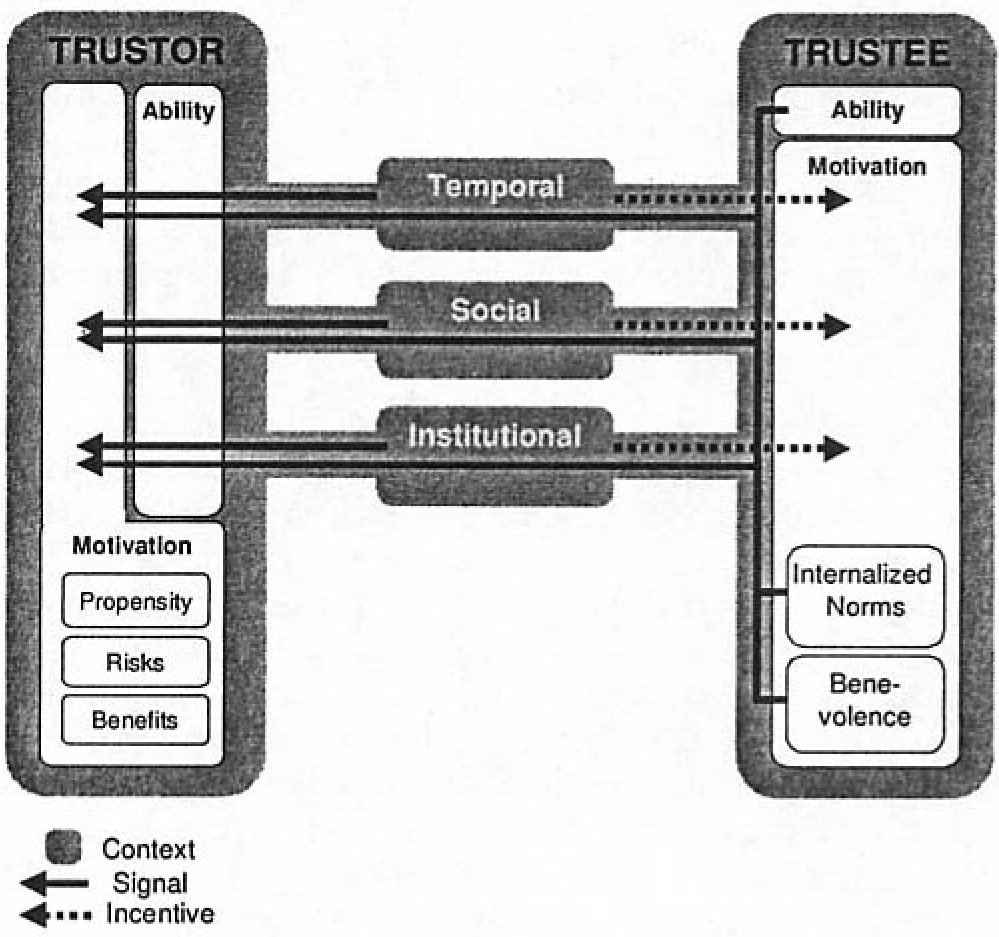
- Intrinsic Properties: Does the user have the ability to follow the rule? Is their integrity aligned with the company?
- Contextual Properties: Is there Social Embeddedness? (e.g., If my boss ignores security rules, I will too).
Insights: How Attacks Exploit "Reliance"
A fascinating distinction made is between Trust and Reliance.
- Trust involves an awareness of risk.
- Reliance is a habitual state where the risk is no longer considered.
Social engineers (like Kevin Mitnick, cited in the paper) exploit this. They build a history of small, "safe" interactions to move a victim from a state of Trust to a state of Reliance. Once the victim is no longer on guard, the attacker strikes.
Practical Design Principles
The authors don't just theorize; they provide a roadmap for "Middle Ground" security—balancing flexibility with control.
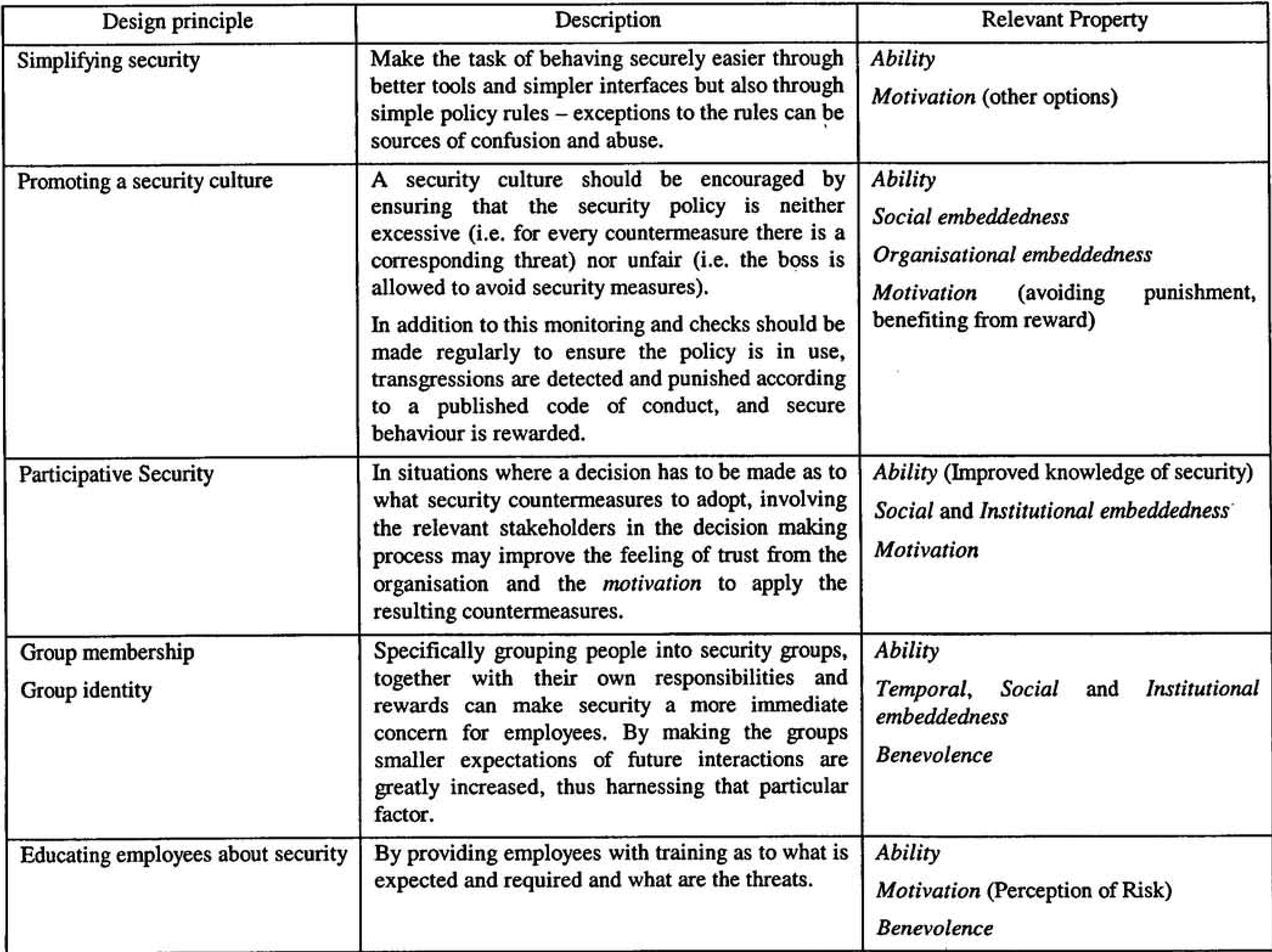
Key takeaways for tech leads and architects:
- Participative Security: Involve employees in the design. If they help set the rules, they are more motivated to follow them.
- De-personalize Distrust: Policies like "two-person integrity" for opening a vault should be framed as "protecting the employee from suspicion" rather than "we don't trust you."
- Simplify: If a security task is too cognitive-heavy, users will find a workaround. Ability is a prerequisite for Trust.
Critical Insight & Conclusion
The genius of "Divide and Conquer" is the recognition that security is a secondary task. No one comes to work to "do security"; they come to work to be productive.
If security is designed as a rigid wall (Assurance), it will eventually be scaled or tunneled under by employees trying to do their jobs. If we design it as a shared social norm (Trust), it becomes part of the organization's immune system. As the authors conclude, the future of secure design requires us to stop looking only at the screen and start looking at the social fabric of the office.