
DLTA: Mastering the Art of Crowdsourcing without "Manager" Privileges
DLTA: A Framework for Dynamic Crowdsourcing Classification Tasks
DLTA (Dynamic Label Acquisition and Answer Aggregation) is a framework for crowdsourcing classification tasks that combines EM-based label inference with a round-robin greedy budget allocation strategy. By adaptively acquiring labels from workers on public platforms like Amazon Mechanical Turk (AMT), it achieves SOTA accuracy, especially when combined with advanced inference techniques like Dawid-Skene.
TL;DR
Managing noisy labels from crowdsourcing platforms like Amazon Mechanical Turk (AMT) is a balancing act between budget and accuracy. DLTA (Dynamic Label Acquisition and Answer Aggregation) is a new framework that treats the crowd as a statistical distribution rather than a manageable workforce. By iterating through rounds of dynamic acquisition and EM-based aggregation, it surfaces "tough" items and allocates budget where it matters most, achieving SOTA accuracy on real-world classification benchmarks.
The Problem: The "Manager" Fallacy in Crowdsourcing
Most academic papers on crowdsourcing quality control make a dangerous assumption: they assume the requester acts like a manager who can point at a specific worker and say, "You, label this image."
In reality, platforms like AMT and CrowdFlower operate on a self-selection basis. Workers choose what they want to work on. This "Managing Workers" assumption makes many adaptive budget-allocation algorithms mathematically elegant but practically useless. On the flip side, "Pure Inference" methods (like Majority Voting or standard EM) avoid this by collecting all labels at once, but they waste budget by labeling "easy" items as many times as "hard" ones.
Methodology: Modeling the Market, Not the Individual
The genius of DLTA lies in its Generative Model. Instead of trying to predict a specific worker's behavior, the authors model the Market Reliability Distribution.
1. The Generative Model
DLTA defines the probability of a worker answering item correctly as: Where:
- : Easiness of the item (0 to 1).
- : Reliability of the worker (0 to 1).
By using a simple single-parameter reliability () instead of a complex confusion matrix, the system can easily fit the current pool of workers into a Beta Distribution.
 Figure 1: The DLTA Framework iterating through Label Inference and Label Acquisition.
2. Dynamic Budget Allocation (GRR)
The framework proceeds in rounds. In each round, DLTA asks: "Which item, if given one more label from a randomly drawn worker from our market distribution, would give us the biggest boost in confidence?"
To prevent the system from getting "tunnel vision" and dumping all money into a single hard item, the authors introduced GRR (Greedy with Round-Robin). It prioritizes items with the least labels first, then applies a greedy strategy based on expected confidence gain.
Experimental Showdown: Accuracy and Scalability
The authors tested DLTA against standard baselines like Majority Voting (MV), Belief Propagation (ITR), and Dawid-Skene (DSEM).
SOTA Performance
While the base DLTA is competitive, the DLTA-DS version (which uses DLTA's acquisition strategy but plugs in the more complex Dawid-Skene model for final aggregation) dominated across the board. On multi-category datasets like "Dog" and "Web," DLTA-DS achieved significantly higher accuracy.
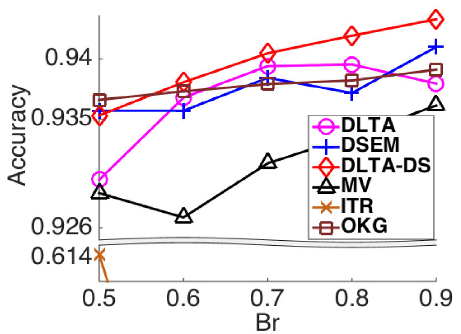 Figure 2: Performance on RTE and TEMP datasets showing DLTA-DS's superiority.
Scalability
A common fear with EM-based iterative methods is that they won't scale. DLTA effectively debunked this, handling 100,000 items in roughly 50 minutes. Given that a typical AMT task takes hours or days to be fully completed by the crowd, the computational overhead of DLTA is practically negligible.
Critical Insight: Why Simplicity Wins
You might ask: If Dawid-Skene (DSEM) is a better inference model, why did the authors create a simpler one for DLTA?
The answer is predictability. A complex model with a full confusion matrix per worker makes it mathematically nightmarish to calculate the "Expected Benefit" of an unknown future worker. By simplifying the worker model to a single reliability parameter, the authors made the Budget Allocation problem solvable.
Conclusion
DLTA proves that you don't need to control your workers to achieve high-quality results. By treating the crowdsourcing market as a dynamic environment and iteratively refining the budget allocation based on task difficulty and market reliability, we can get much higher "ROI" for every dollar spent on human intelligence.
Future Outlook: Integrating DLTA with Active Learning—where machine models and human crowds collaborate to label only the most uncertain samples—could further reduce costs for massive-scale AI training datasets.