
The Science of Viral Tourism: Decomposing Social Media Images into Memetic Replicators
Do Memes Really Exist and Influence Users' Behavioural Activities in Social Network? Memetic Content Management Perspectives Based on Decomposition of Digital Visual Content
This study evaluates a memetic management model for visual content in social networks, specifically targeting the tourism sector. By applying a modified Bag of Visual Words (BoVW) approach to 685 hotel photographs, the author demonstrates that individual semantic components (memes) significantly influence user behavioral activities (likes, comments, shares).
TL;DR
Is a hotel photo just a picture, or a collection of "cultural genes" competing for survival? This study redefines social media content through the lens of Memetics. By decomposing 685 hotel photographs using a modified Bag of Visual Words (BoVW) approach, the research proves that specific semantic elements—memes—directly dictate how many likes, shares, and comments a post receives.
Background: Beyond the Holistic Image
In the hyper-competitive world of destination marketing, "image is everything." However, practitioners often struggle to define why one photo goes viral while another fades into obscurity. This paper positions itself at the intersection of Evolutionary Biology (Dawkins' Meme Theory) and Social Media Content Management (SMCM). It suggests that images are "sub-pools" of memes that must exhibit fidelity, fecundity, and longevity to influence a population.
The "Why": Why Decomposition Matters
Existing methods often treat User Generated Content (UGC) as a single data point. The author argues that this is insufficient because:
- Perceptual-Cognitive Bias: Human brains process visual information 6.5x more effectively than text, but we focus on specific attributes (e.g., a smile, a landscape, a chair).
- Identity Management: Users share content to build a virtual identity; they replicate memes that align with the "labels" they want to associate with.
- The Context Trap: A meme that works in a metropolitan "Capital City" (Warsaw) might fail in a "Regional Center" (Bialystok) due to different cultural "fitness" landscapes.
Methodology: Memetic Decomposition (BoVW)
The core of the study lies in its technical framework for image analysis. The author splits content into two distinct planes:
- Manifest Content (MC): The overt subject matter (e.g., the food on the plate).
- Latent Content (LC): The background or "fleeting impression" (e.g., the upscale interior design behind the plate).
By verbalizing these fragments into a "Bag of Visual Words," the author creates a taxonomic list of 15 memes ranging from "smiling staff" to "local handicrafts."
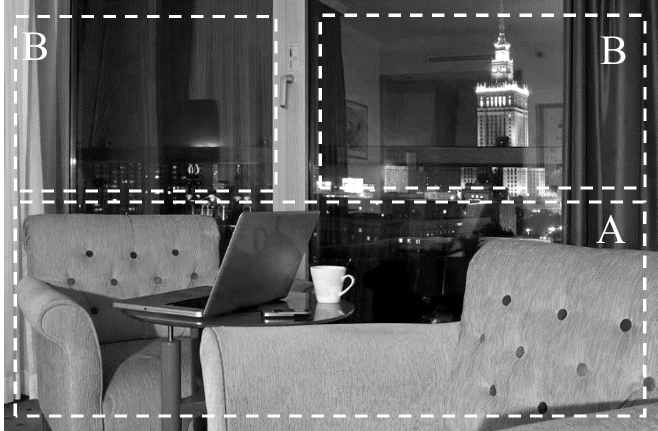 Fig 1: The framework used to separate primary subjects (A) from environmental background memes (B).
Key Insights: The "Content-Core"
The study reveals a fascinating correlation between specific memes and the COBRA (Consumer’s Online Brand Related Activities) model (likes, comments, shares).
- The Power of the Smile: Memes featuring "cheerful/friendly staff" (mc-1-3) were significantly correlated with higher likes and comments across almost all cities.
- Interior Paradox: While "great interiors" (mc-1-4) were frequently posted by hotels, they occasionally showed a negative correlation with engagement in cities like Warsaw and Wroclaw, suggesting that over-exposure of "corporate" luxury might reduce a meme's fecundity.
- Cultural Specificity: In Bialystok, memes related to "local traditions" and "cultural heritage" (mc-2-4) performed exceptionally well, proving that memes must fit the local "cultural mosaic" to spread.
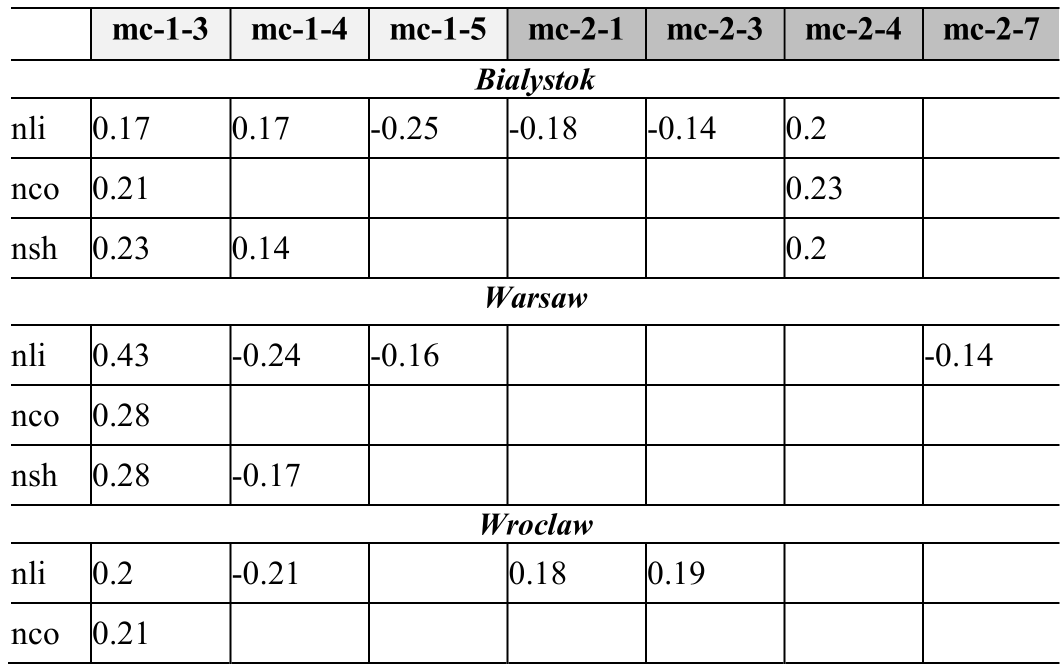 Table 1: Statistical significance showing which memes trigger the most behavioral activity.
Conclusion and Future Outlook
The paper confirms that memes really do exist in social network visual content and can be mathematically analyzed. For hotel managers and marketers, the takeaway is clear: stop posting "pictures" and start managing "memetic pools."
Limitations & Future Work
The study relies on traditional content analysis; the next frontier involves using Deep Learning (CNNs) to automate this memetic decomposition. By training models to recognize these "cultural replicators," brands could eventually predict the virality of a photo before it is even posted.
Takeaway: The "Content-Core" isn't just about what you sell, but which cultural genes you choose to replicate in the minds of your audience.