
Do Neighbor Buddies Make a Difference? Unveiling Reblog Dynamics in SINA Weibo
Do Neighbor Buddies Make a Difference in Reblog Likelihood? An Analysis on SINA Weibo Data
This paper presents a large-scale statistical study on SINA Weibo to analyze how structural "buddy" relationships (reciprocal followers) influence reblogging likelihood. By processing a massive dataset of over 2 billion reblog messages, the authors demonstrate that localized neighborhood structures, rather than just raw follower counts, significantly impact information diffusion.
TL;DR
Why do some posts go viral within certain circles while others fall flat? This paper investigates the "Buddy" effect—reciprocal follower relationships—on reblogging likelihood using an industry-scale dataset from SINA Weibo (2.2 billion messages). The study reveals that having "buddy neighbors" (friends who are also friends with each other) significantly boosts engagement, but being a hyper-active poster might actually lower your per-post reblog probability.
Contextualizing the "Buddy" Relationship
In the landscape of social media research, most metrics focus on global influence (follower count). However, this work shifts the lens to local neighborhood structures. The authors define a Buddy relation as a mutual follow (A follows B, and B follows A). They argue that these ties represent stronger social bonds and filter out the noise of spam or inactive accounts.
The "Why": Motivations and Hypotheses
The authors hypothesize that if two of your friends are also buddies with each other, they share common interests. Therefore, if one reblogs your post, the other sees it multiple times (from you and the buddy), creating a "social reinforcement" effect.
The study sets out to test four key variables:
- Buddy vs. Buddyless Neighbors: Are well-connected friends more likely to reblog?
- Inter-neighbor Traffic: Does the amount of interaction between your friends affect their reblogging rate of your content?
- User Activeness: Does posting more frequently increase the chance of being reblogged?
- Buddy Triangles: Does participating in more closed loops (triangles) help?
Methodology and Architecture
The researchers utilized a snowball sampling method starting from high-profile users (like Kaifu Lee) to collect data from 135,859 users and over 2.29 billion reblog records.
They modeled the reblog likelihood as the ratio of messages from user reblogged by over the total messages posted by .
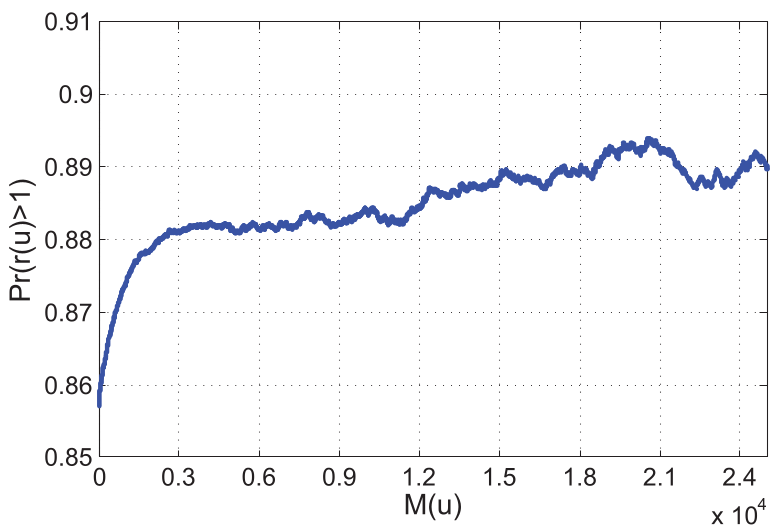 Fig 1. The data shows that while most users have moderate activity, the distribution of buddy triangles is highly skewed.
Key Findings: The Power and Paradox of Buddies
1. The Buddy Advantage
Qualitative analysis confirms that Buddy Neighbors are 16.9% more likely to reblog than those who aren't connected to your other friends. This likelihood increases even further for users who post more messages, suggesting that "core communities" are the primary drivers of content spread for power users.
2. Traffic is King
The study found a strong power-law correlation () between the traffic between two of your friends and their likelihood to reblog you. This suggests that the strength of the bond between your followers is a proxy for how much they will support your content.
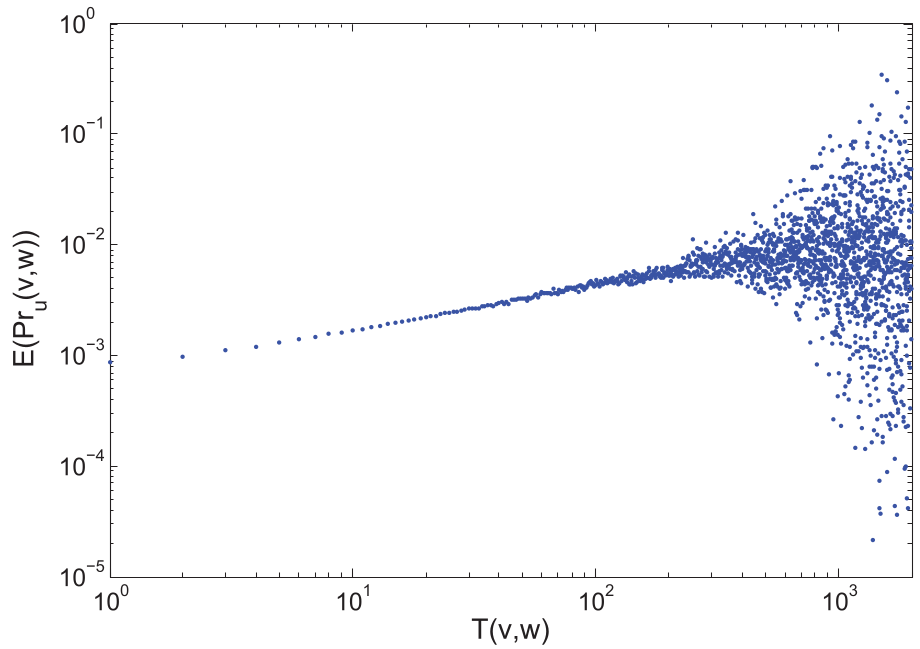 Fig 2. The positive slope indicates that as your friends interact more with each other, they become a more effective reblogging unit for your posts.
3. The Activeness Paradox
Counter-intuitively, the study found a negative correlation between user activeness () and reblog likelihood.
- The Result: If you post 10x more content, the total number of reblogs increases, but the probability per post decreases.
- The Logic: Followers likely experience "information fatigue." A user who floods the feed receives less attention per individual message.
4. The Triangle Surprise
The researchers expected that more Buddy Triangles (the fundamental unit of social cohesion) would increase reblog rates. Surprisingly, they found a negative correlation. The paper suggests this is because users with high triangle counts also tend to be the most active posters, and the "fatigue" effect of high volume outweighs the structural benefit of the triangles.
Critical Insight & Future Outlook
This work provides a foundational quantitative look at how social ties (topology) interact with user behavior (traffic/activeness).
Takeaway for Product Design:
- Recommendation Engines: Instead of just suggesting "Users you might know," platforms should suggest "Buddy Pairs"—introducing a user to two people who are already buddies with each other.
- Content Strategy: Quality over quantity is mathematically validated. Increasing post frequency yields diminishing returns in engagement probability.
Limitations: The study is based on SINA Weibo data from 2012-2016. Modern algorithms (like TikTok's interest-based graph) might reduce the importance of "buddy" structures in favor of content-based signals. Future research should look at how these buddy dynamics hold up in the era of short-form video and algorithmic feeds.