
ADDMiner: Decoding the DNA of Industrial Accidents with Domain Ontology
The Role of Domain Ontology in Text Mining Applications: The ADDMiner Project
The paper introduces ADDMiner, a specialized text-mining model designed to extract causality relationships from large-scale offshore oil platform accident reports. By combining domain-specific ontologies with corpus-based computational linguistics and association rule mining, it transforms unstructured safety narratives into actionable safety insights.
TL;DR
In the high-stakes world of offshore oil drilling, an unread accident report is a missed opportunity to save lives. ADDMiner bridges the gap between massive, unstructured textual archives and proactive safety management. By leveraging a custom-built domain ontology, the system converts messy narratives into structured Association Rules, effectively revealing the "Why" behind industrial failures.
The "Needle in the Haystack" Problem
Safety reports in the petroleum industry are often written in a "free-text style" because it’s the easiest way for workers to record events under pressure. However, this convenience for the writer creates a nightmare for the analyst. Traditional statistical text mining can tell you which words are frequent (e.g., "drill", "leak"), but it fails to capture the causal link between an environmental condition, a specific tool, and a resulting injury.
The authors argue that general-purpose text mining is insufficient for this task. To understand an accident, the machine needs to "know" what an accident looks like—it needs a mental model of the domain.
Methodology: The ADDMiner Architecture
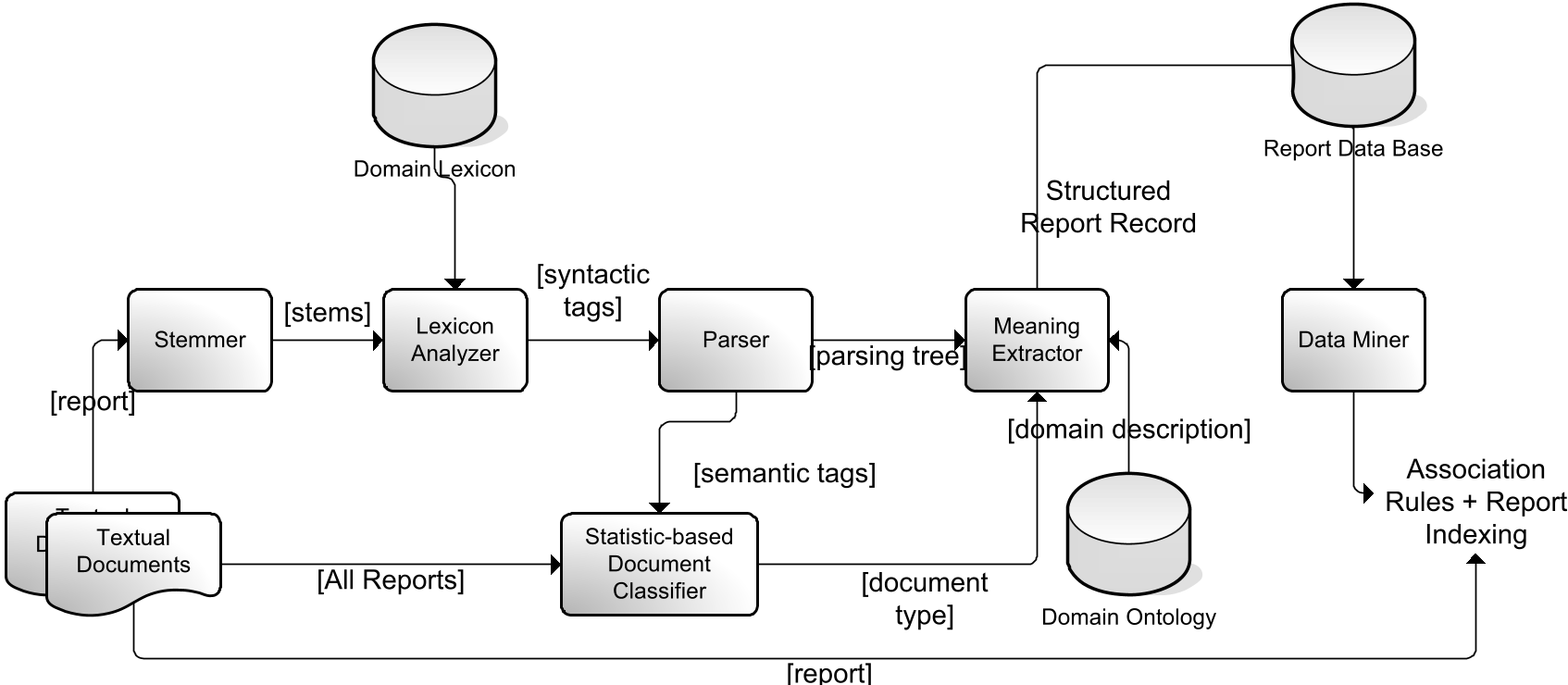
The ADDMiner model isn't just a single algorithm; it’s a pipeline designed to bring structure to chaos.
1. NLP & Lexicon Analysis
The system starts by breaking down sentences using a stemmer and a parser. Since technical jargon is rampant, the lexicon is indexed by stems to handle linguistic variations (e.g., "accident" vs "accidentado").
2. Statistical Type Recognition
Before deep mining, the system classifies the report into one of 15 predefined "Anomaly Types" (e.g., Machine Break, Accident with Injury). This step is crucial because it tells the system which specific sub-ontology to use for the next phase.
3. The Knowledge Hub: Domain Ontology
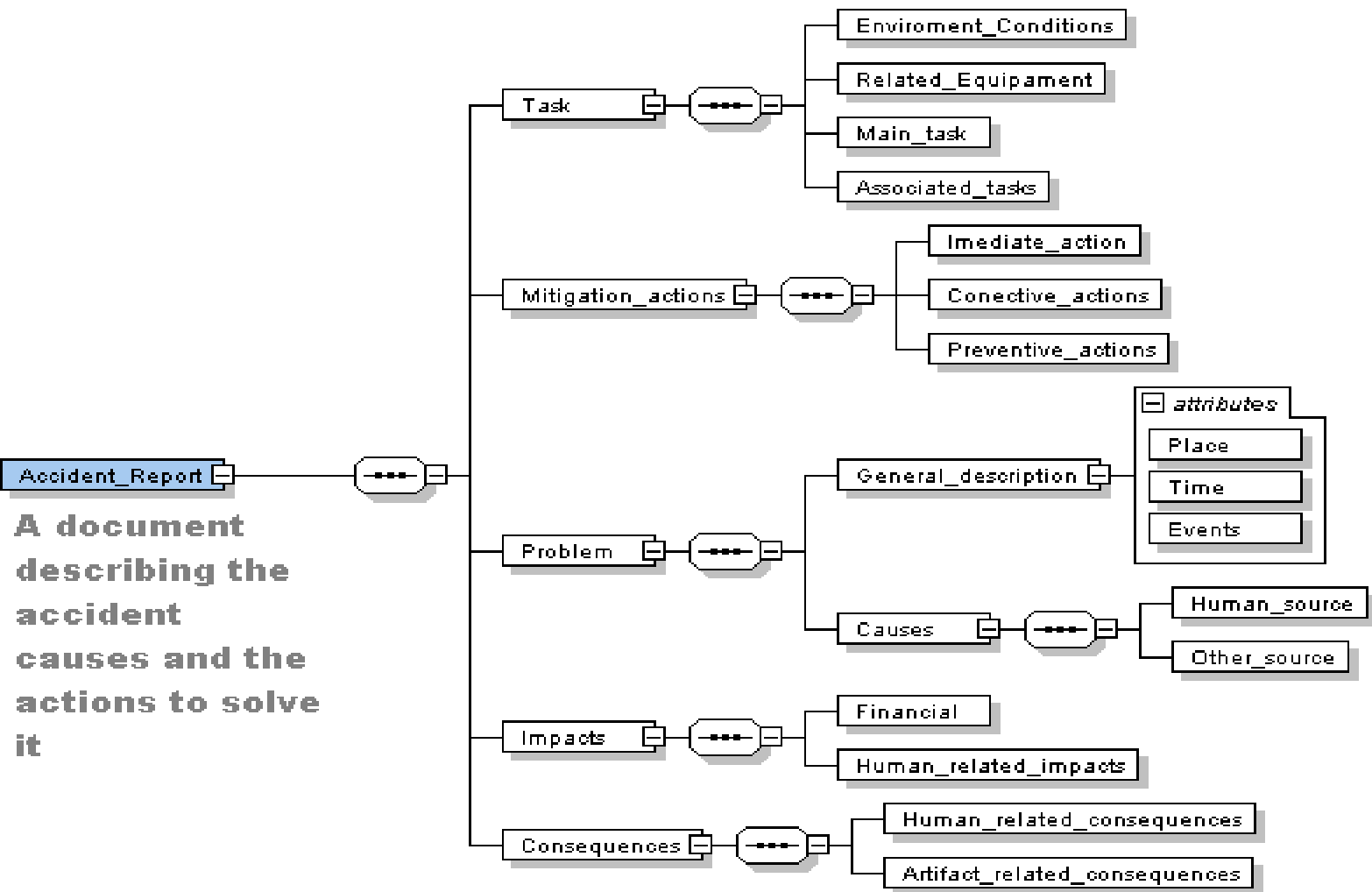
This is the "brain" of the operation. The ontology acts as a blueprint, defining what pieces of information a report should contain:
- The Task: Environment, equipment, and main objective.
- The Incident: When, where, and how.
- The Consequence: Financial impact and human injury.
- The Remedy: Immediate and preventive actions.
From Text to Rules: Uncovering Causality
Once the semantic analyzer extracts the relevant concepts based on the ontology, the data moves into the Association Rule Mining phase.
The system looks for patterns where specific antecedents consistently lead to specific outcomes. For example, the software might discover a rule:
[Stairs] + [Steel] + [Making Hole] ⇒ [Injury]
This isn't just a keyword match; it’s a relational discovery. The system identifies that when someone is using a drill ("making hole") on "steel" while on "stairs," an "injury" is likely. This allows safety managers to implement highly targeted training or equipment changes.
Critical Insight: Why Ontology-Based Mining Matters
The brilliance of ADDMiner lies in its expectation-driven processing. Instead of asking the machine "What is in this text?", the ontology allows the machine to ask, "I am looking for the 'Reason for Injury'—where is it in this text?" This top-down approach significantly reduces the noise typically associated with unsupervised text mining.
Limitations and Future Outlook
While ADDMiner represents a significant leap for industrial safety, its reliance on a manually crafted ontology is a double-edged sword. If the industry evolves (e.g., new types of green-energy equipment), the ontology must be updated by experts. However, in an era of LLMs, this work provides a foundational lesson: Large models are powerful, but domain-specific structure is what makes them reliable.
Conclusion
ADDMiner proves that text mining in hazardous environments is not just about words; it’s about context. By formalizing industry knowledge into an ontology, the authors have provided a way for organizations to finally "learn from history" rather than just archiving it.