
EMOCA: Elevating Rule Mining with Social Intelligence and Pure Pareto Dominance
Dominators vs pure dominators on the accuracy of a classifier with a multi objective cultural algorithm
The paper introduces the Extended Multi-Objective Cultural Algorithm (EMOCA) for mining "If-Then" classification rules. It optimizes for coverage and confidence while employing a pure Pareto domination strategy to ensure rule set compactness, achieving a SOTA accuracy of 96% on the Iris dataset.
TL;DR
Researchers have developed the Extended Multi-Objective Cultural Algorithm (EMOCA), a system that treats rule mining not just as a search for accuracy, but as a social evolution process. By utilizing a Belief Space to retain knowledge and a Pure Pareto Domination strategy, EMOCA produces highly accurate classification rules (96% on Iris) that are significantly more compact and faster to compute than traditional Multi-Objective Evolutionary Algorithms (MOEAs).
Background: The Limits of Memoryless Evolution
In the realm of Data Mining, "If-Then" rules are prized for their interpretability. However, finding the "perfect" rule set is a multi-objective nightmare: you want high Confidence (accuracy), high Coverage (generality), and low complexity (fewer rules).
The authors point out a critical flaw in standard Genetic Algorithms (GAs): they are memoryless. Once a generation passes, the global insights gained are often lost, forced to be rediscovered. EMOCA bridges this gap by introducing a "Culture" that lives outside the individual chromosomes.
Methodology: The Architecture of Social Intelligence
The core innovation of EMOCA is the Belief Space, which acts as a repository for "Social Intelligence." It consists of several Knowledge Sources (KS):
- Normative KS: Stores the boundaries of attribute values.
- Situational KS: Keeps track of specific "best-case" examples.
- History KS: The "Greatest Hits" of previous generations, ensuring elite solutions are never forgotten.
- Domain KS: Tracks the performance vectors (Coverage/Confidence) for Pareto comparison.
Agent-Based Search
Unlike random mutations, EMOCA uses Social Agents with distinct personality traits to guide reproduction:
- Risk Takers: Randomly sample from any knowledge source to explore new territory.
- Imitators: Explicitly try to match successful schemas found in the Situational KS.
- Cautious Agents: Only build upon the proven successes in the History KS.
 Figure 1: Conceptual framework of Cultural Algorithms moving from individual traits to social intelligence.
Dominators vs. Pure Dominators
A central theme of the paper is the comparison between two selection strategies:
- Dominators: Rule A is better than Rule B if it is better in at least one metric and not worse in others.
- Pure Dominators: Rule A must be strictly better than Rule B in all metrics.
By shifting the objective to Pure Dominators, the algorithm effectively prunes redundant or "mediocre" rules, resulting in a lean, high-performance classifier.
Experimental Performance
The authors tested EMOCA against the Iris dataset, comparing it to established methods like NSGA-II and Pitts-DNF-C.
| Metric | EMOCA (Pure Dom) | NSGA-II |
|---|---|---|
| Accuracy | 96.0% | 95.4% |
| Execution Time | 1.20s | 90s - 270s |
| Rule Count | ~6 Rules | 5-7 Rule Sets |
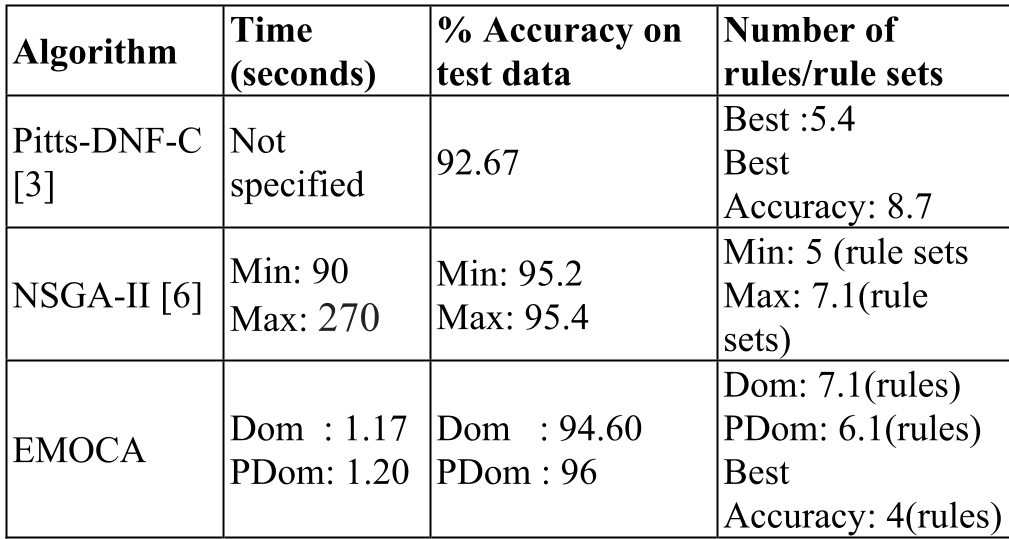 Table 1: EMOCA shows a massive lead in computational efficiency, converging in seconds whereas prior methods took minutes.
Critical Insight & Conclusion
The success of EMOCA suggests that Data Mining benefits heavily from "Meta-Knowledge." By not treating every generation as a blank slate, the algorithm avoids the computational overhead of reassessing poor solutions.
Takeaway: If you are optimizing complex systems with competing objectives, don't just evolve your agents—evolve a "Culture" (Belief Space) that tells them which directions are worth pursuing. Pure Pareto dominance further ensures that the final model is not just accurate, but human-readable.
Limitations
While highly effective on the Iris dataset, the current implementation relies on simple binning for discretization. Future iterations would likely benefit from more sophisticated handling of high-dimensional, non-linear feature spaces.