
Doubly Threshold Graphs: Beyond "Rich People Networks" in Social Modeling
Doubly Threshold Graphs for Social Network Modeling.
The paper introduces Doubly Threshold (DT) graphs, a new deterministic network model for social and economic interactions. It combines the properties of Threshold graphs and Unit Interval graphs using two constraints: a minimum sum of vertex weights for edge existence and a maximum bounded difference between them.
TL;DR
Researchers from UIUC have introduced Doubly Threshold (DT) graphs, a deterministic model that refines how we simulate social and economic networks. By requiring that connected individuals must be both "wealthy enough" (sum of weights) and "similar enough" (difference of weights), this model naturally reproduces the structural hallmarks of real-world social networks, such as high clustering and the absence of specific "anti-motifs" like 4-cycles.
Background: The Wealth and Similarity Constraints
In network science, Threshold Graphs are often used to model interactions where a total amount of a resource (wealth, influence, energy) is needed to trigger a connection. However, these models are often too "permissive"—they imply that a billionaire and a person with zero assets might connect just because their sum hits a threshold, ignoring the sociological reality of homophily (the tendency of individuals to associate with similar others).
The DT graph addresses this by merging two concepts:
- Threshold Graphs: Edge exists if .
- Unit Interval Graphs: Edge exists if .
The result is a model of "wealthy people within the same economic class."
Methodology: The Anatomy of a DT Graph
The core contribution of this paper is the mathematical characterization of DT graphs. The authors prove that any connected DT graph can be decomposed into a specific hierarchical structure using Distance Decomposition.
1. The Core ()
At the heart of a DT graph lies , a subset of vertices that induces a Threshold Graph. This represents the foundational "wealthy" community.
2. The Clique Layers ()
The rest of the graph is organized into layers. The authors prove a striking property: every subsequent layer in the distance decomposition must be a clique. This leads to a "community of communities" structure where each layer is more intensely connected than the last.
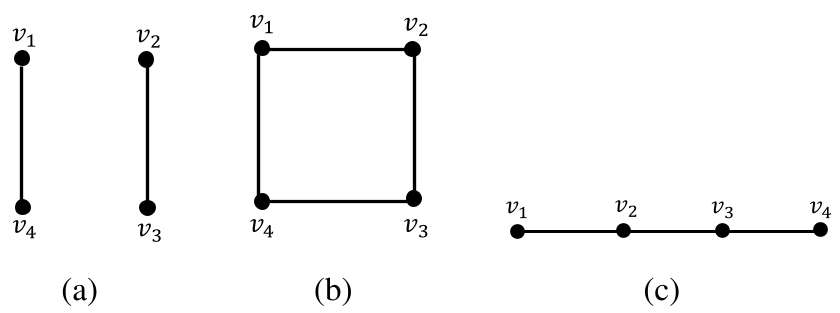 Fig 1: A conceptual example of a DT graph showing how weight assignments () interact with parameters (sum) and (difference).
Structural Insights and Forbidden Subgraphs
One of the most powerful ways to validate a graph model is to check its "Forbidden Induced Subgraphs." Real social networks are known to avoid certain shapes, called anti-motifs.
The authors show that DT graphs successfully avoid:
- (4-vertex cycles): Rare in social circles where "friends of friends" usually know each other (triadic closure).
- (4-vertex paths) and (disjoint edges).
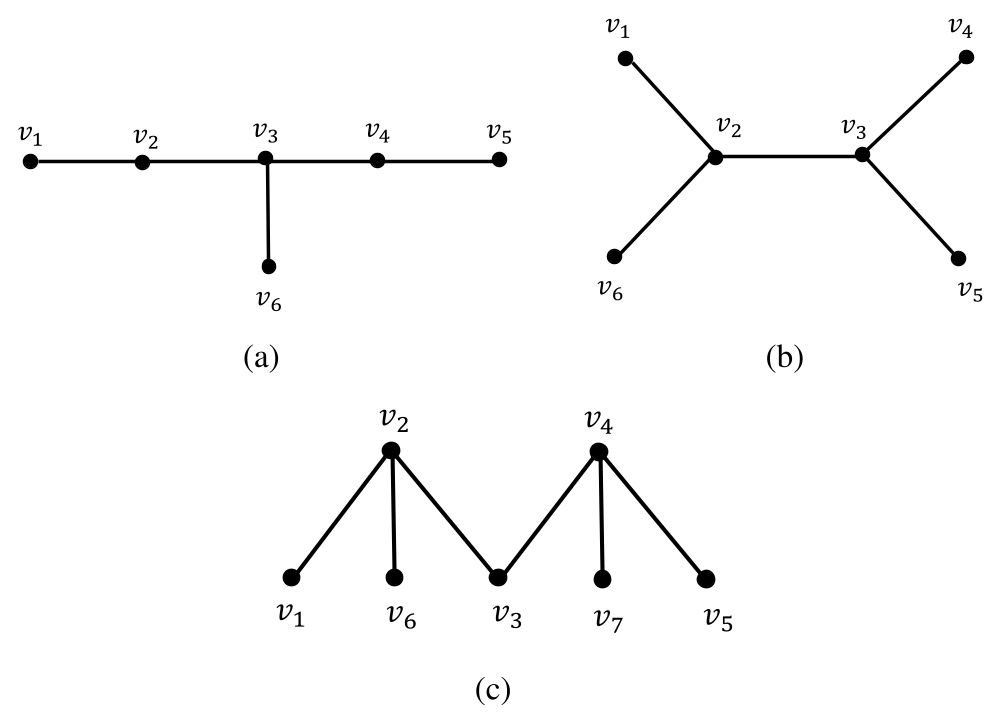 Fig 2: A sampling of the induced subgraphs that cannot exist within a DT graph, matching observations in biological and social systems.
Critical Analysis & Future Outlook
The DT graph model is a significant step forward in deterministic modeling. Unlike random graph models (like Barabási-Albert), DT graphs give us a "why" based on vertex attributes (weights).
Strengths:
- Succinctness: A complex graph can be described just by a list of weights and two scalars ().
- Structural Fidelity: It captures the "hierarchical" nature of social classes better than a simple threshold model.
Limitations:
- Deterministic Nature: Real networks have noise. The authors suggest a probabilistic version (edges formed with probability if constraints are met), which would be a fertile ground for future research.
- Scalar Weights: Currently, the model uses a single weight. In reality, "similarity" is multi-dimensional (age, location, interests), suggesting a need for Vector DT graphs.
Conclusion
By introducing the "Bounded Difference" constraint, the authors have turned the classic Threshold Graph into a nuanced tool for social network analysis. This work provides a rigorous foundation for understanding how local constraints on vertex attributes manifest as global topological properties like high clustering and community hierarchies.