
The Hidden Defect: How Downsizing Erodes Software Professionalism and Quality
Investigating the effects of downsizing on software professionals' self-efficacy and its consequences on software development quality
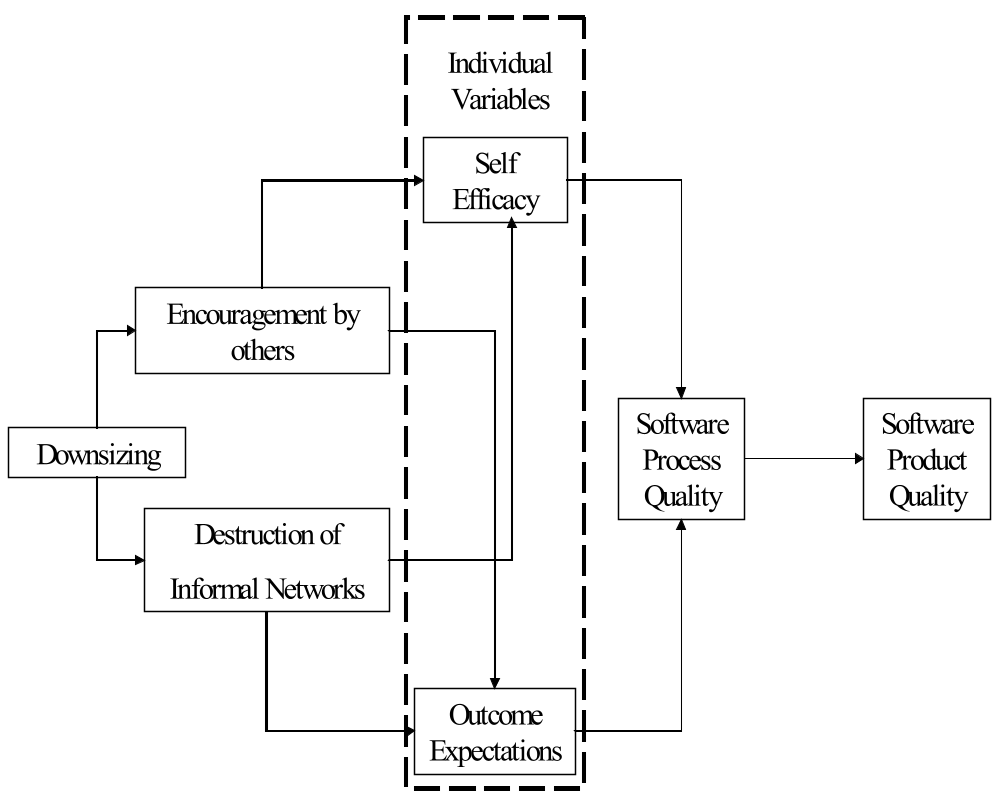
This research investigates the psychological and structural impacts of corporate downsizing on software professionals' self-efficacy and outcome expectations. Using Social Cognitive Theory, the authors propose a conceptual model linking personnel reduction to degraded software development quality through the destruction of informal social networks.
TL;DR
When tech companies "lean out" through layoffs, they aren't just cutting costs; they are severing the social infrastructure that sustains technical competence. This paper argues that downsizing destroys informal networks, plummeting software professionals' Self-Efficacy (the belief in one's ability to succeed). This psychological erosion directly correlates with a decline in software process quality, resulting in bug-ridden products and unstable system environments.
Background: The Downsizing Paradox
In the corporate world, downsizing is often treated as a "surgical" procedure to improve efficiency. However, statistics show a grim reality: only 21% of companies see a satisfactory return on investment after layoffs. The authors of this study position their work at the intersection of psychology and software engineering, arguing that the true cost of downsizing is the "hidden" destruction of organizational learning capacity and individual motivation.
The Core Insight: Social Cognitive Theory in Dev Teams
The researchers utilize Social Cognitive Theory (SCT), which suggests a triadic reciprocality between environment, person, and behavior.
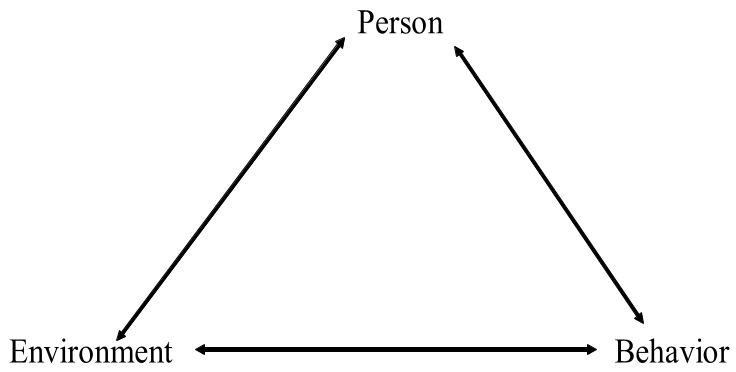
The primary engine of a developer's performance isn't just their coding skill, but their Self-Efficacy. When a coworker is laid off, two things happen:
- Network Destruction: Informal "Instrumental" networks (how we get advice) and "Expressive" networks (friendships) disappear.
- Psychological Isolation: Survivors face "survivor guilt" and increased workloads without the social support needed to tackle complex new tasks, leading to a death spiral of low morale and poor performance.
A New Framework for Software Quality
The paper proposes that software quality is not just about "bug-free code" at launch. They break it down into three critical phases:
- Delivered System Quality: Product quality at the time of acquisition.
- System-In-Use Quality: The ability to meet expectations throughout the software's life (maintainability).
- System Environment Quality: The internal organizational conditions that support the software (internal "champions" and stable support structures).
Why Performance Drops (Methodology)
The authors hypothesize that downsizing creates a vacuum of domain expertise. Requirements elicitation—the foundation of any project—suffers because the "experts" are gone. The remaining developers, burdened with extra work and low confidence, are more likely to introduce defects during the implementation phase.
Furthermore, the loss of "champions" (enthusiastic early adopters within a firm) means new technologies are less likely to be supported or optimized, damaging the Internal System Environment Quality.
Critical Analysis & Conclusion
This paper serves as a stern warning to IT leadership. Using downsizing as a tool to increase productivity is often counter-productive in creative, high-skill fields like software development.
Takeaway for Managers: Software is a social artifact. The code is only as strong as the social ties and the individual confidence of the people writing it. If you destroy the network, you destroy the product quality.
Limitations: The paper is a conceptual framework and proposed methodology (at the time of publication). It focuses heavily on internal organizational dynamics and would benefit from modern data on how "Open Source" or "Distributed Work" might mitigate or exacerbate these network destructions.
Future Outlook
As the tech industry continues to navigate cycles of rapid hiring and "efficiency-driven" layoffs, this research provides the theoretical foundation to measure the long-term technical debt accumulated by psychological and social disruption.