
Driving the Feed: The Science of Social Interactions in Apparel Retail
Driving likes, comments, and shares on social networking sites: how post characteristics affect brand interactions in apparel retailing
This study investigates how brand post characteristics—vividness, interactivity, and content—influence user interactions (likes, comments, and shares) within the apparel retail sector on Facebook. By analyzing 415 posts from six major brands, it identifies that specific media types and interactive elements like hashtags and voting significantly drive engagement.
TL;DR
What makes a consumer stop scrolling and actually hit the 'like' or 'share' button? This study analyzes 415 posts from global apparel giants (like H&M and Zara) to decode the "DNA" of a successful brand post. The secret sauce? High vividness, low-friction interactivity, and extreme brevity.
Background: The Engagement Puzzle
In the crowded landscape of Social Networking Sites (SNS), brands aren't just competing with other brands; they are competing with friends, family, and viral memes. While we know social media drives value, the specific "levers" that a brand manager can pull—vividness, interactivity, and timing—often produce unpredictable results. This paper zooms into the apparel retail sector, a "high-involvement" domain where consumers are naturally more inclined to interact with style and lifestyle content.
1. The Core Framework: Vividness vs. Interactivity
The study breaks down brand posts into several key dimensions to understand their unique impact on the "Trinity of Engagement": Likes, Comments, and Shares.
Vividness: The Sight & Sound
The author categorizes posts by how much they stimulate the senses:
- No Vividness: Plain text (Status updates).
- Low: Pictures and Albums.
- Medium: Links and Events.
- High: Videos.
Interactivity: The Call to Action
Interactivity isn't just asking a question. It ranges from:
- Low: Hashtags, Voting, or Website Links.
- Medium: Contests and "Calls to Act" (e.g., "Check out this sale").
- High: Direct Questions.
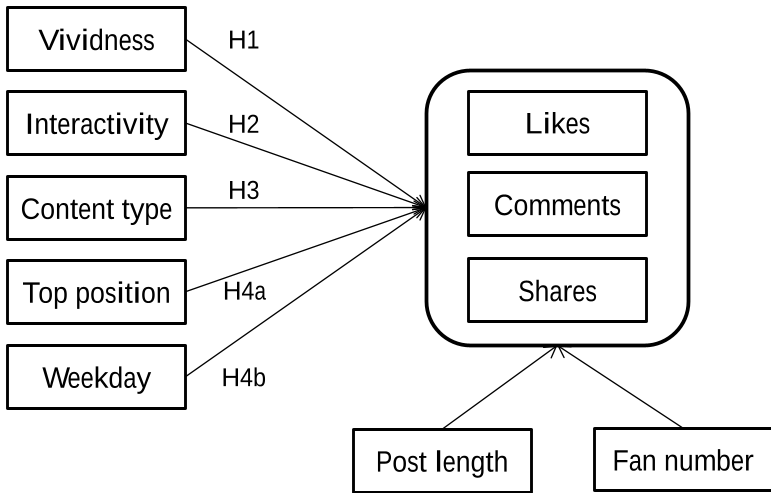 Figure 1: The researcher’s model for how post characteristics filter through to user behavior.
2. Key Findings: What Actually Works?
The "Brevity" Rule
One of the most consistent findings across all models was that post length negatively affects interaction. In an era of informational overload, users prefer "fast processing." If a post is too long, the likelihood of a like, comment, or share drops significantly.
The Power of the Hashtag and Voting
Interestingly, "low interactivity" elements like hashtags and voting were major drivers for both comments and shares.
- Hashtags act as a bridge—allowing users to explore more content while staying within the platform's ecosystem.
- Voting provides a low-barrier way for fans to express an opinion, leading to higher engagement than complicated contests.
Content Matters: Coverage vs. Promotion
The study found that "Coverage" (behind-the-scenes at photo shoots or events) and "Product Announcements" were significantly more effective at driving likes than generic promotions or discounts. People follow fashion brands for the aesthetic and the newness, not just the coupons.
3. Results Analysis
The OLS regression models revealed varying degrees of explanatory power for different metrics:
- Likes (): Highly influenced by vividness (Pictures) and specific content types (Product/Coverage).
- Comments (): Driven mostly by interactive features like questions and voting.
- Shares (): Influenced by video content and the time a post remains at the "Top of Page."
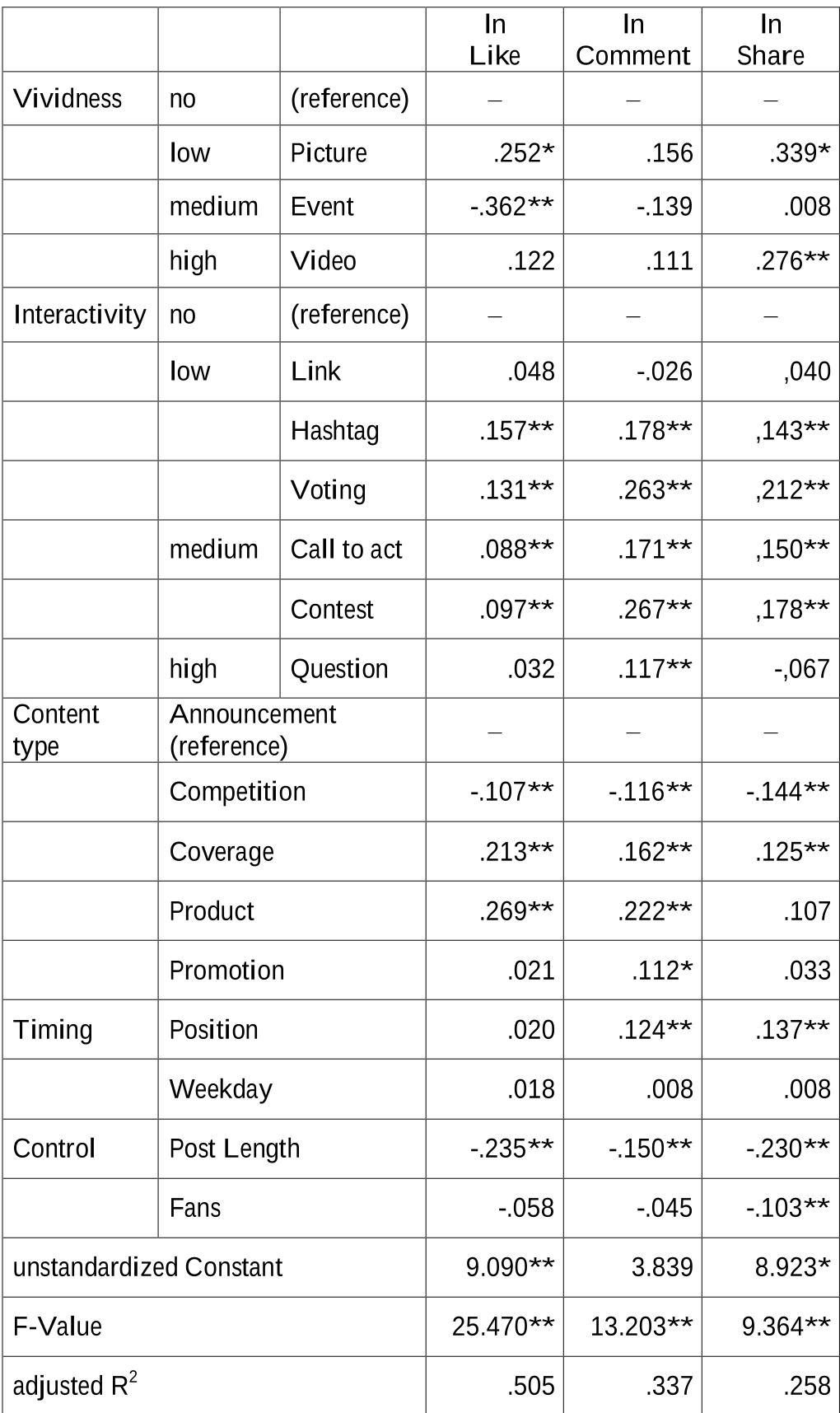 Table 1: Standardized estimation results showing the impact of characteristics on Likes, Comments, and Shares.
4. Academic Insight: The Competition Paradox
A surprising result was that posts labeled as "Competition" content type had a negative impact on interactions, while the "Contest" interactivity feature was positive.
- The Logic: While the initial contest post gets massive engagement because it's interactive, subsequent "coverage" or updates about the competition (the content type) are often ignored or seen as clutter by the wider audience.
5. Summary & Future Outlook
This research proves that social media management is a game of marginal gains.
- Strategic Takeaway: Brand managers should favor Pictures over Video for cost-efficiency (as pictures performed strongly for likes), use Voting to spark comments, and keep text short.
- Limitations: The data is from 2014-2016; in 2026, the rise of "Reels" and "Shorts" likely shifts the "Vividness" weights even further toward high-quality video content.
- Future Path: Moving beyond "Likes" to "Revenue"—the next frontier is linking these micro-interactions directly to transaction data.
Academic Takeaway: This work bridges the gap between general social media theory and vertical-specific reality, proving that "High Involvement" industries require a different engagement playbook than "Low Involvement" ones.