
Beyond the Privacy Paradox: The Dual Decision Strategy in Social Networks
A dual privacy decision model for online social networks
This paper introduces the "Dual Privacy Decision" model to analyze how Online Social Network (OSN) users manage privacy by simultaneously controlling information content and interaction audience. Using structural equation modeling on Facebook user data, the study identifies distinct "Information Manager" and "Interaction Manager" behavioral profiles based on the privacy calculus of perceived benefits versus disclosure costs.
TL;DR
Why do people who claim to value privacy still post their lives online? This paper moves past the "Privacy Paradox" by introducing the Dual Privacy Decision model. It reveals that users aren't just "private" or "public"—they are either Information Managers (who have many friends but curate what they see) or Interaction Managers (who keep small circles and share more freely within them). Self-expression, not socialization, is the primary driver of data disclosure.
Background Positioning
In the landscape of Information Systems (IS) research, this work is a theoretical bridge. It takes Laufer and Wolfe’s 1977 interpersonal privacy theory and applies it to the 21st-century OSN environment. It shifts the focus from "Privacy as a Concern" to "Privacy as Relationship Management," providing a more nuanced SOTA framework for understanding digital dossiers.
The Problem: The Mismatch of Data and Socializing
Traditional privacy models (like the Individual-to-Business exchange) don't fit Facebook or Twitter. In an OSN:
- Information is the currency: You must share to participate.
- Audiences are fluid: Unlike a private email, a post can leak to "friends-of-friends."
- Motivation is multi-faceted: We don't just share for "service"; we share to express our identity or please our family.
The authors argue that the "privacy paradox" exists only if you view privacy as a single dimension. In reality, users manage a trade-off between Information (the content) and Interaction (the reach).
Methodology: The Dual Decision Framework
The researchers proposed a model where a user's Interpersonal Privacy Identity (IPI) is tested against the "Privacy Calculus"—the mental mapping of benefits against risks.
The Two-Dimensional Matrix
The study categorizes data release into a matrix of Information Type (Characteristic vs. Observational) and Scope of Release (Narrow vs. Wide).
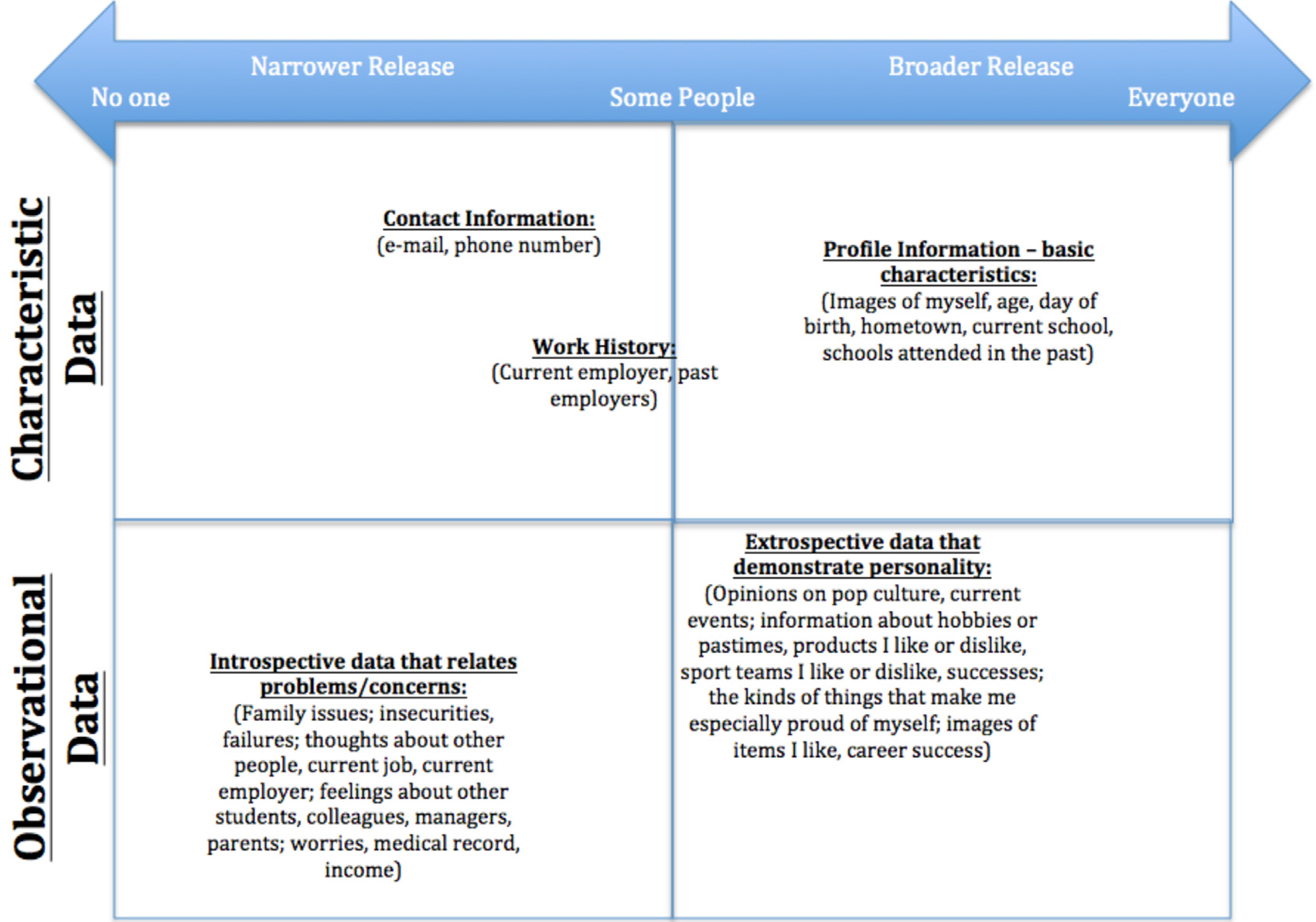 Fig 1: The proposed classification of OSN information release behaviors.
The Structural Model
They tested 25 hypotheses using a sample of 680 users. The model examined how four benefits—Information Seeking, Socialization, Self-expression, and Pleasing Others—override the desire for privacy.
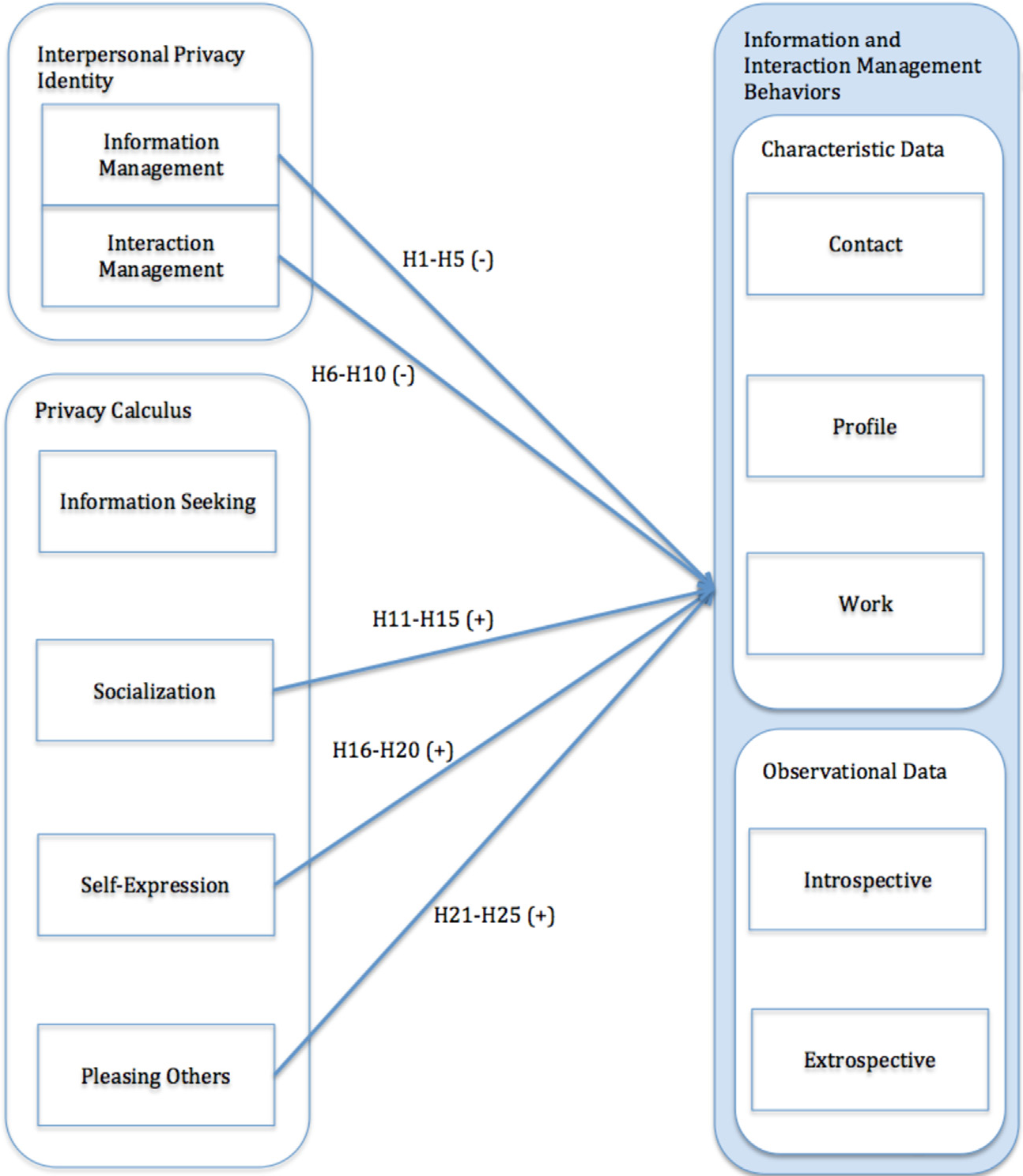 Fig 2: The Final Structural Model showing the interplay between IPI and the Privacy Calculus.
Key Insights & Experimental Results
The findings challenge the assumption that "privacy-conscious" users simply share less. Instead, two distinct profiles emerged:
- Information Managers: These users have a high desire for Information Management. They actually share more profile data (age, photos, school) to attract a large network but are extremely restrictive with introspective data (feelings, insecurities). They use their profile as a public-facing "advertisement."
- Interaction Managers: These users focus on who can see them. They keep their profiles nearly private to minimize friend requests. Because their circle is small and trusted, they feel safer sharing "messier," more personal data.
The Power of Self-Expression
The most striking result was that Self-expression is the ultimate override. Users seeking self-expression disclosed data across all categories—including sensitive contact and work history—more widely than those seeking socialization or trying to please others.
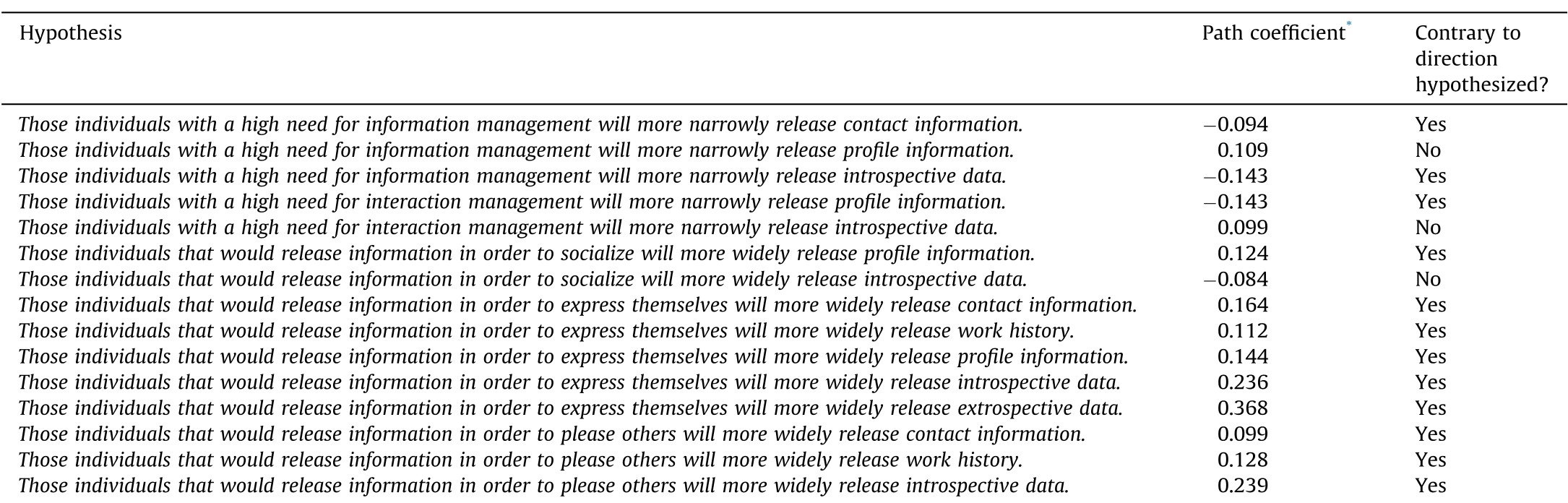 Table 1: Path coefficients showing the significant impact of Self-expression on data release scope.
Critical Analysis & Takeaways
The "Sophomore" Effect
Interestingly, Facebook Proficiency led to less restrictive privacy behaviors. As users become "power users," they grow comfortable (or perhaps complacent) and are more likely to override their privacy identity for the benefits of the platform.
Limitations
The study focuses on Facebook, a platform where the "Global Audience" is always a looming threat. The results might differ on ephemeral platforms (Snapchat) or professional ones (LinkedIn), where the "Pleasing Others" motivation might manifest differently.
Future Outlook
This paper serves as a blueprint for the next generation of social media design. If OSNs want to retain users, they must move away from binary "Public/Private" toggles and offer Relationship Management Interfaces that mirror real-world social silos.
Takeaway: Privacy isn't dead; it's just being "managed" in increasingly complex ways. We are all either curating our audience or curating our content. Which one are you?