
Dynamic Detection of Radical Profiles: Merging Social Graph Analytics with Computer Vision
Dynamic Detection of Radical Profiles in Social Networks Using Image Feature Descriptors and a Case-Based Reasoning Methodology
The paper introduces a Case-Based Reasoning (CBR) framework for detecting radicalized social network profiles by combining interaction-based risk scoring with local image feature descriptors. It specifically addresses the identification of extremist iconography (e.g., ISIS flags) in Twitter profile images, achieving high performance with the SIFT algorithm.
TL;DR
Manual monitoring of extremist propaganda on social networks is no longer feasible. This paper presents a specialized Case-Based Reasoning (CBR) framework that automates the discovery of radical profiles on Twitter. By first filtering high-risk candidates through interaction patterns and then using SIFT-based image analysis to detect extremist iconography, the system provides a prioritized list for human experts to verify, significantly reducing manual overhead.
Background & Positioning
In the landscape of counter-terrorism, most research focuses on Natural Language Processing (NLP) to flag "extremist speech." However, the authors argue that images—specifically profile pictures and banners—carry a persistent ideological "brand" that is harder to disguise. The work sits at the intersection of Social Network Analysis (SNA) and Computer Vision (CV), moving from static detection to a dynamic, iterative monitoring system.
The Problem: The Needle in a High-Velocity Haystack
Security forces face two primary obstacles:
- Scale: Millions of users interact with radical content; analyzing every profile picture is computationally prohibitive.
- API Constraints: Platforms like Twitter impose strict rate limits on data retrieval.
- Visual Complexity: Identifying a small flag or a distorted logo in an unconstrained real-world image requires robust feature matching that handles rotation and scaling.
Methodology: The CBR Workflow
The framework utilizes a cyclic Case-Based Reasoning methodology consisting of four stages:
1. The Interaction-Based Filter (Retrieve)
Instead of checking everyone, the system calculates a Risk Score for adjacent users based on their proximity to known radical accounts.
- Formula: The score aggregates followers, retweets, and mentions.
- Sentiment Weighting: Mentions are weighted by the absolute value of their sentiment (using SentiStrength), based on the intuition that highly emotional interactions (positive or negative) indicate stronger personal ties or radicalization potential.
2. Iconography Matching (Reuse)
The system compares the profile images of high-scoring candidates against a reference "radical icon" (e.g., an ISIS flag).
- Feature Descriptors: The authors compared SIFT, Root-SIFT, SURF, ORB, and AKAZE.
- Robustness: Because radical icons are often cropped, rotated, or partially obscured, local feature descriptors are used to find matching "key-points" rather than global image similarity.
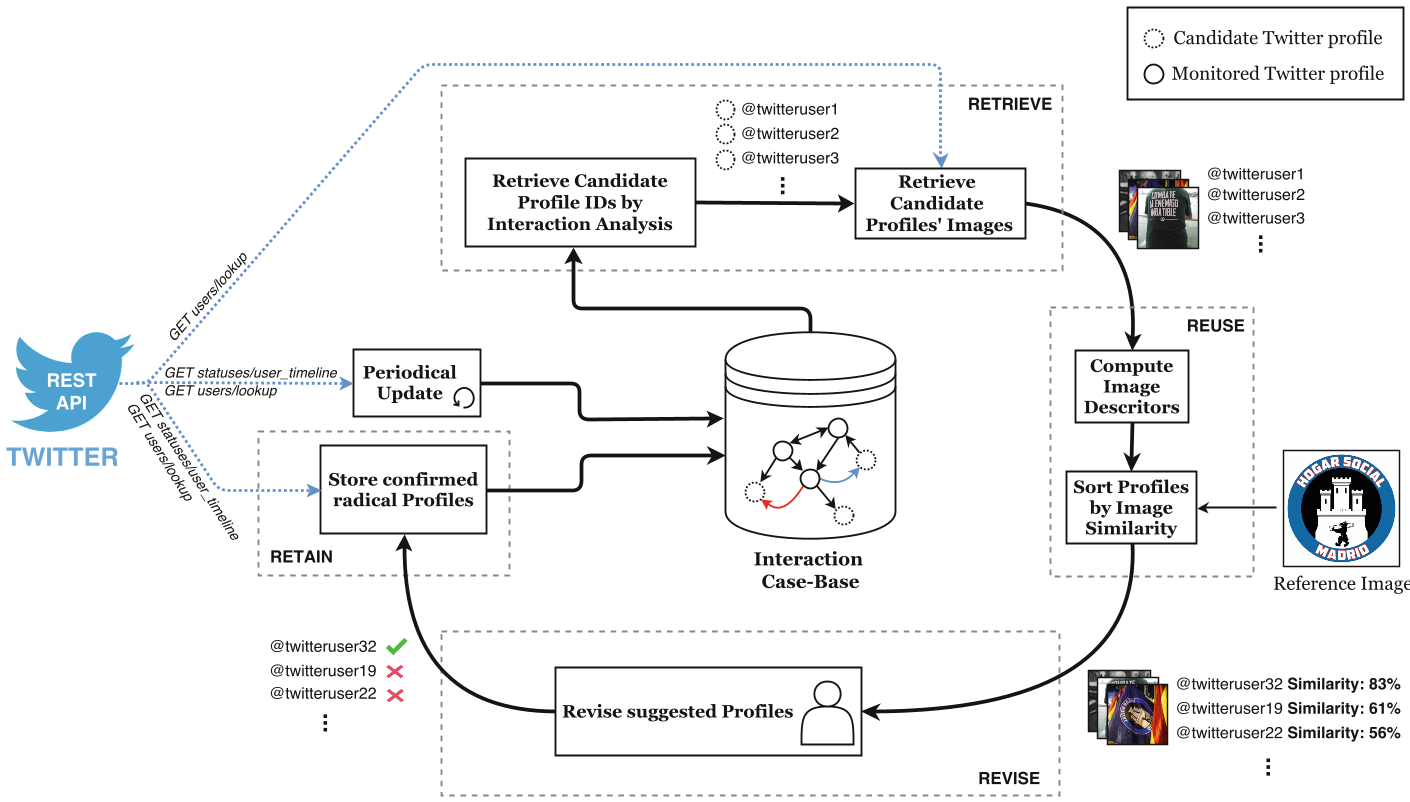 Figure 1: The CBR-based system architecture integrating the Interaction Case-Base and Human-in-the-loop validation.
Experimental Insights: SIFT vs. The Rest
The researchers tested their framework against iconography from three groups: ISIS, Golden Dawn (GD), and Hogar Social Madrid (HSM).
- SIFT is King: SIFT and its variant Root-SIFT provided the highest AUC (Area Under Curve), reaching 0.95-0.98 for ISIS and HSM.
- The Complexity Factor: Accuracy was lower for Golden Dawn (GD) because their logo is visually simpler, leading to more "false" key-point matches in non-radical images.
- Efficiency Trade-offs: While ORB was 15x faster than SIFT, its accuracy was significantly lower, making SIFT the preferred choice for high-stakes security applications where precision is paramount.
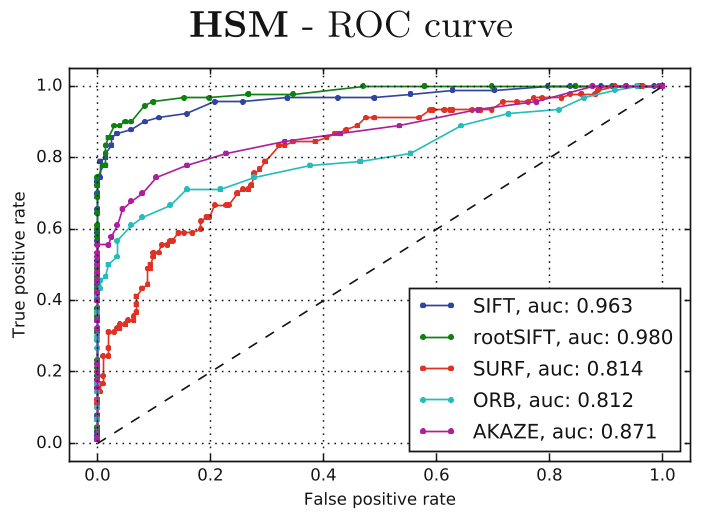 Figure 2: ROC curves showing SIFT's superior performance in distinguishing radical iconography.
Case Study: Identifying ISIS Supporters
In a real-world test, the system monitored 4 initial ISIS-supporting accounts. It successfully flagged 8 new candidate profiles, all of which were confirmed to display extremist symbols. Notably, the system was able to find iconography not just in profile pictures, but also in banners and background images, which are often overlooked.
Critical Analysis & Limitations
While powerful, the system has notable constraints:
- Scale/Quality Issues: It struggles with very small or low-quality icons (as seen in the "missed" cases).
- Context Blindness: The system flagged Iraqi soldiers holding an ISIS flag upside-down (a sign of victory) as "radical" because the descriptor is rotation-invariant.
- Human-in-the-loop: The authors correctly conclude that AI should be a "force multiplier," but the final judgment remains with human experts to interpret context and intent.
Conclusion
This research moves beyond simple keyword matching by recognizing that visual identity is a cornerstone of online radicalization. By combining social graph metrics with robust computer vision, the proposed CBR framework offers a scalable, intelligent solution for early detection in a domain where time and accuracy literally save lives.