
Dynamic Trust: Revolutionizing Suspicious Profile Detection on Social Platforms
A dynamic approach to detecting suspicious profiles on social platforms
This paper introduces a dynamic behavioral framework for detecting suspicious social media profiles, moving away from static binary classification. The method utilizes three core indicators—Balance, Energy, and Anomaly—processed through a dynamic Bayesian scoring mechanism to identify malicious actors on platforms like Twitter with high accuracy.
TL;DR
Researchers have developed a lightweight, dynamic scoring system that identifies suspicious social media profiles by analyzing daily behavioral patterns—specifically "Activity" and "Visibility." Unlike heavy, static models, this approach is designed to run directly on smartphones, reaching peak accuracy in just 5 days of observation.
Background & Motivation: The Mobile Security Gap
As social networking merges with ubiquitous mobile usage, the surface area for social engineering, phishing, and identity theft has expanded. Current security paradigms often rely on Mobile Device Management (MDM) systems that simply block applications, which users frequently circumvent.
The academic gap lies in the nature of detection: most existing SOTA methods treat suspiciousness as a static binary state (Member of Class A vs. Class B). These methods often require massive data histories and heavy computation, making them impractical for mobile devices. The authors argue that trust is a dynamic metric that should be evaluated locally for a user’s immediate contact circle.
Methodology: The Three Pillars of Suspicious Behavior
The framework moves away from complex graph theory and focuses on the "physics" of user interaction via three derived indicators:
- Balance (): The angular relationship between activity (e.g., number of tweets) and visibility (e.g., use of hashtags and mentions). Suspicious profiles often show extreme values—either desperate for visibility without content, or hyper-active without engaging common social signals.
- Energy (): The Euclidean distance of a user's presence. Automatized bots typically consume significantly more "energy" than regular, intermittent human users.
- Anomaly (): A logarithmic score evaluating how unlikely a specific activity-visibility pair is relative to the general population.
Algorithm and Framework
The system harvests messages in real-time () and updates a cumulative suspicious score using a Dynamic Naive Bayesian Classifier.
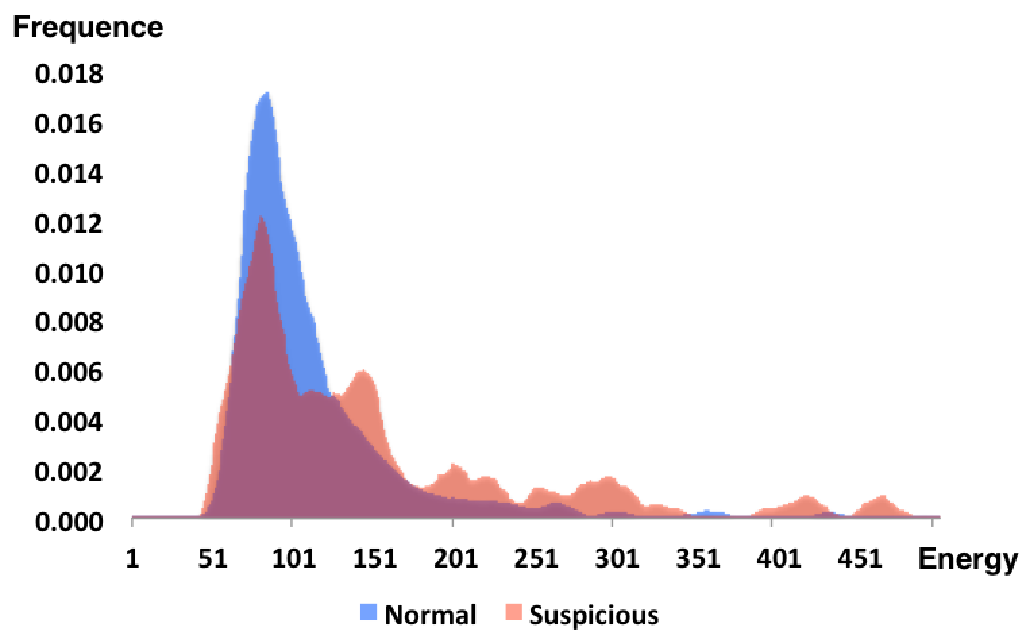 Fig 1. The scoring algorithm leverages a moving average () to smooth behavioral noise while capturing evolving threats.
Experimental Insights
The study analyzed 2,000 Twitter profiles over 30 days. The results confirmed key intuitions:
- Suspicious profiles are outliers: They tend to occupy the extreme ends of the Balance and Energy distributions.
- Efficiency of Time: The model’s Area Under the Curve (AUC) performance plateaus after approximately 5–10 days.
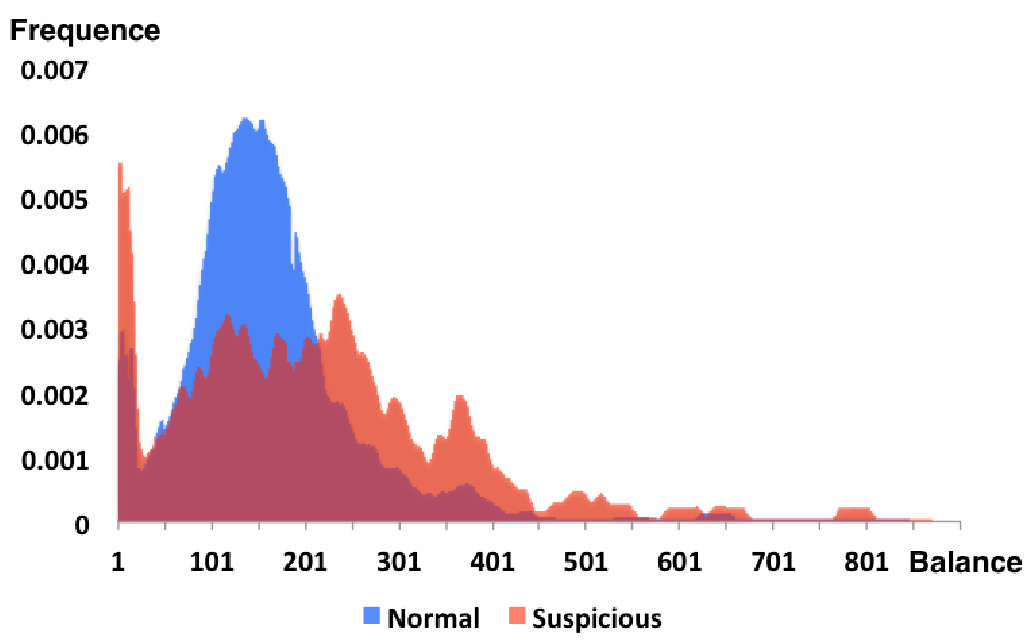 Fig 2. Frequency distribution showing how suspicious profiles deviate significantly in the "Balance" metric compared to normal users.
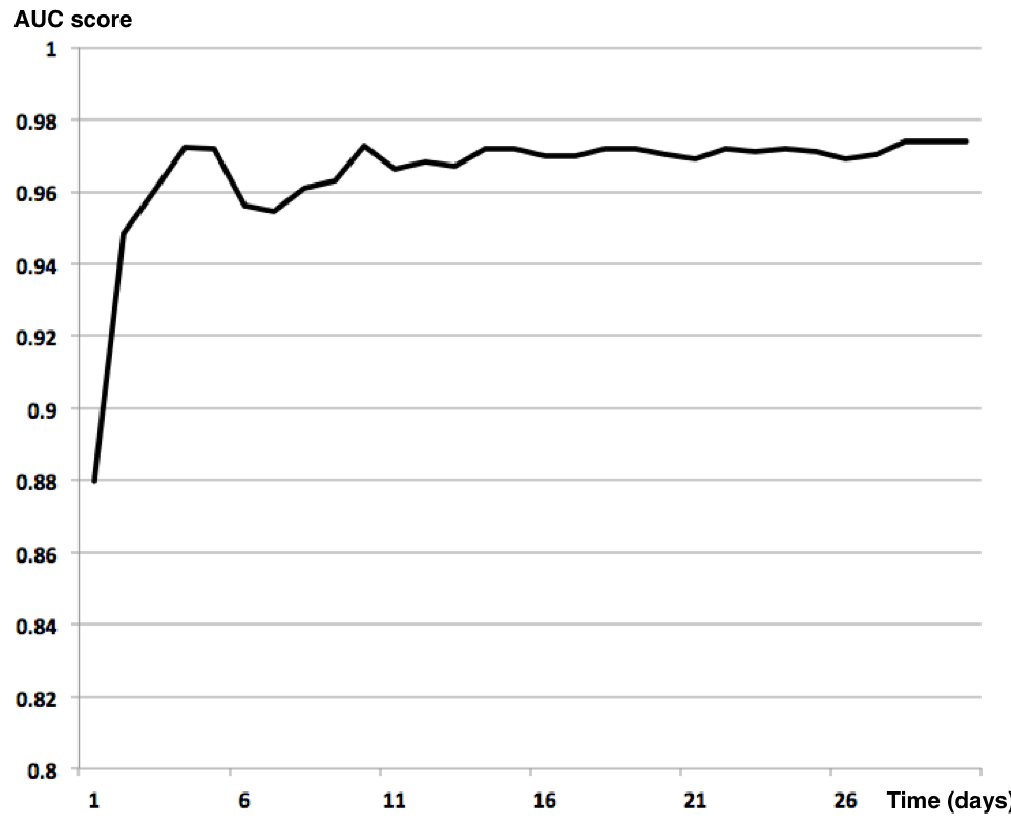 Fig 5. The AUC score trajectory shows rapid learning, proving that long-term history isn't always necessary for high-accuracy detection.
Critical Analysis & Conclusion
This work represents a significant shift toward Edge AI for Privacy. By processing data locally on a smartphone, it bypasses the need for massive centralized datasets.
Key Contributions:
- Genericity: Equations 1 and 2 can be redefined for Facebook (likes, group creates) or LinkedIn without changing the core framework.
- Computational Efficiency: The use of discretization and simple Euclidean/Logarithmic calculations makes it ideal for background mobile processes.
Limitations: Highly sophisticated "sleeper" accounts or high-quality manual social engineering might bypass these metrics if they mimic human "Balance" and "Energy" perfectly. Future work could integrate Spatio-temporal analysis (where and when messages are sent) to further refine the Anomaly score.
In summary, by shifting the focus from "what" a user is to "how" a user behaves over a short window, we can create a much safer mobile social ecosystem.