
Dynamic Competition in Social Networks: Targeted Advertising vs. Uniform Broadcasting
A Dynamic Game Formulation for Control of Opinion Dynamics over Social Networks
This paper presents a dynamic game formulation for multi-agent opinion dynamics within a social network, where two competing marketers influence individuals to move towards conflicting desired opinions. It utilizes optimal control theory and Nash equilibrium analysis to evaluate strategies ranging from "Uniform Broadcasting" to social-media-style "Targeted Advertising."
TL;DR
This research transforms the "war for hearts and minds" into a rigorous mathematical framework. By formulating marketing competition as a dynamic non-cooperative game, the authors prove that leveraging social network structure (Targeted Advertising) significantly outperforms traditional "spray and pray" (Uniform Broadcasting) methods. Through Nash Equilibrium analysis, the study reveals how marketers should optimally distribute their budgets based on individual agent "centrality."
Background: Beyond Homogeneous Markets
Classic economic models of duopolies (e.g., Coca-Cola vs. Pepsi) often treat the consumer base as a single, uniform mass. However, in the age of Facebook and Twitter, influence is a two-step process:
- Direct Influence: Marketers spend money to sway specific individuals.
- Social Influence: Agents influence their peers through internal network dynamics.
The authors argue that the real "battlefield" is the network topology itself. The challenge lies in minimizing the distance between the average network opinion and a target value while managing a finite advertising budget.
Methodology: The Dynamic Game Formulation
The paper models opinion evolution using a discrete-time stochastic framework: Where represents the internal social dynamics (based on a Laplacian matrix) and represents how marketers () apply their control .
Key Strategies Under Fire
- Uniform Broadcasting (UB): Traditional media (TV/Radio) where every agent receives the exact same signal.
- Targeted Advertising (TA): Modern social media marketing where each individual can be targeted with a bespoke signal.
The core of the paper involves solving for the Nash Equilibrium (NE) of an infinite-horizon cost function. Since marketers have opposing goals (), the system rarely reaches a full consensus, but rather a "tug-of-war" steady state.
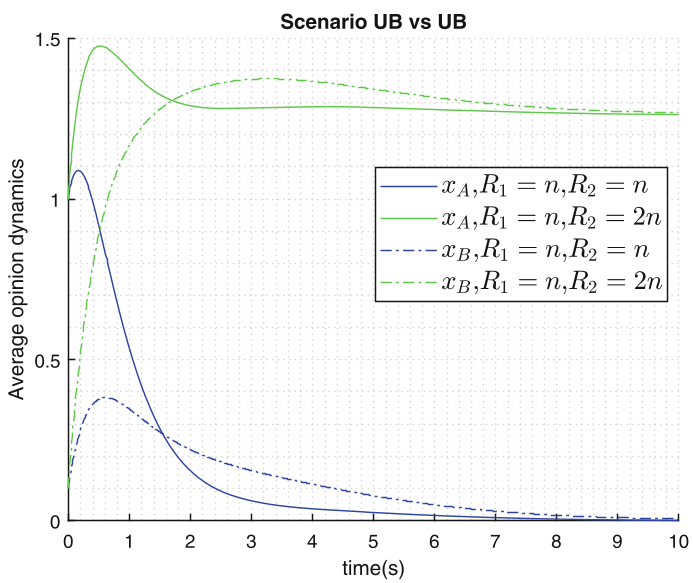 Fig 1. The directed graph of 10 agents used to test the competitive dynamics.
Numerical Insights: The Power of Centrality
The authors highlight a critical phenomenon: The Centrality Advantage. Using a 10-node directed graph, they demonstrate that the Nash Equilibrium strategy naturally leads a marketer to invest more heavily in "influencers"—those with high centrality scores.
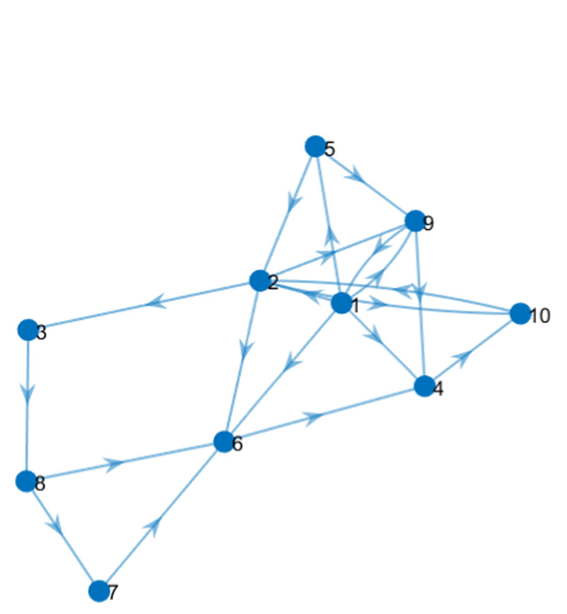 Fig 2. When Marketer 1 uses Targeted Advertising (TA) and Marketer 2 uses Uniform Broadcasting (UB), the average opinion effectively moves toward Marketer 1's goal (), despite equal budget weights.
Results Comparison
The study provides a quantitative breakdown of costs and outcomes (Table 1 inside the paper). Interestingly, when both parties use TA and have equal resources, the network often reaches a consensus at the midpoint (zero). However, the moment one side optimizes based on the graph topology (asymmetry in strategy), they gain a massive upper hand.
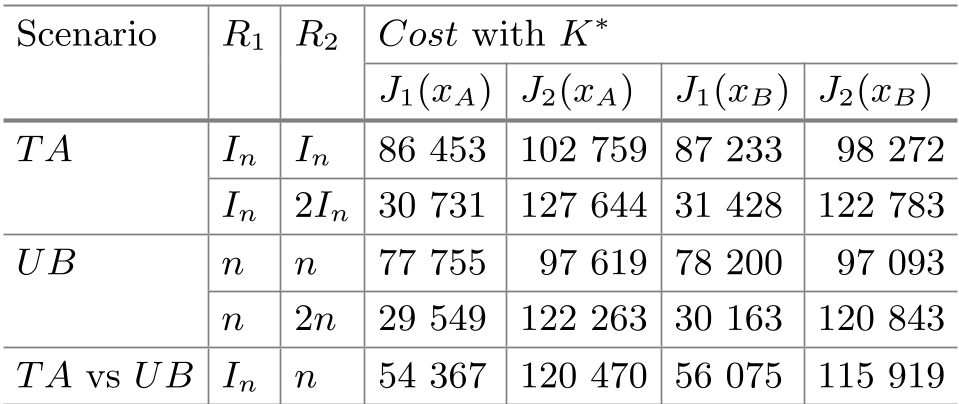 Table 2. Cost analysis under different scenarios (Targeted vs. Uniform).
Critical Analysis & Takeaways
The beauty of this work lies in its bridge between Control Theory and Social Science.
- Insight: The uniqueness of the Best Response, derived via the Algebraic Riccati Equation, provides a "gold standard" for how a rational actor should respond to an opponent's marketing campaign.
- Limitation: The model assumes a linear opinion update rule (DeGroot model). In reality, humans often exhibit "bounded confidence" (only listening to those they already agree with), which would introduce non-linearities and potential fragmentation.
- Commercial Value: For digital platforms, this confirms that the "Network Value" of a customer (their influence on others) is a quantifiable metric that should directly dictate advertising spend.
Conclusion
The paper successfully demonstrates that in a competitive social environment, knowledge of the network structure is a force multiplier. Targeted Advertising isn't just a marketing preference; in a dynamic game against a competitor, it is the mathematically optimal necessity for dominance.