
Strategic Harmony: How Environmental Policy Drives the Dynamics of Remanufacturing
Analysis of the dynamic impact of environmental policies on reverse logistics
2003-05-01
Summary
Problem
Method
Results
Takeaways
Abstract
This paper presents a comprehensive production system model combining original manufacturing and product remanufacturing using System Dynamics (SD). It evaluates the impact of environmental legislation and remanufacturing investments on supply chain flows and costs, establishing a strategic framework for closed-loop logistics.
## TL;DR
This paper leverages **System Dynamics (SD)** to model the intricate dance between forward production and reverse logistics. By simulating various environmental penalty levels and remanufacturing capacity expansion scenarios, the authors reveal that while penalties force greener behavior, the timing and scale of industrial investment are what ultimately stabilize the system's economic health.
## The Motivation: Beyond One-Way Logistics
For decades, supply chains were viewed as linear pipelines. However, increasing environmental consciousness and stricter EU regulations (like Greece's L.2939/6-8-2001) have mandated a shift toward **Closed-Loop Supply Chains**. The challenge isn't just "recycling"—it's managing the complex, time-delayed feedbacks where used products compete with or complement new ones. The authors identified a gap: existing models often failed to capture the **transient behavior** of systems during the painful transition from "disposable culture" to "remanufacturing culture."
## Methodology: The Engine of System Dynamics
The researchers didn't just look at static costs; they looked at **Causal Loops**. Using the SD methodology, they mapped how internal stocks (inventory) and flows (production/return rates) react to external pressures.
### The Decision Logic
A standout feature of this work is the mathematical modeling of human and corporate choices. Instead of binary switches, they use **Sigmoid Functions** to determine:
1. **User Behavior**: The probability of a user returning a product ($P_{UD}$) based on the cost of "illegal" disposal vs. the take-back incentive.
2. **Collector Behavior**: The fraction of products sent for remanufacturing ($P_{CR}$) based on the cost-benefit analysis of remanufacturing vs. simple disposal.
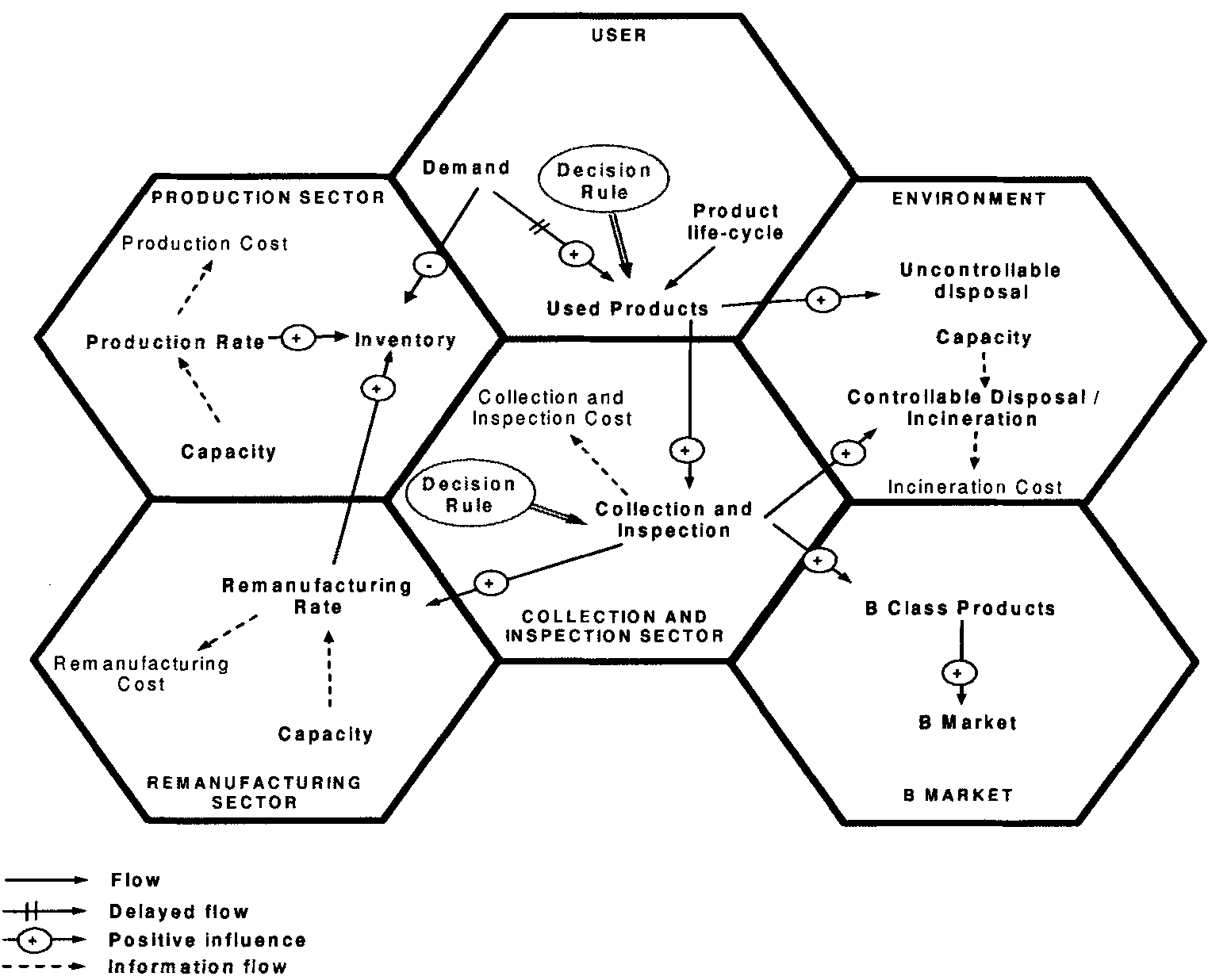
*Figure 1: The intricate web of causal links governing the forward and reverse channels.*
## Experiments: Penalties vs. Capacity
The authors conducted "What-If" analyses across 63 cases, varying penalty levels (0% to 30%) and expansion horizons (3 to 9 years).
### Key Findings:
* **The Threshold Effect**: High penalties (30%) act as a massive deterrent, making uncontrollable disposal negligible almost immediately.
* **The Investment Lag**: At lower penalty levels, the system remains in a "transient phase" much longer. If it's relatively cheap to dump products, companies and users resist the high initial cost of remanufacturing infrastructure.
* **Economies of Scale**: The model validates that as remanufacturing reaches 40-50% of demand, the unit cost drops, proving that "Green" can eventually be "Lean."
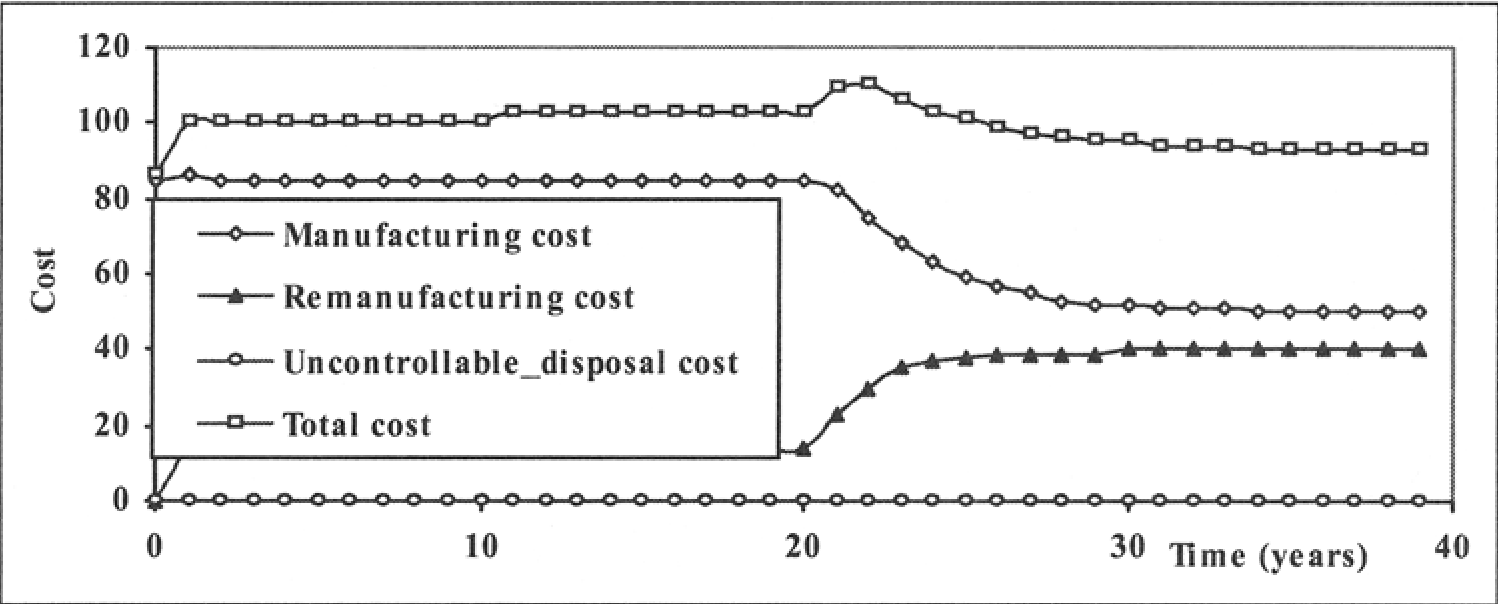
*Figure 7: Cost evolution under high penalty scenarios, showing the initial spike in investment followed by stabilization.*
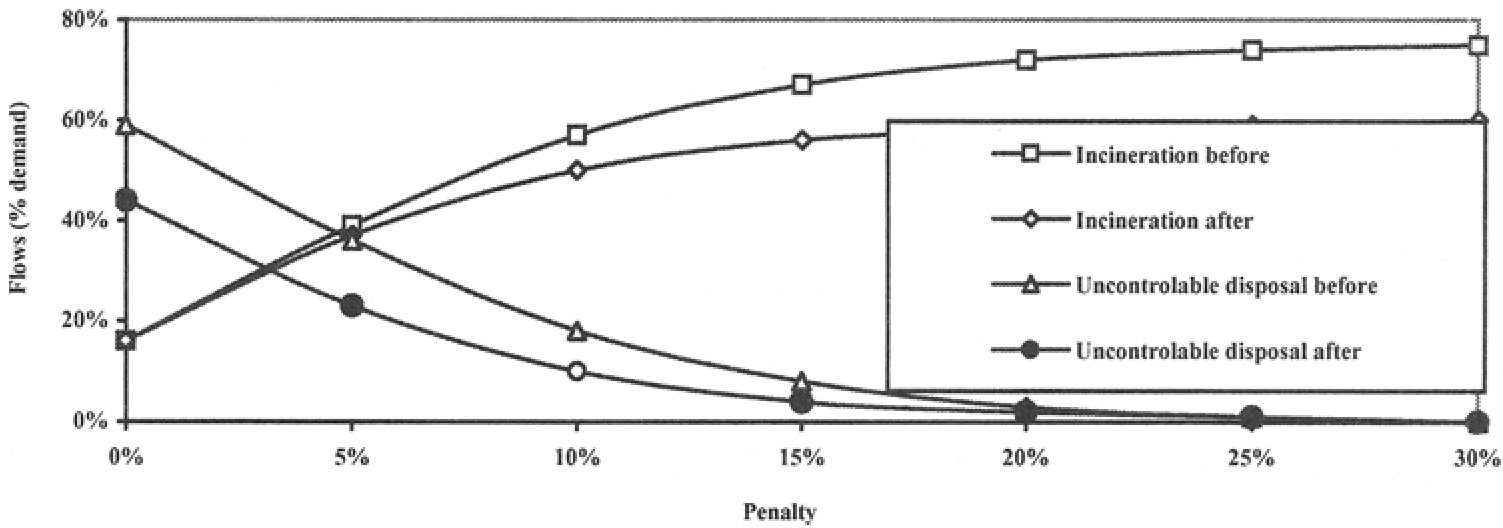
*Figure 9: A steady-state comparison showing how expansion reduces both types of waste disposal.*
## Critical Analysis & Professional Insight
This work is a cornerstone for **Strategic Logistics**. While most operations research focuses on short-term inventory optimization, this paper addresses the "Why" and "When" of systemic shifts.
**Strengths**:
* **Holistic Approach**: It treats the environment not as an external variable, but as a core feedback loop.
* **Sigmoid Modeling**: Captures the "soft" logic of market behavior more realistically than linear models.
**Limitations**:
* The model assumes "A-quality" demand is constant. In reality, remanufactured goods often cannibalize new product sales or face "stigma" that affects demand elasticity.
* The secondary market (B-class products) is mentioned but not deeply explored in the cost-benefit simulations.
## Future Outlook
The authors suggest integrating "Green Image" effects—how much a brand's reputation benefits from these policies—into the model. For modern practitioners, this SD framework is a blueprint for navigating the **Extended Producer Responsibility (EPR)** laws currently sweeping the global electronics and automotive sectors.
**Takeaway**: Policy alone isn't enough; it must be coupled with a planned, multi-year investment in capacity to prevent the "cost-shock" of environmental compliance.