
Beyond Static Traits: Capturing the Evolving Personality State in the Wild
Towards a dynamic view of personality: multimodal classification of personality states in everyday situations
The paper introduces a shift from static personality trait recognition to the dynamic classification of "personality states" using multimodal sensor data. Utilizing the SocioMetric Badges Corpus, it employs SVM classifiers to identify behavioral episodes (e.g., introverted vs. extroverted moments) in everyday office situations.
TL;DR
Human personality isn't just a static set of scores; it is a dynamic sequence of behaviors that shift with our environment. This paper moves the needle from predicting Personality Traits (who you are on average) to Personality States (how you act right now). By leveraging multimodal data from wearable "Sociometric Badges," the authors achieved classification accuracies significantly above baseline, proving that situational context is the missing link in personality computing.
Context: The Person vs. Situation Debate
In academic psychology, a long-standing debate exists: does your personality (Person) or your environment (Situation) dictate your behavior?
- The Person Perspective: Focuses on stable traits (Big Five).
- The Situation Perspective: Highlights variability (you're loud at a party but quiet in a library).
Most AI models today are stuck in the "Person" perspective, trying to label users with fixed traits. This paper argues that this is why performance often plateaus. The authors adopt Fleeson's density distribution view, suggesting that while your "trait" might be Introverted, you frequently inhabit "Extroverted States" depending on the context.
Methodology: High-Grained Multimodal Sensing
The study utilized the Sociometric Badges Corpus, involving 54 subjects over six weeks. These badges aren't just microphones; they are sophisticated social interaction trackers.
1. The Data Streams
- Bluetooth (BT): Measures coarse proximity (1-3 meters) and tracks location (Canteen, Coffee area).
- Infrared (IR): A high-precision proxy for "face-to-face" interaction; it only triggers when two people are directly facing each other.
- Speech (SP): Captures prosodic features like energy and amplitude without invading privacy through direct recording.
- E-mail (EM): Tracks communication frequency and length.
2. Situational Topic Modeling
To define the "Situation," the authors used Latent Dirichlet Allocation (LDA). Just as LDA finds topics in a document, here it finds "social topics" in a day. It identifies clusters like "Weekly Group Meetings" or "Random Chats with Friends" based on duration, location, and the network of people involved.
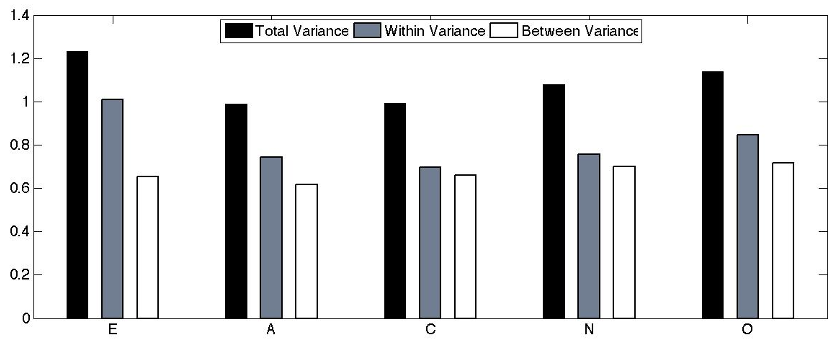 Figure 1: Comparison of within-individual vs. between-individual variance.
Experimental Insights
The core discovery, visualised in the chart above, is that within-individual variance (the blue bars) is almost always higher than between-subject variance. This means the change in your behavior throughout the day is often greater than the difference between you and your colleague.
Classification Performance
The researchers used Support Vector Machines (SVM) with four experimental schemas:
- Unimodal: Single sensor data.
- Unimodal + Context: Sensor data + Average behavior of your neighbors.
- Multimodal: Fusing multiple sensors.
- Multimodal + Context: The "full-stack" approach.
Key Result: Emotional Stability was the most predictable state (70% accuracy). In general, fusing modalities and including the "social context" (how those around you are acting) provided a substantial boost in recognizing your current personality state.
Critical Analysis & Professional Perspective
The value of this research lies in its Ecological Validity. Most personality studies happen in labs; this happened in a real office over 6 weeks.
The "How it Works" Intuition
Why does including "Context" help? Because your behavior is reactive. If everyone around you is talking loudly (Context), your "Extraversion State" is easier to classify if the model knows you are reacting to a social "Coffee Break" topic rather than sitting in a "Formal Meeting."
Limitations
- Privacy vs. Utility: While the authors avoided message content to preserve privacy, the use of wearable badges is socially intrusive.
- Subjectivity: The "ground truth" relies on self-reported TIPI questionnaires three times a day, which are subject to memory bias.
Conclusion
This paper is a cornerstone for the next generation of Context-Aware Computing. By moving from "Who is this user?" to "What state is this user in right now?", we can build AI that knows when to interrupt us, when to provide social support, and how to better mediate human-human interaction in the workplace.
Future Outlook: The next logical step is using Stochastic Models (like Hidden Markov Models) to predict transitions between states—predicting not just that you are stressed now, but that you are about to become stressed based on your current social trajectory.