
DPS: Unlocking Cloud Profitability through Joint Pricing and Placement for Distributed ML
Dynamic Pricing and Placement for Distributed Machine Learning Jobs
The paper proposes DPS (Dynamic Pricing and Placement Strategy), an online learning-based framework for distributed machine learning (ML) jobs in cloud environments. It integrates a Multi-Armed Bandit (MAB) approach for dynamic pricing with a greedy placement algorithm to maximize provider profit while minimizing stochastic job runtime.
Executive Summary
TL;DR: The paper introduces DPS, a framework that treats cloud resource pricing and physical task placement as a single, coupled optimization problem. By leveraging Multi-Armed Bandit (MAB) learning, it bypasses the need for users to predict their own job runtimes or reveal their budgets, while outperforming optimal fixed-price strategies by 25%.
Background: In the landscape of Distributed Machine Learning (DML), the Parameter Server (PS) architecture is king. However, the performance (and thus the cost) of these jobs is highly sensitive to network topology. This paper moves beyond the "Standard VM" pricing model to a specialized MLaaS (Machine Learning as a Service) model.
Problem & Motivation: The Stochastic Runtime Trap
Traditional cloud providers like AWS or Azure usually charge by the hour. This works for web servers, but for DML:
- Runtime is a Variable: If the Parameter Server and Workers are on different physical racks, the "Pull/Push" latency increases, bloating the runtime.
- Budget Invisibility: Providers don't know the maximum price a user is willing to pay.
- Feedback Loop: A faster placement allows the provider to sell those same resources to someone else sooner, but current pricing ignores this efficiency gain.
The authors' core insight is that pricing must be a function of the learned runtime efficiency.
Methodology: The Core Mechanism
The DPS (Dynamic Pricing and Placement) algorithm functions in two rhythmic stages:
1. Dynamic Pricing via UCB
Instead of guessing a single price, DPS discretizes the price range and treats each price as an "arm" in a MAB problem. It calculates an Upper Confidence Bound (UCB) for two metrics:
- : The expected resource demand sold at price .
- : The expected "resource availability" (linked inversely to job runtime).
By maximizing the reward function , the system balances Exploration (trying new prices to see if users accept) and Exploitation (using prices known to be profitable).
2. Greedy Placement Algorithm (PA)
Once a user accepts a price, the focus shifts to hardware. The algorithm sorts physical servers by idle capacity and attempts to:
- Co-locate: Put all Workers and PSs on one server to make transmission time zero.
- Minimize Spanning: If one server isn't enough, it uses a greedy approach to occupy the fewest number of servers possible, minimizing cross-switch traffic.
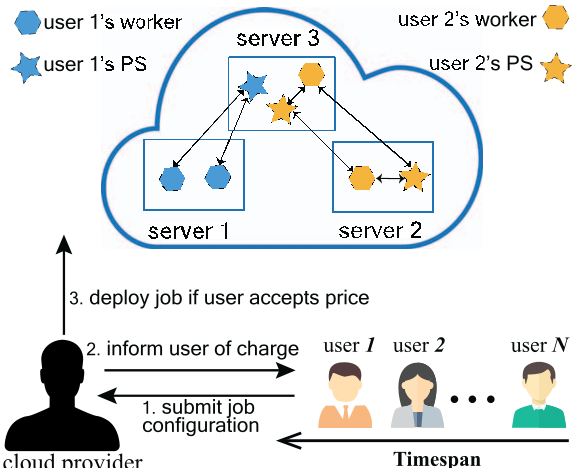 Fig 1. The Interaction between the User and the DPS Cloud Provider.
Experiments & Results: Beating the Theoretical Best
The most striking result is that DPS eventually achieves a negative regret compared to the Best Fixed-Price (BFP) strategy.
- Why? BFP is limited to a single price across the whole timespan. DPS learns the "temporal demand" and can adjust prices dynamically, capturing more value during peak periods.
- Efficiency: The total profit of DPS reached 125% of BFP and 115% of its own "Simple" version (without exploration), proving that the "warm-up" learning phase is vital.
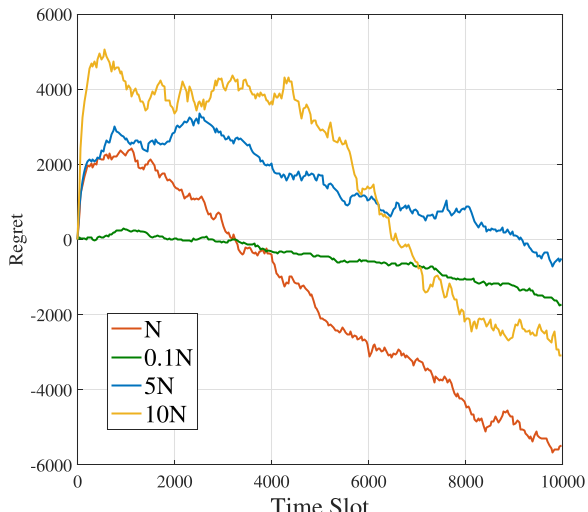 Fig 2. DPS (Solid blue line) significantly outperforming Fixed, Random, and TOP pricing models.
Critical Analysis & Conclusion
Takeaway
The value of DPS lies in its Inductive Bias: it assumes that if you place a job well, you can price it more competitively (or more profitably). It successfully transforms the "uncertainty" of ML runtimes into a "learning opportunity."
Limitations
- Homogeneity: The model assumes workers of the same type perform identically. In reality, "straggler effects" in heterogeneous hardware (e.g., mixed A100/H100 clusters) might disrupt the runtime estimation.
- Static Placement: Once a job is placed, it stays there. Future work could integrate Live Migration to further optimize placement as new, high-value jobs arrive.
Future Outlook
As DML jobs evolve into massive LLM training runs, the "stochasticity" of network congestion will become even more pronounced. This paper provides the mathematical framework for a more "intelligent" cloud that doesn't just rent hardware, but manages the efficiency of time.