
DW-Similarity: Scaling Individual Recognition in Distributed Social Networks
Dynamic Weight-Based Individual Similarity Calculation for Information Searching in Social Computing
2015-07-07
Summary
Problem
Method
Results
Takeaways
Abstract
This paper introduces a Dynamic Weight (DW) based similarity calculation method for finding and integrating individuals across heterogeneous social networks. By leveraging a recursive semantic similarity metric and a search framework, the approach achieves state-of-the-art performance, notably reaching an F-measure of 0.99 on benchmark datasets.
## TL;DR
In the vast ecosystem of social computing, an individual's data is often fragmented across LinkedIn, Facebook, and DBpedia. This paper introduces a **Dynamic Weight (DW)** based similarity algorithm that identifies "hidden" identical individuals. By treating links not as static connections but as dynamic indicators of information entropy, the authors achieved a 0.99 F-measure on international benchmarks, outperforming traditional semantic matching tools.
## The Problem: The "Peter" Paradox
Imagine searching for "Peter" on the web. You are met with thousands of results, mostly famous stars. Even in structured "Linked Data," determining if "Peter" on Facebook is the same "Peter" on LinkedIn is hard.
Prior works generally fell into two traps:
1. **Expert-Assigned Weights**: Pre-defining that a "Mother" link is more important than a "Friend" link. This doesn't scale to the 37,000+ link types in Freebase.
2. **Static Statistics**: Assuming every "Birth Place" link has the same weight. In reality, being born in a tiny village (rare link) is a much stronger identity signal than being born in "London" (common link).
## Methodology: The Intuition of Dynamic Weight
The authors' core insight is that **the more common a connection is, the less it contributes to similarity.** This is formalized as a Dynamic Weight (DW) formula:
$$w_{l} = \frac{1}{\log(I(N_i^l) + I(M_j^l) + \delta)}$$
This ensures that rare shared neighbors (e.g., sharing a specific doctoral advisor) result in a much higher similarity score than sharing a broad attribute (e.g., living in the United States).
### Architecture and Recursive Calculation
The system follows a three-stage pipeline: **Link Disambiguating** (matching "Alma Mater" to "Graduated From"), **Link Weight Assigning**, and **Recursive Similarity Searching**.
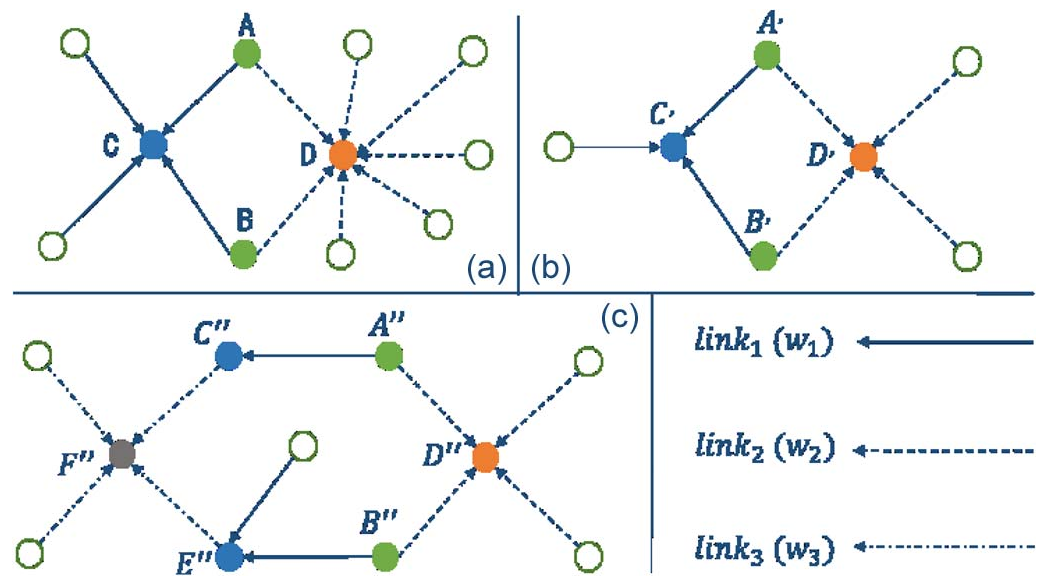
*Fig 1: The system framework from raw data input to sorted similarity pairs.*
The similarity $S(O_i, O_j)$ is not just a one-step comparison. It is a recursive function where two nodes are similar if their neighbors are similar, modulated by the $w_{l}$ of the links connecting them. This allows the system to find similarities even when direct information is missing.
## Experimental Evidence
The authors tested their approach against heavyweight competitors like **LogMap, ASMOV, and RiMOM** across several OAEI (Ontology Alignment Evaluation Initiative) datasets.
### Key Findings:
* **Near-Perfect Precision**: On IIM-2012 datasets, the F-measure reached **0.99**.
* **Robustness to Noise**: Even when 40% of links were missing (simulating incomplete data), DW maintained an F-score of **0.938**, significantly higher than the competitors (approx. 0.89-0.92).
* **Link Depth Independence**: The method proved highly effective even when the "depth" of the data graph was altered.
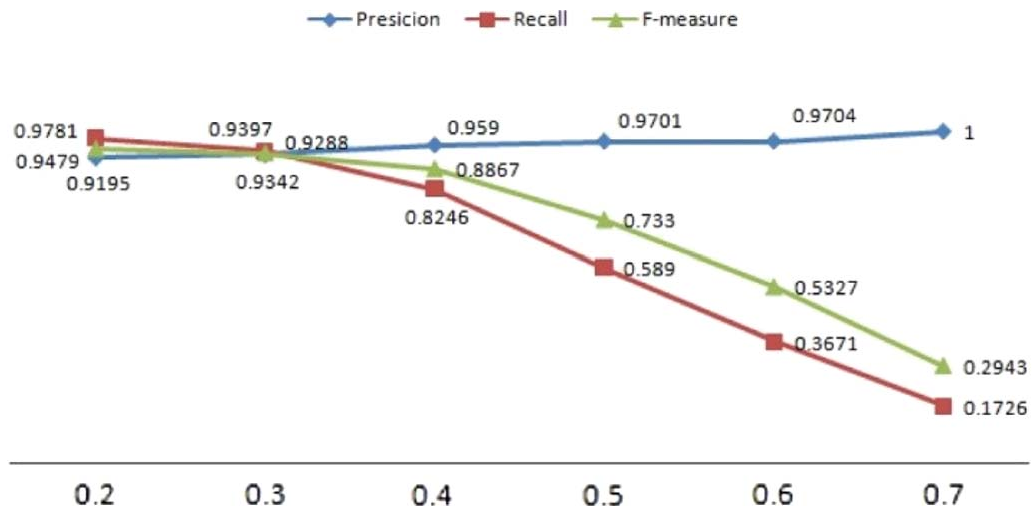
*Fig 2: Comparison of DW vs. other algorithms across multiple Sandbox test cases.*
## Critical Analysis & Future Work
While the DW method is a powerhouse for structural and link-based matching, the authors admit a current **limitation**: it ignores the semantic richness of long-form text (labels and descriptions). In "text-heavy" networks, the precision drops slightly (to 0.82 in some cases) because "Luke Skywalker" and "L.K." aren't recognized as the same string without NLP intervention.
**The Takeaway**: This work represents a major step forward for **Social Computing**. It shifts the focus from "what" a link is to "how unique" that link is in the context of the individuals it connects. For future developers, integrating this structural DW approach with Modern LLM-based text embeddings could provide the "ultimate" entity resolution engine.
## Conclusion
By moving away from "Experience-Based" weighting and embracing the dynamic nature of information in social graphs, Xie et al. have provided a scalable, high-accuracy framework for unifying the distributed web of data.