
SMAQL: Scaling Reinforcement Learning for Dynamic Spatial Crowdsourcing
Dynamic Worker-and-Task Assignment on Uncertain Spatial Crowdsourcing
2018-05-01
Summary
Problem
Method
Results
Takeaways
Abstract
This paper introduces Spatial-aware Multi-Agent Q-Learning (SMAQL), a reinforcement learning framework designed for dynamic and uncertain spatial crowdsourcing. By combining grid-based spatial decomposition with collaborative multi-agent Q-learning, it achieves State-of-the-Art efficiency in matching large-scale tasks and workers without prior environment knowledge.
## Executive Summary
**TL;DR**: The paper proposes **SMAQL (Spatial-aware Multi-Agent Q-Learning)**, a framework that solves the "curse of dimensionality" in spatial crowdsourcing by partitioning the physical world into a grid. Each grid cell is managed by a dedicated Q-learning agent, allowing the system to handle thousands of workers and tasks in real-time under high uncertainty.
**Background**: In the landscape of Spatial Crowdsourcing (SC), we are moving from static, pre-planned assignments to **dynamic, online environments**. This paper bridges the gap between complex GIS data and Reinforcement Learning (RL), positioning itself as a scalability-focused improvement over standard Markov Decision Processes (MDPs).
## The Core Challenge: Uncertainty and Scale
Spatial crowdsourcing is inherently "messy." Unlike laboratory RL environments:
1. **Dynamics**: Workers join and leave the platform unpredictably.
2. **Uncertainty**: The quality of a worker or the exact travel time is often unknown until the task is initiated.
3. **Scalability**: In a city like San Francisco, attempting to calculate a global optimal for 5,000 workers using a single Q-table leads to state-action space explosion.
The authors argue that traditional static mathematical models are too rigid, while standard Q-learning is too slow for large-scale deployment.
## Methodology: The "Spatial-aware" Divide & Conquer
The technical breakthrough of SMAQL lies in its **Composite MDP** formulation. Instead of one agent trying to solve the whole city, the problem is decomposed.
### 1. Grid-Based Decomposition
The environment is divided into a 2D grid. Tasks and workers are indexed based on their geographic coordinates. This localized focus reduces the complexity for any single agent from $O(N imes M)$ to a fraction of that size.
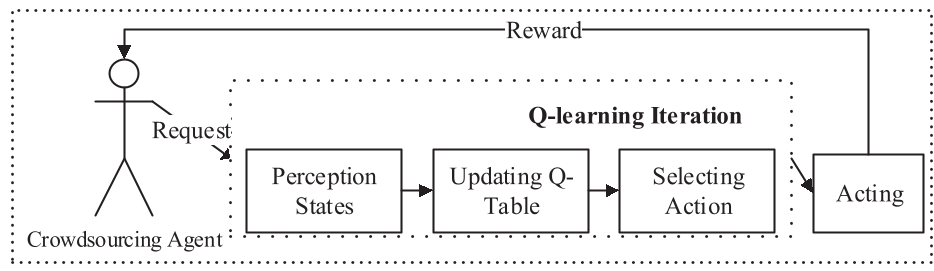
*Fig 1: The Iteration Framework where agents interact with a dynamic SCMDP environment.*
### 2. Multi-Objective Reward Function
Each agent optimizes a bi-objective reward $R(s)$:
- **Quality Score ($qos_{qs}$)**: Ensuring high-quality task completion.
- **Travel Cost ($qos_{tc}$)**: Calculated based on the distance $dist(x, y)$, incentivizing workers to take localized tasks.
### 3. The Top-Q Coordination
To ensure global efficiency, SMAQL uses a **Top-Q approach**. Each agent $i$ maintains its own state-action value $Q_i(s, a)$. The global system selects the action $ ilde{a}$ that maximizes the "Highest Q" (HQ) across all regional agents:
$$ ilde{a} = \arg \max_{a} \{ \max_{i} Q_i(s, a) \}$$
## Experimental Validation
The researchers utilized the **Gowalla** dataset, focusing on the San Francisco area to simulate real-world task distributions.
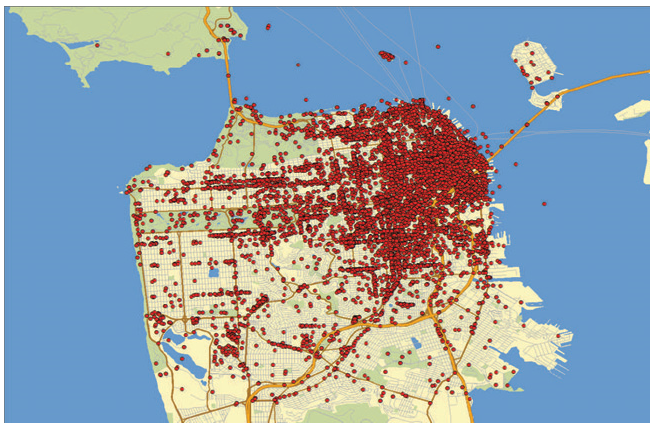
*Fig 2: Visualization of crowdsourcing data points in San Francisco.*
### Key Findings:
- **Worker Scalability**: When increasing workers from 50 to 5,000, SMAQL's runtime remained significantly lower than traditional Q-learning.
- **Task Density**: Even as task density increased, the multi-agent approach allowed for parallelized decision-making, preventing the "bottleneck" effect seen in centralized models.
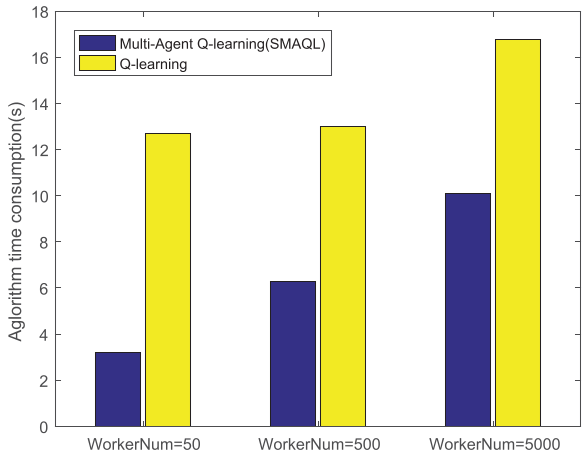
*Fig 3: Efficiency gain of SMAQL vs. Standard Q-Learning across different worker scales.*
## Critical Insights & Conclusion
**Takeaway**: SMAQL proves that the Inductive Bias of "Spatial Locality" (the idea that tasks are best solved by nearby workers) can be directly baked into RL architecture via grid-based sub-problems.
**Limitations**: The paper primarily uses a fixed grid size. In the future, **Adaptive Gridding** (where grid cells shrink in high-density areas) could further optimize the balance between computational load and assignment precision.
**Future Work**: This framework opens doors for "Socially-aware" crowdsourcing, where agent rewards could incorporate worker preferences or social network connections to further improve retention and satisfaction in the gig economy.