
Beyond Static Links: How Memory Decay Shapes the Pulse of Social Networks
Discovering the Dynamics in a Social Memory Network
This paper introduces the Social Memory Network (SMN), an agent-based model that incorporates temporal decay to simulate how "memory" affects the dynamics of social interactions. By modeling the diminishing attraction of events and individual activity over time, the SMN successfully replicates the small-world properties and power-law distributions observed in real-world systems like the USTC Bulletin Board System (BBS).
TL;DR
Social networks are not just collections of static nodes; they are living organisms that "forget." This paper introduces the Social Memory Network (SMN), an agent-based model that proves human memory decay—modeled as an exponential cooling of interest—is the hidden engine behind the "metabolism" of online forums and social structures.
Problem & Motivation: The Flaw in Infinite Growth
Most classic network theories, such as the Barabási-Albert model, operate on a "rich-get-richer" principle where old nodes accumulate links indefinitely. However, in the real world, topics die, trends fade, and people go inactive.
The authors identify a critical gap: Prior models lack a sense of time. They fail to explain why the first "event" in a system doesn't remain the most popular forever. To bridge this, the researchers look toward psychology, specifically the Ebbinghaus forgetting curve, to introduce a temporal decay constant () into network dynamics.
Methodology: The Mechanics of Forgetting
The core of the SMN model is the interplay between two types of nodes: Events (e.g., forum topics) and Individuals (e.g., users).
1. The Decay Equation
The attraction of an event and the activity of a person are governed by: This means if a topic isn't "refreshed" by a new action (like a reply), its visibility in the system effectively vanishes.
2. The Agent Algorithm
At each time step, the model decides whether to create a new agent or select an existing one based on their current "residual activity." This creates a competitive environment where new, "hot" topics can outshine old, "forgotten" ones.
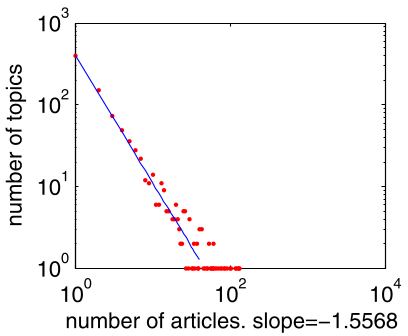 Figure 1: (a) Individual-Event interaction structure; (b) The temporal evolution of events.
Experiments: Validating the "Pulse"
The authors compared their model against years of empirical data from the USTC BBS (a University Bulletin Board System).
Key Findings:
- Metabolism: When (no memory decay), the "first mover" topic lives forever. When , the network exhibits a natural "metabolism" where old events die to make room for new ones.
- Structural Emergence: The model successfully replicates "Small-World" characteristics—high clustering and short path lengths—specifically when the probability of creating new individuals () is low.
- Power-Law Success: Even with decay, the distribution of topic popularity follows a power-law, matching the heavy-tailed nature of real social media.
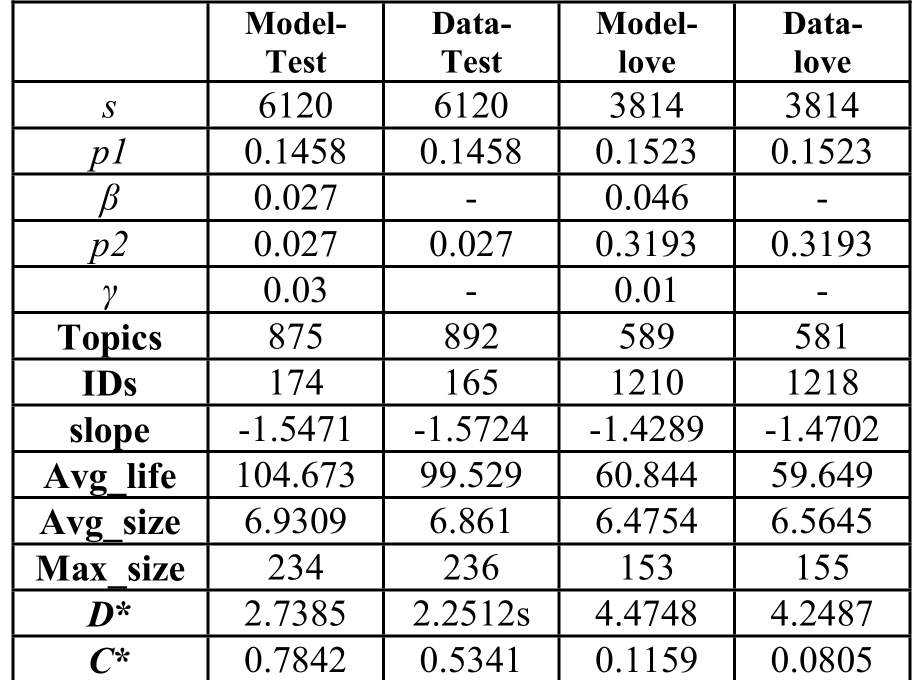 Table 1: Comparison between SMN Model parameters and real-world BBS data.
Critical Insight: Why This Matters
The SMN model provides a mathematical framework for Information Ecology. It suggests that the "health" of a social network depends on its decay rate.
If the decay is too slow, the system becomes stagnant (dominated by old guard/old topics). If the decay is too fast, communities cannot form persistent clusters. The researchers found that different forum boards (e.g., a technical "Test" board vs. a social "Love" board) have different inherent "memory" speeds, affecting their community density and topic lifespans.
Conclusion & Future Outlook
This work marks a shift from viewing social networks as topological maps to viewing them as dynamic processes.
Limitations: The model assumes a uniform decay rate for all individuals, whereas real human memory is influenced by emotional resonance and cognitive load. Future Work: Integrating this "memory feature" into modern AI recommendation engines could help prevent the "filter bubble" effect by forcing a natural rotation of content based on temporal relevance rather than just historical engagement.