
e-Democracy: Bridging the Digital Divide for Tomorrow’s Citizens
e-Democracy: The Political Culture of Tomorrow’s Citizens
The study investigates the impact of the Internet on the political-social behavior of students (the "tomorrow’s citizens") and teachers in Western Greece. It introduces a web-based survey framework to analyze perceptions of e-democracy, revealing that younger generations exhibit higher confidence and participation rates in digital democratic processes compared to their educators.
TL;DR
This research explores the shift toward e-Democracy by surveying students and teachers in Greece. It finds a significant "generational inversion": while teachers use the web for commerce and work, students are the true pioneers of digital political engagement, such as e-voting. However, the study warns that socio-economic status remains a gatekeeper to this digital forum.
Background: The Evolution of the Democratic State
Democracy has always been adaptive, moving from the Athenian city-state to the modern nation-state. Today, Information and Communication Technologies (ICTs) are forcing another redefinition. The paper posits that e-Democracy is not just a digital tool but a "Direct Operation of Democracy" that aims to increase citizen participation and transparency.
The Problem: The Digital Divide and Cultural Maturity
The authors identify two core obstacles to the flourishing of e-democracy:
- Socio-economic Stratification: Access is heavily influenced by parental education and urban vs. rural geography.
- The Maturity Gap: Many participants feel society is not yet "mature" enough for digital governance, fearing the creation of an "impersonal e-state."
Methodology: A Comparative Framework
Using a custom-built PHP/MySQL platform, the researchers analyzed data from over 800 participants. They focused on four dimensions: personal data, conceptual understanding, reaction to e-participation tools, and future challenges.
Key Framework Insight
The study highlights that Catholic Access (universal access) is a prerequisite, but the ultimate success of e-democracy depends on the "strategic side"—engaging citizens to actually influence world politics through digital dialogue.
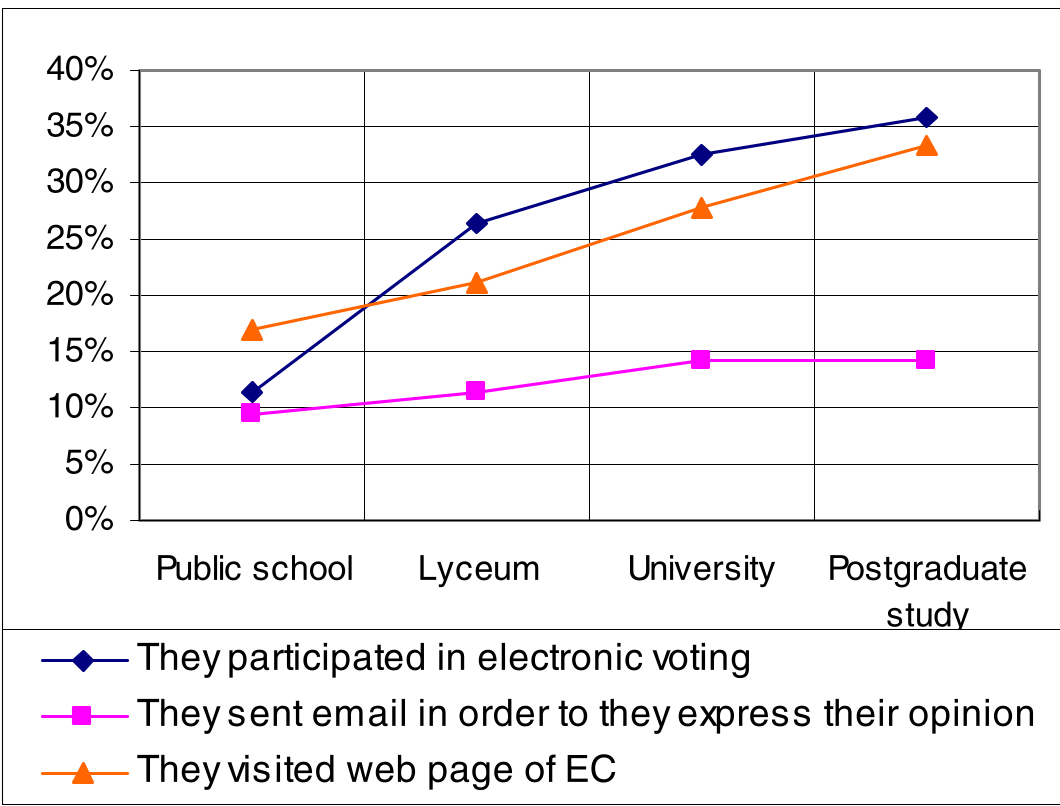 Figure 1: Student perceptions of the biggest challenges facing e-Democracy, highlighting technological growth and citizen activation.
Experiments & Results: Students vs. Teachers
The results reveal a fascinating dichotomy in how different generations use the web:
- E-Voting Leadership: 46% of students have voted online, compared to just 20% of teachers.
- Commercial vs. Political: Teachers dominate economic transactions (58%) and purchases (59%), while student usage in these areas is negligible (1-2%).
- The Education Correlation: There is a near-linear relationship between a parent's educational level and a student's home Internet access (from 23% for primary school graduates up to 62% for postgraduates).
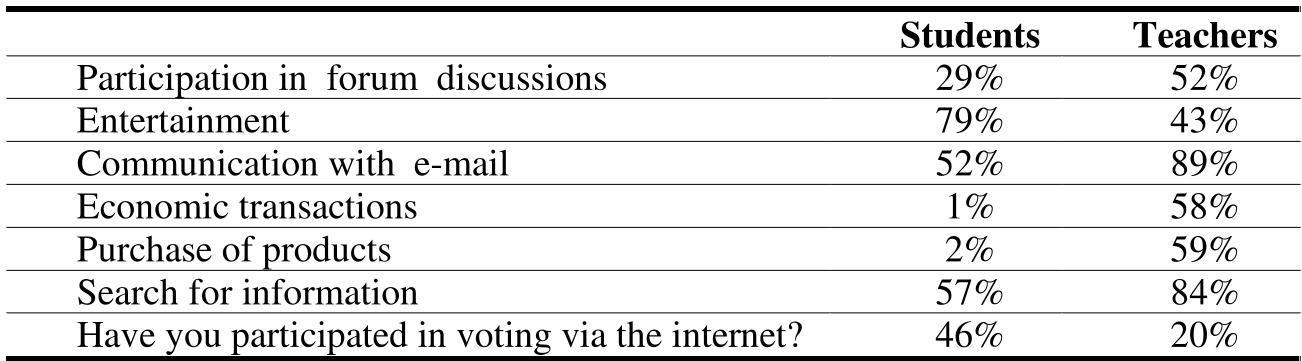 Table 1: Divergent Internet usage patterns between students and teachers.
Deep Insight: Beyond the Infrastructure
The paper concludes that technology alone cannot educate. The transition to e-Democracy requires a "political culture" shift.
The Risks of Digital Stratification
Students identified the "creation of an impersonal e-citizen" (36%) and the "division into digital and traditional citizens" (25%) as primary risks. This suggests that tomorrow's citizens are acutely aware that e-democracy could inadvertently marginalize those without the tools or skills to participate.
Future Outlook
The authors suggest that school laboratories are the critical battleground for equality. By providing universal access and education on how to deliberate (rather than just how to click), schools can mitigate the socio-economic "digital gap" and prepare a generation for a more direct, transparent form of governance.
Final Takeaway
Success in digital democracy resides in the human interaction over technological infrastructure. The goal is to move from "e-participation as a hobby" (like recreational voting) to "e-participation as a reasoned political thesis."