
Social Networked e-Health: Decoding the Drivers of Adoption in Uganda
A Model of e-Health Acceptance and Usage in Uganda: The Perspective of Online Social Networks
This paper introduces the Social Networked Model, an extension of the E-government Acceptance Model (EGAM), specifically tailored to enhance e-Health adoption in Uganda. By integrating social network dimensions—Social Support, Awareness, Influence, and Attractiveness—the research successfully identifies key drivers that bridge the gap between traditional e-government frameworks and modern online social interactions in developing nations.
TL;DR
Western adoption models for technology often fail in the Global South because they ignore the power of community. This paper proposes a Social Networked Model for Uganda, proving that factors like "Social Support" and "Social Attractiveness" are not just "nice-to-haves"—they are the primary engines driving 68% of the perceived ease of use for e-Health services.
Background: The Ugandan e-Health Paradox
Uganda has invested heavily in ICT infrastructure, yet e-Health adoption remains stagnant. While the average citizen is increasingly active on WhatsApp, Facebook, and Twitter, there is a massive disconnect between their social digital lives and their interaction with government health services.
The researchers identified that the problem isn't just "the digital divide." It is a trust and awareness gap. Users don't fear the technology; they fear the isolation of using it and the lack of guidance from their trusted social circles.
Motivation: Why Traditional Models (TAM/UTAUT) Aren't Enough
Most acceptance models focus on the individual: Is it useful for me? Is it easy for me? However, in transitioning countries, technology usage is a collective experience. The authors argue that the "Social Influence" component in existing models like UTAUT is too narrow. They propose that for a citizen to accept e-Health, they need:
- Social Awareness: Seeing peers use the system successfully.
- Social Support: Having someone to ask when the system gets complex.
- Social Attractiveness: Interacting with an interface that feels as engaging as a social media feed.
Methodology: The Socially-Extended EGAM
The study extended the E-government Acceptance Model (EGAM). Unlike the basic Technology Acceptance Model (TAM), EGAM includes "Top Leadership Involvement" and "Government Policy." This paper pushes it further by layering on four "Social" pillars.
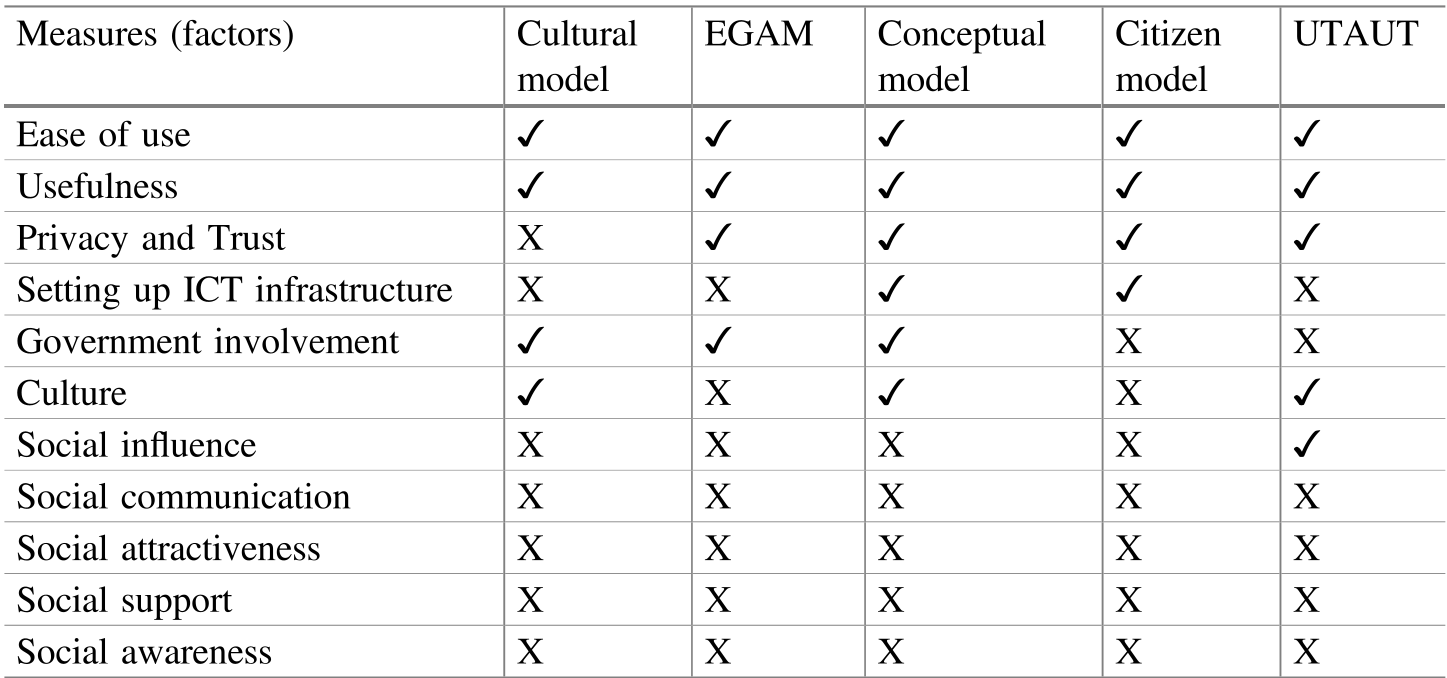 The comparison shows that prior models were almost entirely silent on social communication and support.
Key Findings: What Actually Moves the Needle?
By conducting regression analysis on 278 users, the researchers discovered a hierarchy of influence:
- Ease of Use is Socially Constructed: An incredible 68.3% of the variance in "Perceived Ease of Use" was explained by Social Support. If a user knows their friends can help them navigate the app, the app "becomes" easier to use.
- The Power of Influence: Social Influence and Social Awareness combined to explain 45.9% of why people find e-Health "Useful." In Uganda, "usefulness" is a social proof rather than a standalone feature.
- The 'Attractiveness' Factor: For the "Millennium generation" of Ugandans, "Social Attractiveness" (R² = 31.3%) is a key driver of intention to use. If it doesn't look or feel like a modern social platform, they won't log in.
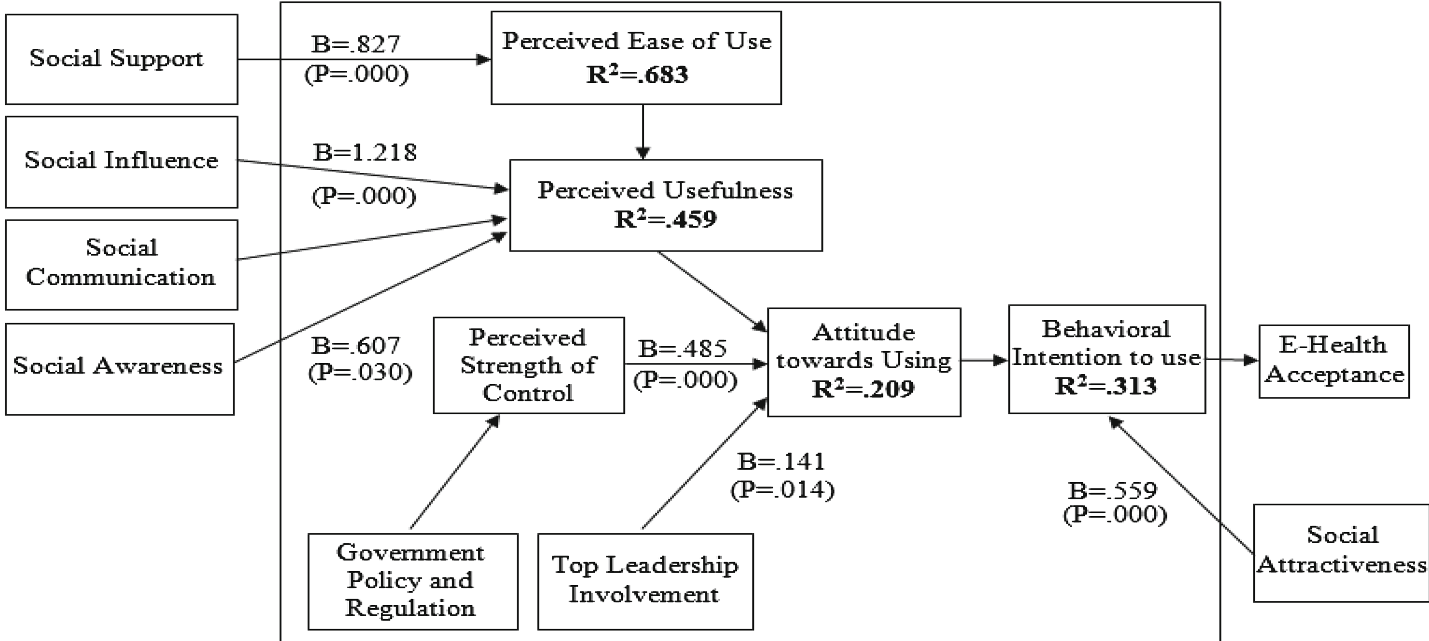 Figure 3: The final Social Networked Model showing the causal paths between social constructs and behavioral intention.
Critical Insight: Analysis & Perspective
The most striking takeaway is the negation of "Social Communication" as a significant driver for perceived usefulness (p = .138). While users want support and influence, they aren't necessarily looking to "chat" within the e-Health platform itself. They want the platform to be validated by their external social network first.
Limitations: The study focuses on IT/IS graduate students—the "low-hanging fruit" of digital natives. The real challenge, and future work, must involve applying this model to rural populations where "Social Support" might shift from digital friends to physical community leaders.
Conclusion
This paper serves as a blueprint for "transitioning countries." It shifts the e-Health conversation from "How do we build a faster system?" to "How do we build a system that fits our citizens' social habits?" For product managers in the GovTech space, the message is clear: Social integration is not a feature; it is the foundation of acceptance.