
Deciphering e-Servicescapes: Why Aesthetics and Trust Outshine Complexity in Online Retail
How e-servicescapes affect customer online shopping intention: the moderating effects of gender and online purchasing experience
This study investigates the impact of "e-servicescapes" on online shopping behavior through an integrated S-O-R (Stimulus-Organism-Response) framework. By analyzing 290 Taiwanese consumers, the researchers demonstrate how website attributes like aesthetic appeal and financial security significantly drive trustworthiness and attitudes, ultimately influencing purchase and electronic word-of-mouth (e-WOM) intentions.
TL;DR
What makes a customer click "Buy"? This research explores the power of e-servicescapes—the virtual environment of a website—and proves that while usability is expected, aesthetic appeal and financial security are the true drivers of trust. Interestingly, the study finds that over-customization can actually backfire, and that women and experienced shoppers are far more discerning critics of website design than their counterparts.
The Digital "Atmosphere": Why Intentions Matter
In a physical store, the music, lighting, and layout (the servicescape) influence your mood and spending. In the digital realm, this is the e-servicescape. While e-commerce is booming, many retailers struggle to convert visitors into buyers. This paper argues that the "organism" (the human brain) processes website stimuli through a complex chain of trust and attitude before reaching a behavioral response like a purchase or a recommendation (e-WOM).
The Framework: S-O-R meets DMH
The researchers utilized a robust theoretical triangulation:
- Stimulus-Organism-Response (S-O-R): Tracking how external cues trigger internal states.
- Theory of Planned Behavior (TPB): Linking beliefs and attitudes to final intentions.
- Dual Mediation Hypothesis (DMH): Exploring how attitudes toward a website "spill over" to attitudes toward the brand itself.
The Research Model
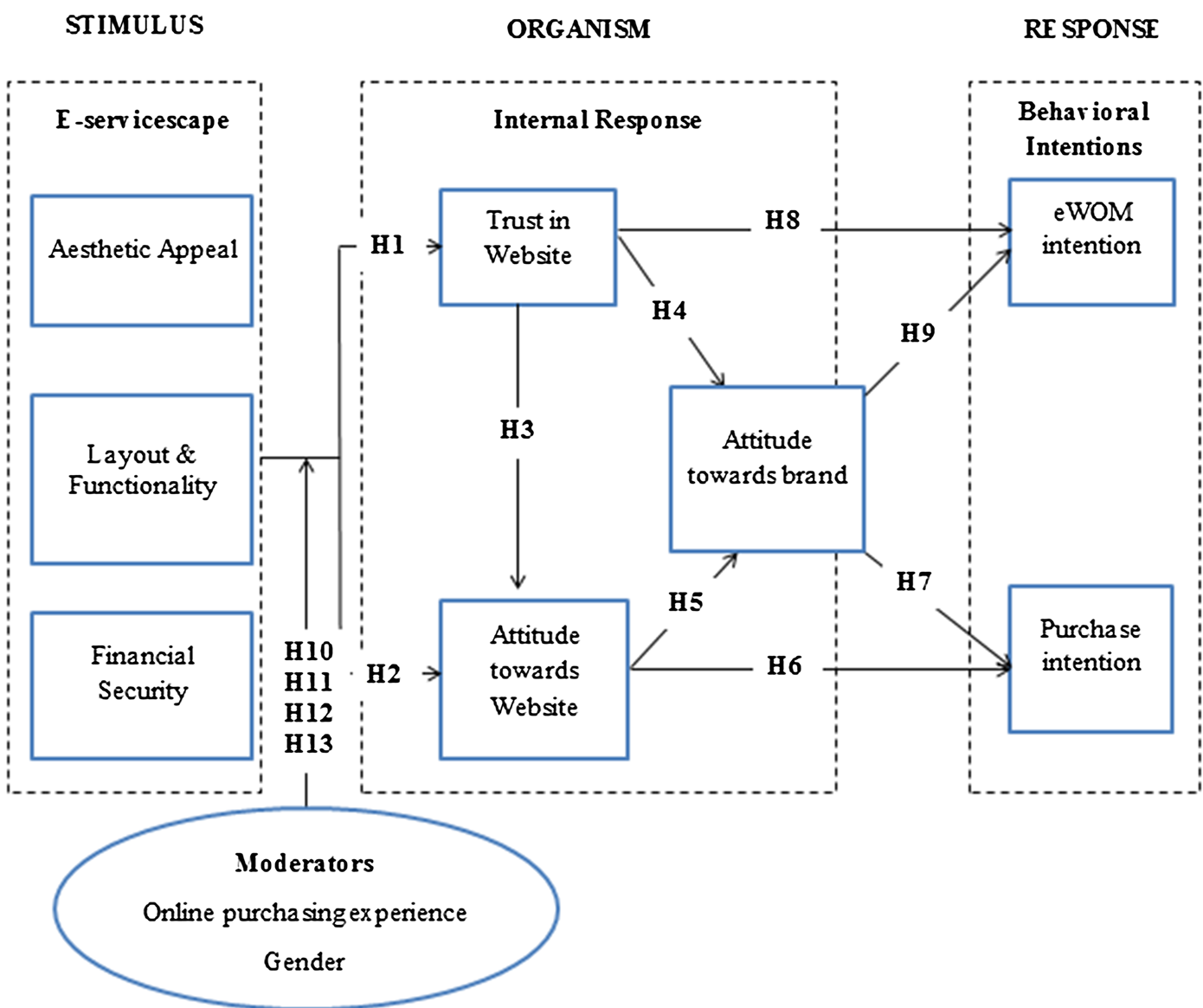
The study broke down e-servicescapes into four critical pillars:
- Aesthetic Appeal: The "wow" factor.
- Usability: The ease of finding information.
- Customization: Personalized content.
- Financial Security: The perceived safety of the transaction.
Methodology & Findings: The "Customization Trap"
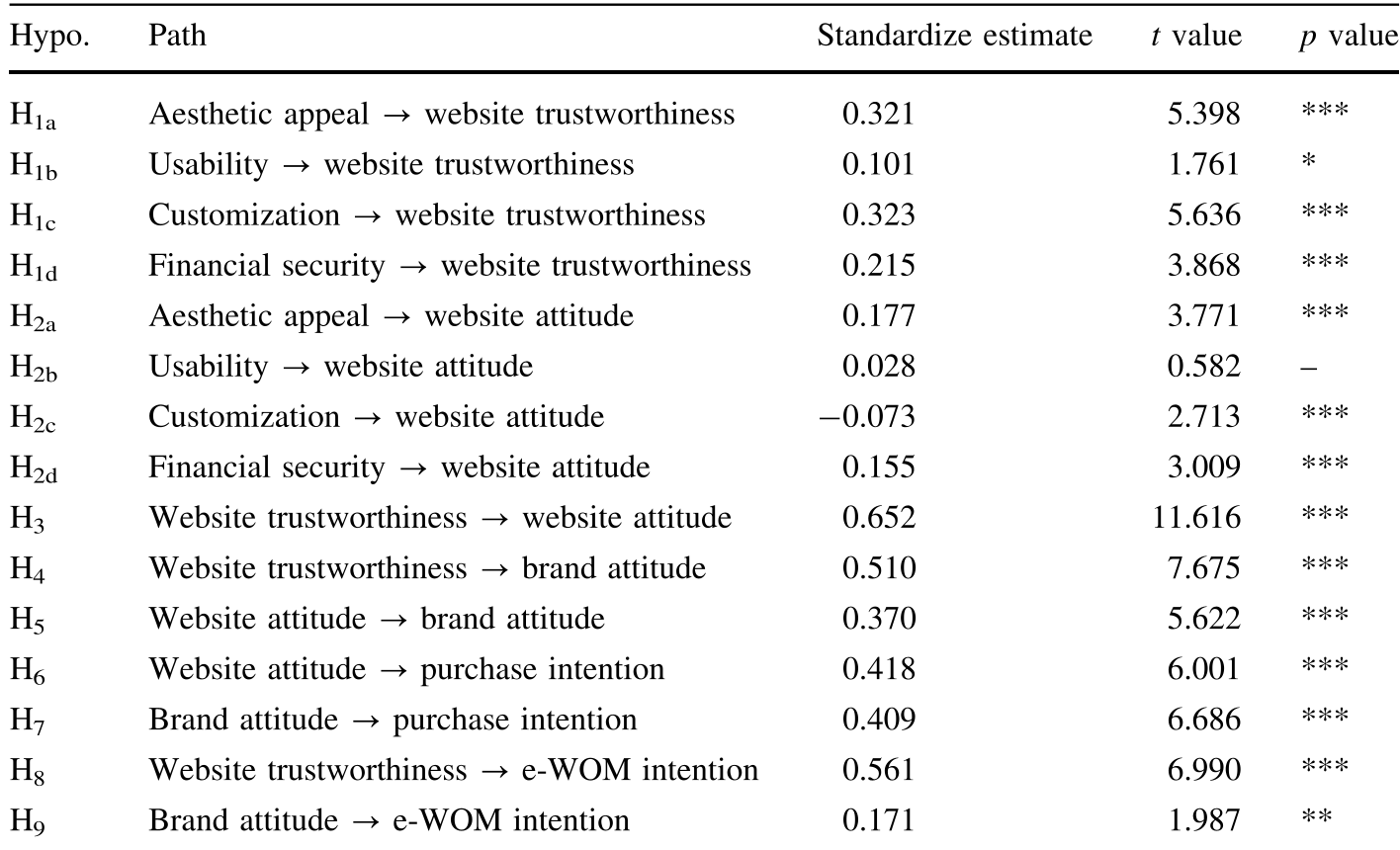
Analyzing data from 290 consumers via Partial Least Squares (PLS), the results yielded a striking paradox. While Aesthetic Appeal (β=0.321) and Financial Security (β=0.215) significantly boosted trust, Customization actually had a negative relationship with website attitude (β=-0.073).
The Academic Insight: Research suggests that when users find an interface too "intrusive" or complex to set up, they experience cognitive overload. In the fashion context (using the Lativ website), users preferred clean, standard configurations over the labor-intensive effort of personalizing a page.
Key Results Summary
The Human Element: Gender and Experience
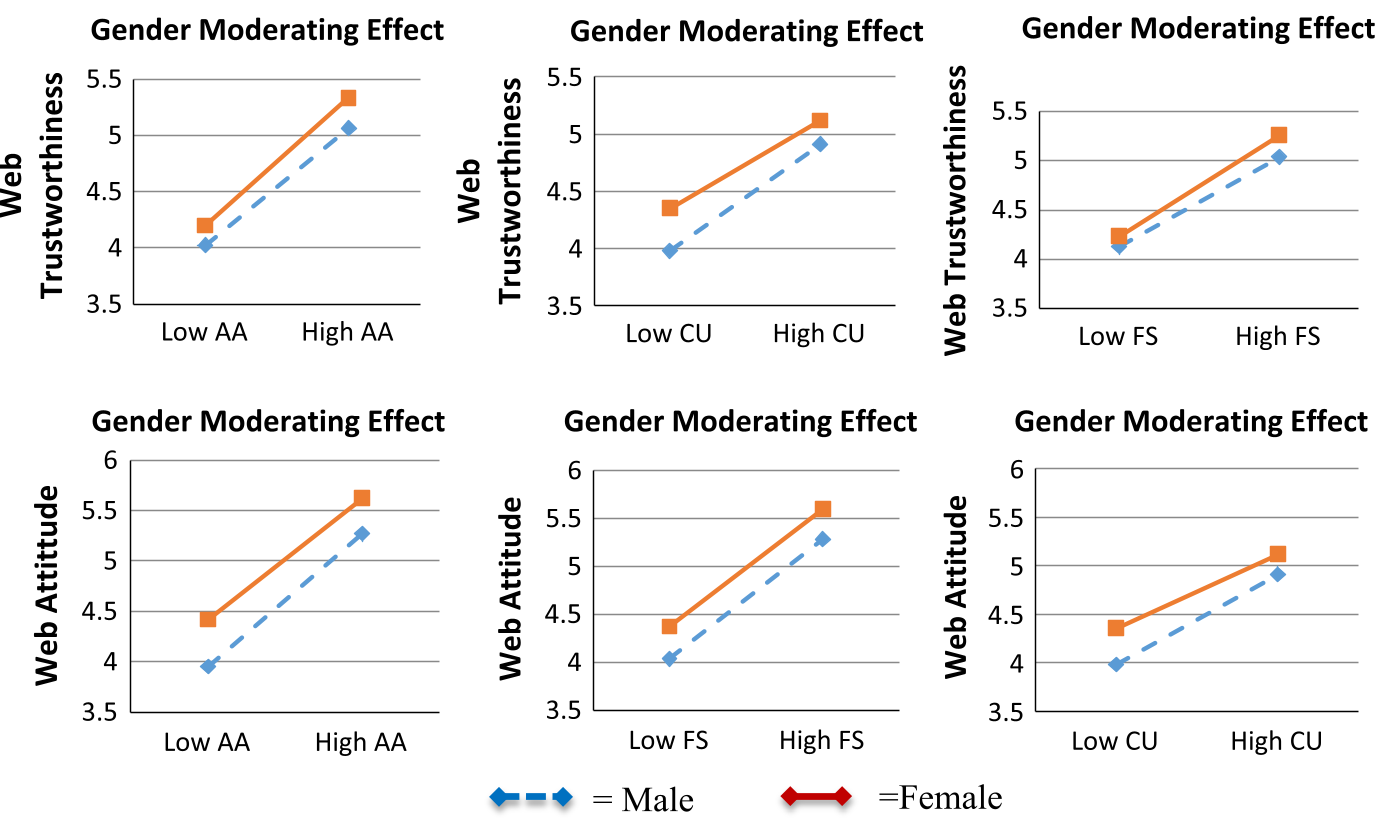
The study’s most practical contribution lies in its moderation analysis:
- The Gender Gap: Women showed significantly higher sensitivity to aesthetic and security cues. To win over female shoppers, a website cannot just be functional; it must be visually evocative and explicitly secure.
- The Experience Factor: Experienced online shoppers (High EX) have higher "design hygiene" standards. They are more likely to trust a site that looks professional and navigate away from "amateurish" layouts.
Moderation Analysis Visualized
Strategic Takeaways for Tech & Marketing Leaders
- Invest in "Eye Candy" with Substance: Aesthetics aren't just for show—they are the primary heuristic customers use to judge your brand's legitimacy.
- Simplify Customization: If you offer personalized features, ensure they are "opt-in" and don't complicate the default user journey. A system crash during customization is a guaranteed way to lose a brand advocate.
- Trust Spillovers: Remember that a consumer’s attitude toward your website directly dictates their attitude toward your brand. A clunky checkout experience doesn't just lose a sale; it damages the brand's long-term reputation.
Conclusion
This research proves that in the virtual world, the "vibe" of your website is its most potent sales tool. By focusing on aesthetic coherence and iron-clad security, retailers can foster the trust necessary to turn a casual browser into a brand evangelist.
Limitations: The study focused on Taiwanese students and a single fashion brand, suggesting that future research should test these dynamics in different cultural contexts and product categories like high-stakes electronics or services.