
Bridging the Gap: An Intelligent Early Alert System for Zero-Day and CVE Vulnerabilities
An Early Alert System for Software Vulnerabilities based on Vulnerability Repositories and Social Networks
This paper introduces an Early Alert System for software vulnerabilities that aggregates data from official repositories (CVE/NVD) and social networks (Twitter). By utilizing NLP techniques and word embeddings, the system provides personalized, real-time security notifications based on a user's specific technological environment.
TL;DR
Cybersecurity professionals are drowning in data but starving for information. This paper proposes a system that crawls both official vulnerability repositories (like NVD) and "social sensors" (Twitter) to deliver personalized, real-time alerts. By using domain-specific NLP and intelligent tagging, it filters out the noise, allowing admins to focus only on the vulnerabilities that actually affect their specific software stack.
The Motivation: Beyond Alert Fatigue
The "EternalBlue" exploit of 2018 is a haunting reminder of the "vulnerability-patch gap." Even though a patch existed months before the WannaCry attack caused $4 billion in damages, thousands of companies remained unprotected.
Why? Because security professionals face Alert Fatigue. Current methods for staying informed are fragmented:
- Official Repositories (CVE/NVD): Reliable but often slow to update.
- Mailing Lists: Non-specific and overwhelming.
- Social Media: Faster for "Zero-day" news but saturated with noise and irrelevant technical chatter.
The authors’ insight was to build a system that acts as a "curated lens," focusing only on the intersection of New Threats and User Tech Stacks.
Methodology: The Intelligence Under the Hood
The system architecture follows a clean retrieval-to-presentation pipeline:
1. Context-Aware Query Expansion
Users define their environment using tags (e.g., "Microsoft SQL Server"). However, in the wild, this might be referred to as "SQL Server," "MSSQL," or "SQLSvr." The system uses a Word2Vec (Skip-gram) model trained specifically on a cybersecurity corpus to "expand" these queries, ensuring high recall—so no critical alert is missed due to a naming variation.
2. The Hybrid Data Source
The system treats Twitter as a real-time sensor for Zero-day threats while pulling from the National Vulnerability Database (NVD) for verified reports.
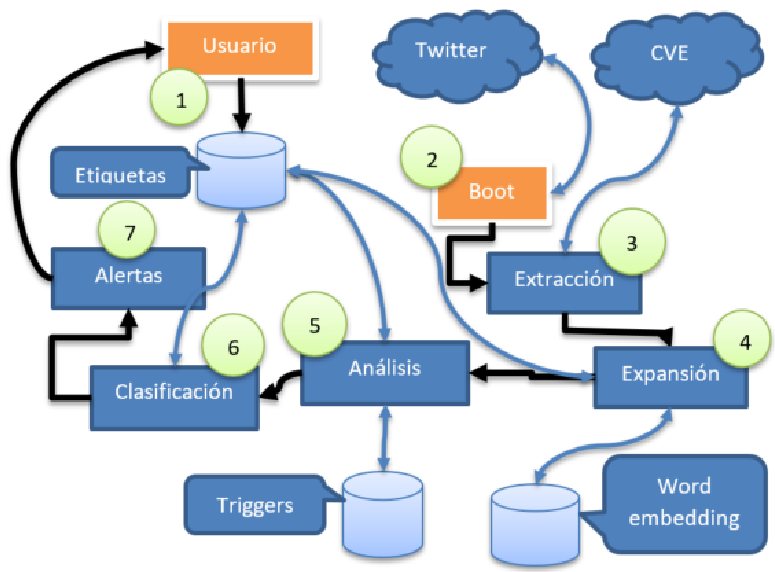 Fig 1: The architecture showing the flow from user preference definition to expanded querying and final alert delivery.
3. Intelligent Tagging and Timelines
Raw information is processed and assigned "Intelligent Tags." Instead of a cluttered list, alerts are presented in a Timeline paradigm, which is much more intuitive for tracking the development of a threat over time.
Experimental Validation
The authors conducted usability tests with industry professionals. The results were telling:
- Cognitive Load: Users found the "preference definition" (Fig 2) difficult at first but noted it drastically reduced the "overwhelming" nature of vulnerability tracking once set up.
- Real-world Utility: Professionals emphasized that the distinction between a CVE (verified) and a Zero-day (potential) is vital for prioritizing weekend shifts and urgent patching.
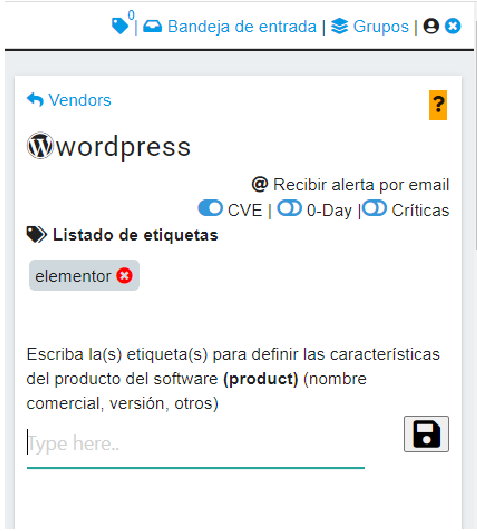 Fig 2: The interface allows users to characterize their tech environment, enabling the "curated lens" effect.
Critical Insight & Future Outlook
The most interesting finding was the participants' reaction to Collaborative Filtering. Much like StackOverflow, users wanted to be able to tag and solve vulnerabilities collectively. However, this raises a "trust" issue—how do you prevent malicious actors from deleting valid alerts?
The authors conclude that future systems should incorporate a Reputation-based mechanism. Only users with a proven track record (security "karma") should be allowed to modify the community-driven tags.
Limitations
- Expert-Only Design: The current system assumes a high level of technical knowledge.
- Twitter Reliability: Relying on social media APIs makes the system vulnerable to changes in platform data access policies.
Conclusion
This work moves us closer to a "Smart Security" environment. By acknowledging that humans cannot process the sheer speed of modern exploit disclosure alone, the authors provide a blueprint for semi-automated, high-precision security monitoring.
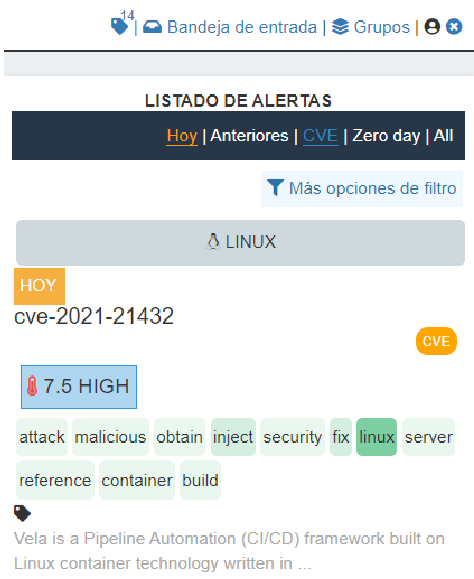 Fig 3: The final output—a clean, filtered timeline of vulnerabilities tailored to the user's specific risk profile.