
Alpine Algorithms: Uncovering Switzerland’s Hidden Role in Computing History
Early History of Computing in Switzerland: Discovery of Rare Devices, Unknown Documents, and Scarcely Known Facts
This paper explores the "hidden" history of computing in Switzerland, detailing the discovery of rare devices like the Zuse Z4 and M9, the development of the ERMETH electronic computer, and the origins of pioneers like Nicklaus Wirth and Heinz Rutishauser. It provides a comprehensive archival look at how Switzerland became an early European hub for both mechanical and electronic computation.
TL;DR
While many associate early computing exclusively with names like Turing or von Neumann, Switzerland was a silent powerhouse of innovation. From hosting Konrad Zuse’s Z4—the world’s only operational programmable computer in 1950—to the birth of "automatic programming" and the creator of Pascal, Swiss contributions were pivotal. Recent archival discoveries at ETH Zurich reveal forgotten mechanical wonders and a surprising technical lineage connecting the Alps to the ENIAC.
Background: Beyond the US-UK Monopoly
The history of computing is often told through a transatlantic lens. However, in 1948, as the world transitioned from gears to vacuum tubes, Switzerland’s ETH Zurich founded the Institute for Applied Mathematics. Led by Eduard Stiefel, this institute became the gateway for modern computing in continental Europe, driven by a pragmatic need to solve complex engineering problems like dam construction and jet fighter aerodynamics.
The Zuse Z4: The Refugee Machine
One of the most fascinating revelations is the journey of the Zuse Z4. After Konrad Zuse fled Berlin in 1945, the Z4 was his only surviving calculator. While IBM was merely interested in the patents and German institutions were broke, ETH Zurich recognized its value.
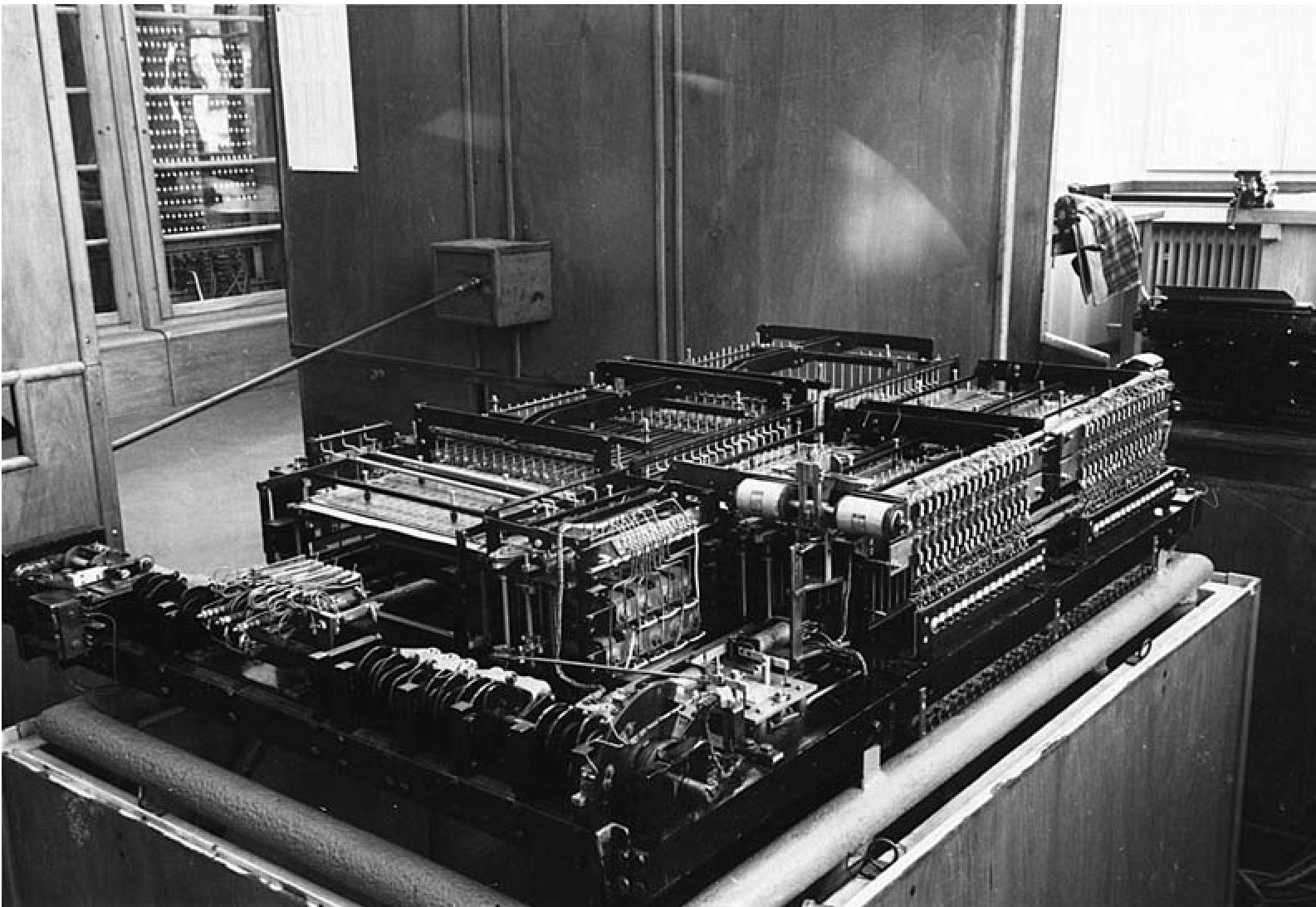 Figure 1: The mechanical memory of the Zuse Z4 relay computer.
In 1949, ETH rented the Z4—making it arguably the first commercially leased computer in history. Interestingly, the Z4 originally lacked conditional branching. It was the Swiss mathematicians who insisted on this feature, effectively turning a "super-calculator" into a modern computer.
ERMETH and the Birth of Software Engineering
While the Z4 provided immediate power, the Swiss team (Stiefel, Rutishauser, and Speiser) began building their own: the ERMETH (Elektronische Rechenmaschine der ETH).
The methodology used by the ETH team was remarkably forward-thinking:
- Heinz Rutishauser became a father of "automatic programming" (early compilers).
- Ambros Speiser eventually founded the IBM Research Lab in Zurich.
- Corrado Böhm wrote a seminal dissertation on compilers at ETH as early as 1954.
Forgotten Mechanical Marvels
The author’s research also unearthed analog and mechanical "monsters" that achieved precision often thought impossible for their time.
- The Loga Calculator: A massive 24-meter-long cylindrical slide rule, used by banks and engineers for unparalleled precision before the digital age.
- The Multiple Curta: While the "pepper mill" Curta is a collector's icon, the research found drawings for a parallel mechanical calculator that was unfortunately never built.
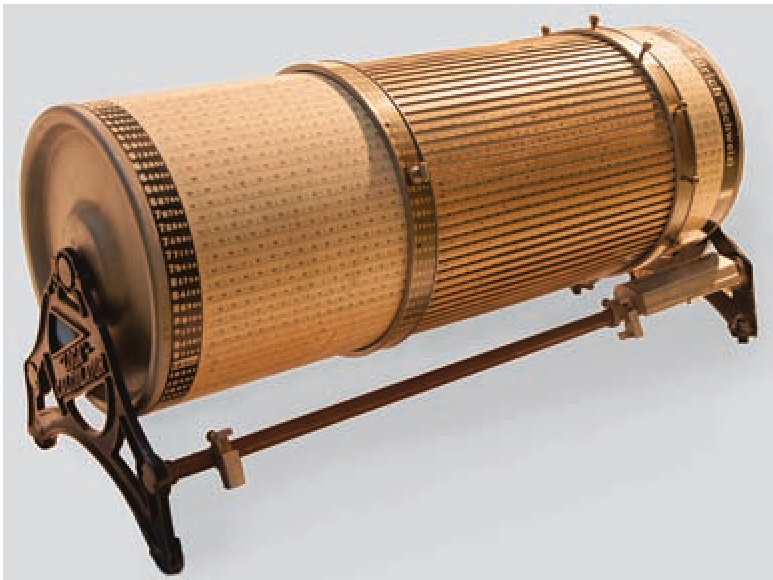 Figure 2: The 24-meter Loga calculator—the world's largest mass-produced slide rule.
The ENIAC Connection: A Swiss Heritage
In a surprising twist of genealogy, the paper traces the roots of John Mauchly and J. Presper Eckert back to Switzerland. Mauchly’s great-grandfather emigrated from the St. Gallen region, and Eckert’s ancestors likely hailed from Appenzell. This suggests that the "Swiss tradition" of precision and mathematics may have indirectly shaped the very first American electronic computers.
Critical Insight & Conclusion
This paper serves as a vital reminder that technical innovation does not happen in a vacuum. The Zuse Z4’s stay in Zurich wasn't just a rental; it was a collaborative evolution that proved binary floating-point arithmetic was viable.
Takeaway: The Swiss approach—blending rigorous mathematics with legendary mechanical craftsmanship—laid the groundwork for the high-level programming languages (ALGOL, Pascal) we use today.
Limitations: Much of the documentation was nearly lost due to 50-year privacy rules. The article hints that more "scarcely known facts" likely still remain in the archives of private Swiss companies like Hasler AG (now Ascom).