
Causal Community Detection: Stopping Malicious Social Media Campaigns Before They Go Viral
Early Identification of Pathogenic Social Media Accounts
The paper introduces a novel framework for the early identification of Pathogenic Social Media (PSM) accounts (e.g., terrorist supporters) using causal inference and community detection. By defining a time-decay causality metric and applying the C2DC (Causal Community Detection-Based Classification) algorithm, the authors achieve a precision of 0.84 in detecting malicious accounts within just 10 days of their initial activity.
TL;DR
Researchers from Arizona State University have developed a way to spot "Pathogenic" social media accounts—like those spreading extremist propaganda—using only their action logs. By combining causal inference with time-decay metrics and community detection, their system (C2DC) can identify potential threats with 84% precision within just 10 days of their first tweet, outperforming models that use complex text and network features.
The Core Challenge: Speed vs. Data
Existing methods for moderating harmful content on platforms like Twitter often suffer from a "too little, too late" problem. They rely on:
- User Reports: Slow and manual.
- Content Analysis: Easily bypassed by changing keywords or using images.
- Network Analysis: Often impossible because the underlying follower/following graph is restricted by APIs.
Pathogenic Social Media (PSM) accounts are dangerous because they act as key users—the initial triggers that make a message "viral." The authors argue that the key to catching them lies not in what they say, but in the causal impact their timing has on the rest of the network.
Methodology: The C2DC Framework
The authors' approach is built on two sophisticated pillars:
1. Time-Decay Causal Logic
Traditional causal inference (like Kleinberg-Mishra) treats all past actions equally. However, social media is fleeting. To solve this, the authors introduced an exponential decay function . This ensures that recent interactions carry more weight in determining if a user is truly a "cause" of a cascade.
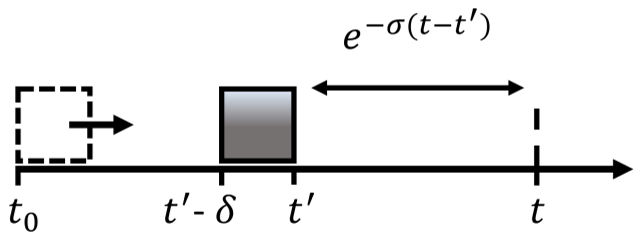 Figure 1: The sliding window approach allows the model to calculate causality vectors that evolve over time.
2. Causal Community Detection (C2DC)
A major insight of this paper is that causality correlates with community. Through t-tests, the authors proved that users within the same community (grouped by common message interactions) have much smaller Euclidean distances between their causality vectors than users in different communities.
The C2DC Algorithm works by:
- Building a graph of users based on chronological action logs.
- Using the Louvain method to partition users into communities.
- Using K-Nearest Neighbors (KNN) within those communities to classify unknown accounts based on the labels of their peers.
Experiments and Results
Testing against a massive dataset of 53 million ISIS-related tweets, the framework demonstrated exceptional "timeliness."
 Figure 2: Performance metrics (Precision, Recall, F1) across different classifiers and intervals.
Key Findings:
- Superior Precision: C2DC reached a precision of 0.84 using only the first 10 days of data.
- Efficiency: While baseline methods like SENTIMETRIX (a DARPA challenge winner) allowed many PSMs to remain active for over 50 days, the DECAY-C2DC model captured them all within 20 days.
- Low False Positives: By leveraging community structure, the model avoids "trigger-happy" bans, significantly reducing false positives compared to standard Random Forest or DBSCAN approaches.
Critical Insight & Future Outlook
The beauty of this research lies in its Inductive Bias: it assumes that malicious actors are fundamentally collaborative and that their coordination leaves a unique "causal footprint" in time.
Limitations: The model relies on a "seed set" of known suspended accounts to train the KNN classifier. In a real-world zero-day scenario, initial labels might be scarce.
Future Impact: This method could be a game-changer for platform safety teams. Because it doesn't need to "read" the tweets, it is naturally resistant to obfuscation (like using emojis or code-words) and functions across all languages natively.
Takeaway
The study proves that in the fight against disinformation, timing is everything. By treating social media interaction as a causal sequence rather than just a collection of text, we can identify bad actors before their "viral" campaigns reach a tipping point.