
The Early (Tweet-ing) Bird Spreads the Worm: Assessing Twitter's Malware Potential
The Early (tweet-ing) Bird Spreads the Worm: An Assessment of Twitter for Malware Propagation
This paper investigates Twitter as a high-velocity malware propagation medium, proposing a conceptual epidemic model based on the SIR (Susceptible-Infected-Recovered) framework. The study highlights how unique Twitter features like #hashtags and short-URLs can be exploited to accelerate infection rates beyond traditional social network boundaries.
TL;DR
This research dissects how Twitter’s unique architecture—specifically its "follower" trust system and global hashtag discovery—serves as a high-speed highway for malware. By applying Epidemic Theory, the authors prove that the combination of URL obfuscation and trending topics allows even primitive malware to bypass traditional security filters and infect vast nodes with minimal effort.
Background: Why Social Networks are the New Frontline
The "golden age" of email-based worms (like ILOVEYOU or Anna Kournikova) has ended, killed by sophisticated spam filters and user skepticism. However, the rise of Online Social Networks (OSNs) has created a new Inductive Bias in security: the Trust Anchor. Users are significantly more likely to click a link shared by a profile they "follow" than one from a random email address.
Twitter, in particular, presents a unique threat because of two factors:
- Short-URLs: Mandatory character limits force the use of services like
bit.ly, which naturally obfuscate the destination URL, rendering "hover-over" safety checks useless. - Hashtags (#): A broadcast mechanism that allows an infected account to reach users outside their immediate network, effectively "jumping" from one social cluster to another.
Methodology: Modeling the Outbreak
The authors utilize a modified SIR (Susceptible-Infected-Recovered) model from epidemic theory but simplify it for a "no-recovery" scenario. The core intuition is that a compromised account acts as "Patient Zero" in a tree-structured network.
1. The Dual-Channel Infection Model
The paper defines two paths for infection:
- The User-Follower Path (): Based on the average degree of connectivity () and the probability of clicking a link from a trusted source ().
- The Trending Topic Path (): Reaches users not connected to the initial source by attaching malicious links to high-velocity hashtags ().
2. The Mathematical Insight
The rate of change for infected users is modeled as: Recognizing that users are not uniformly mixed, the authors introduce a spatial/temporal density parameter (), treating the infection as a growing "circular region" of compromised nodes.
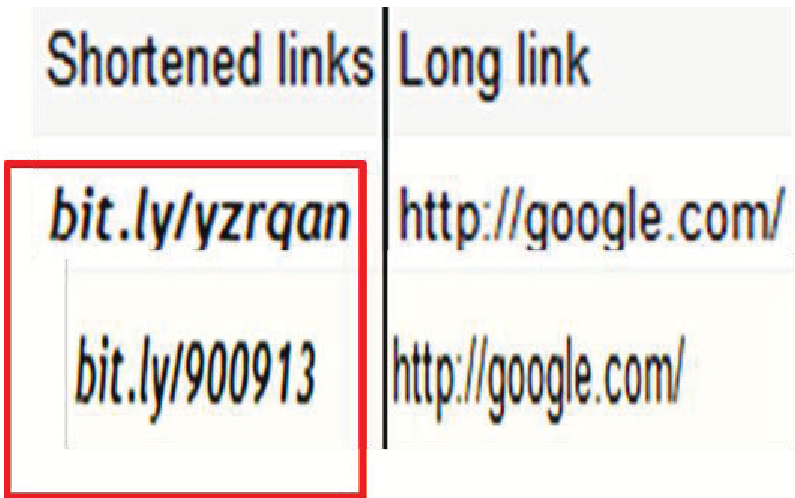 Figure 1: The tree-like structure of Twitter where information (and malware) cascades through followers.
Experimental Analysis: Speed of Spread
The simulations contrast different "Data Trend" rates—how fast a hashtag is growing.
Key Findings:
- Exponential Trends: Result in an immediate and massive spike in infections. This explains why attackers target "Breaking News" or major global events.
- Connectivity vs. Probability: Even when users are cautious (low ), the sheer volume of "broadcast" tweets ensures a steady growth of the botnet.
- Obfuscation Success: The inability to verify short-URLs is the single greatest enabler of the propagation.
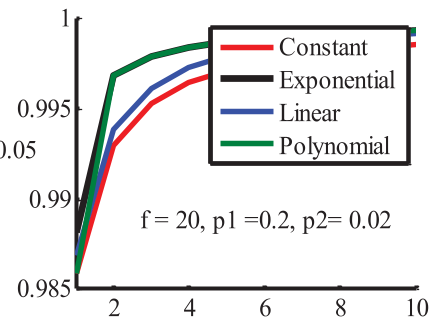 Figure 2: Fraction of infected users over time across various follower counts and click probabilities.
Critical Insights & Future Outlook
The paper’s assessment of Twitter as a "propagation medium" remains startlingly relevant. While Twitter has since introduced its own t.co wrapper to scan links, the core vulnerability—the reliance on trending topics for discovery—remains an open vector.
Takeaways for the Industry:
- Sandboxing is Mandatory: Relying on "Report Abuse" buttons is a reactive, failed strategy. Real-time sandboxing of all shortened links at the platform level is the only structural fix.
- Trend Integrity: Social platforms must treat "Trending Topics" as a security surface, much like an API, ensuring that rapid-growth hashtags aren't being flooded by automated bots generating high-entropy short-links.
Conclusion
The study concludes that the "Early Bird" (the attacker who exploits a trending topic first) doesn't just get the worm—it spreads it. The structural fluidity of Twitter, designed for viral information flow, is inherently a double-edged sword that provides malware with near-infinite reach.