
ProfileSEEKER: Bridging the SME Bankruptcy Prediction Gap with Ensemble Learning
12989_Profiieseeker - Early warning system for predicting economic situation of small and medium enterprises.
This paper introduces ProfileSEEKER, an early warning information system designed to predict bankruptcy in Small and Medium Enterprises (SMEs). The system utilizes an ensemble approach (SD5) combining five different classifiers—including various Neural Network architectures and Bayesian Belief Networks—to improve prediction reliability in the volatile SME sector.
TL;DR
ProfileSEEKER is a specialized early warning system designed to protect Small and Medium Enterprises (SMEs) from financial collapse. By combining five distinct machine learning classifiers (Neural Networks and Bayesian logic), the system overcomes the noise of "creative accounting" to provide highly accurate and explainable bankruptcy forecasts a year in advance.
The SME Crisis: Why Traditional Models Fail
SMEs are the backbone of the economy, representing 99.8% of EU companies. However, their survival rate is alarming: 50% fail within their first five years. Standard bankruptcy models like Altman’s Z-score often falter here because:
- Data Distortion: SMEs frequently employ "creative accounting," leading to intentional financial reporting inaccuracies.
- Dual Logic: Family businesses operate on a mix of rational economic and emotional family logic, making their trajectory less predictable than large public corporations.
- Information Gap: Unlike large firms with ERP II and Business Intelligence modules, SMEs lack the tools for real-time risk assessment.
Methodology: The SD5 Ensemble Architecture
The core innovation of ProfileSEEKER is the SD5 decision-making system. Rather than relying on a single "best" algorithm, the authors leverage the Weighted Majority Algorithm (WMA) philosophy to synthesize five different classification perspectives.
1. The Classifier Suite
- Neural Networks (LIN, MLP3, MLP4, RBF): These models excel at capturing non-linear relationships and patterns within the 7 key financial attributes (e.g., share of inventories, asset productivity, sales change).
- Bayesian Belief Network (BBN): This is the "Explainable AI" component. It generates transparent IF-THEN rules, allowing a business owner to understand why the system predicts a threat.
2. Queue Validation
To handle limited datasets, the authors utilized a proprietary "queue validation" method, ensuring that the model parameterization remained robust even when training data was scarce.
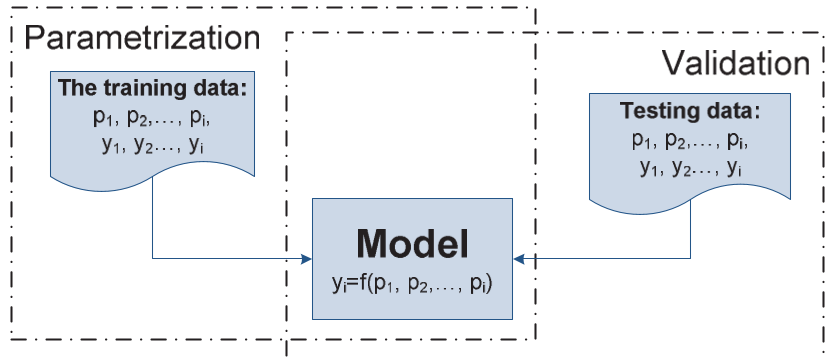 Fig 1. The modeling workflow from data parameterization to the final prediction output.
Experimental Results: Strength in Diversity
The research utilized a dataset spanning 1999 to 2007. The ensemble approach (SD5) proved its worth by maintaining high stability across different company states.
| Model | Bankrupt (Q) | Non-bankrupt (Q) |
|---|---|---|
| LIN | 0.64 | 0.91 |
| MLP4 | 0.61 | 0.92 |
| SD5 (Collective) | 0.67 | 0.92 |
As shown in the data, while some models like MLP4 were slightly better at identifying healthy companies, they were significantly weaker at identifying bankrupt ones. The SD5 system provided the most balanced performance, achieving a 0.92 quality score for non-bankrupt firms and a robust 0.67 for those at risk.
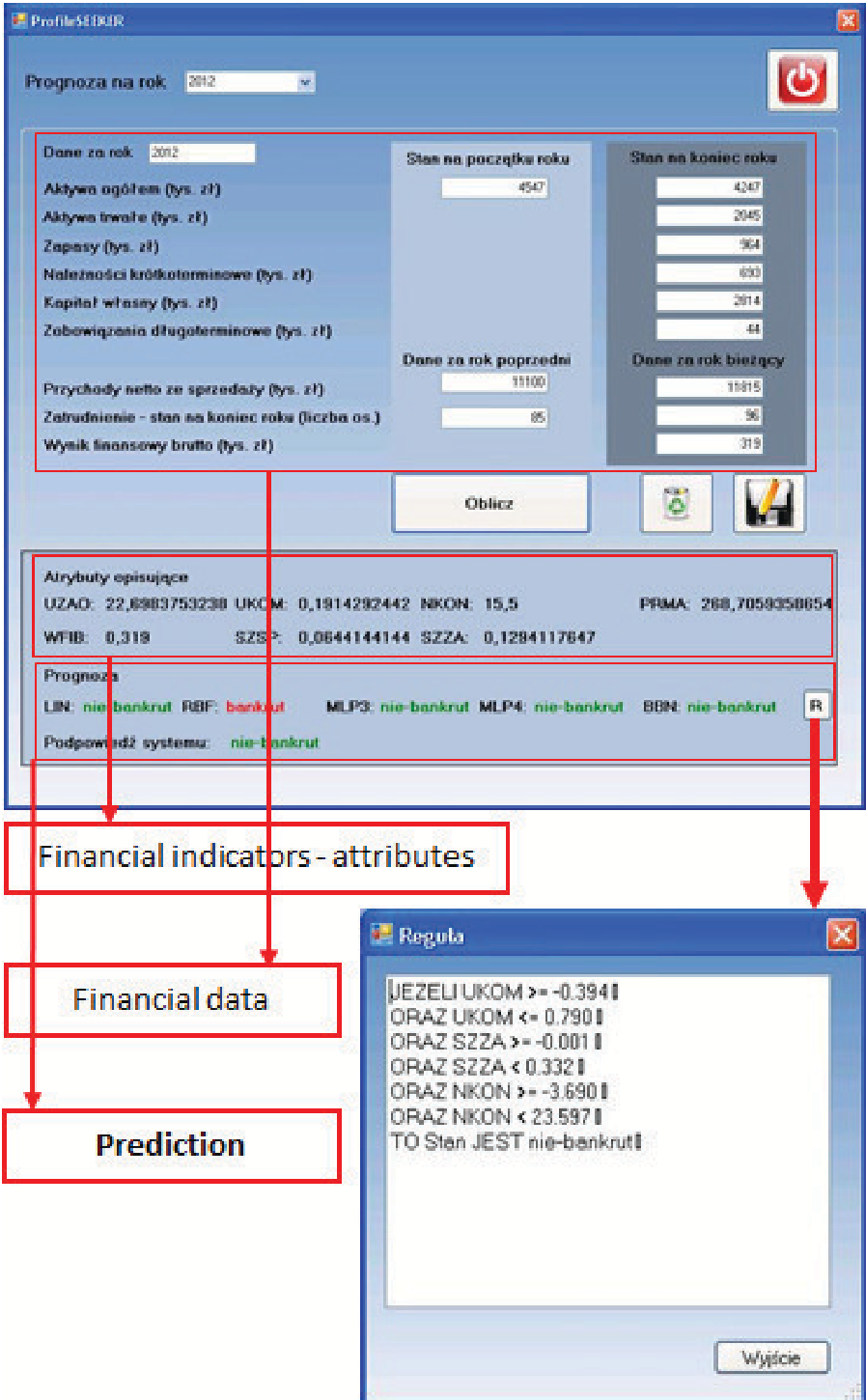 Fig 2. The ProfileSEEKER User Interface, designed for intuitive financial data entry and immediate risk assessment.
Critical Insights & Future Outlook
The true value of ProfileSEEKER lies in its Explainability Kernel. In the SME sector, a "black box" prediction is useless; a manager needs to know that a "shortage of net working capital" (NKON) is the specific trigger for a bankruptcy warning.
Limitations and Next Steps
- Bankrupt Recall: While 0.67 is an improvement, predicting actual bankruptcy remains harder than predicting stability. Further research into "emotional factors" (family dynamics) as quantifiable inputs could close this gap.
- Real-time Integration: Future iterations could move from manual financial data entry to direct API integration with SME accounting software.
Conclusion
ProfileSEEKER proves that for high-stakes financial decisions in "noisy" environments, the ensemble of specialized neural networks and rule-based Bayesian logic is far superior to individual models. It provides a blueprint for practical, deployable AI that serves the most vulnerable yet vital sector of the global economy.