
Beyond Single Systems: Mastering the Economics of Software Product Lines
9927_The Economic Impact of Product Line Adoption and Evolution.
The paper introduces a comprehensive framework for Software Product Line (SPL) engineering, focusing on the economic impact of different adoption and evolution schemes. It highlights the "PuLSE" methodology and demonstrates, through the case study of Market Maker Software AG, how structured reuse can reduce costs and time-to-market by a factor of 10.
TL;DR
In modern software engineering, the pressure to deliver customized variants for different market segments often leads to "code bloat" and maintenance nightmares. This paper explores Software Product Line (SPL) engineering—a strategic approach to software reuse that can slash costs and time-to-market by a factor of 10. By analyzing the adoption and evolution of the "Merger" product line at Market Maker Software AG, the authors provide a roadmap for transitioning from craftsmanship to industrial-scale software production.
The "Stovepipe" Trap vs. Strategic Reuse
Most organizations fall into the trap of stovepipe development: when a new customer arrives, they branch the code, tweak it, and suddenly find themselves managing ten independent codebases. The "Big Bang" alternative—building a perfect, all-encompassing platform from day one—is equally dangerous due to high upfront costs and the uncertainty of future market needs.
The authors argue that the key to competitive advantage lies in structured adoption schemes that balance technical feasibility with economic reality.
The Methodology: Four Paths to Product Line Success
The paper identifies four primary entry points for an organization:
- Independent: Starting from scratch (rare, high uncertainty).
- Project-integrating: Gradually merging existing, independently developed systems into a common infrastructure.
- Reengineering-driven: Transforming legacy "monoliths" into a modular basis for future products.
- Leveraged: Building a new product line using an existing one as a foundation (the "revolution" of ROI).
Core Framework: The Investment Curve
The heart of the SPL strategy is managing the investment curve. While traditional development has a lower initial cost, the cost of adding new variants grows linearly. SPL requires an initial "entrance barrier" investment but allows for near-zero marginal costs for subsequent products.
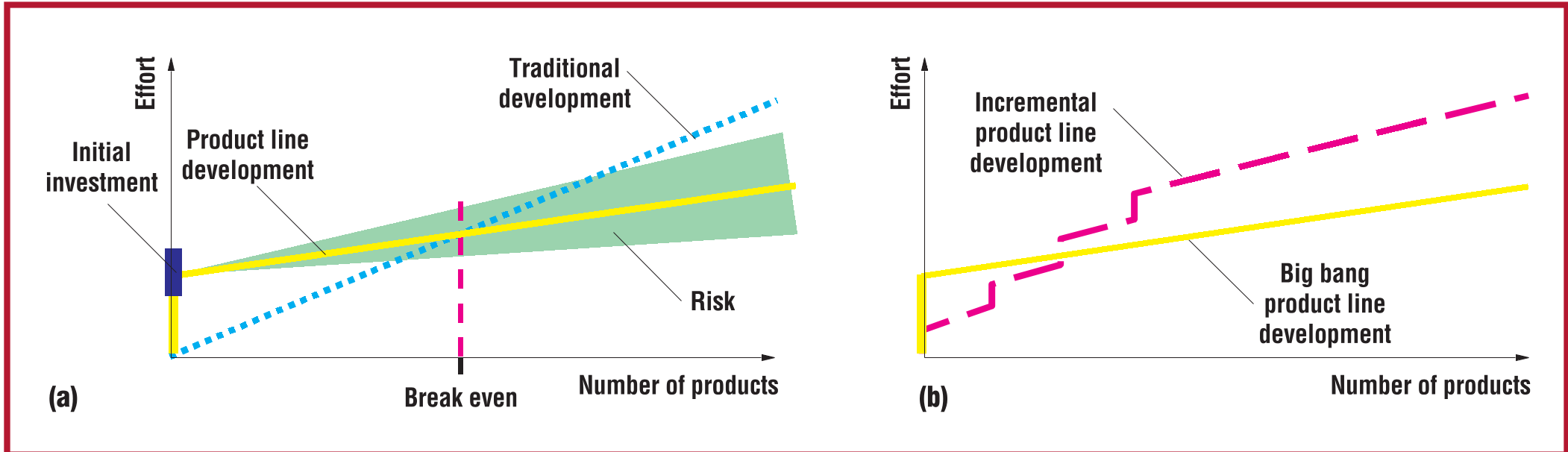 Figure 1: Comparison of investment profiles between immediate infrastructure setup and incremental growth.
Scoping: The Secret to High ROI
The most critical contribution of the paper is the concept of Scoping. It’s not enough to "reuse code"; you must decide what to reuse:
- Product Portfolio Scoping: Deciding exactly which products belong in the family.
- Domain-based Scoping: Identifying which technical areas (e.g., data processing vs. UI) offer the highest reuse potential.
- Reuse Infrastructure Scoping: Determining which specific functionalities provide the highest economic benefit if made generic.
Case Study: Market Maker's "Merger" Product Line
Market Maker Software AG transitioned from a single DOS tool to a sophisticated Java-based product line for financial data. By using a Leveraged Adoption scheme, they utilized their existing data servers to feed a new web-based infrastructure.
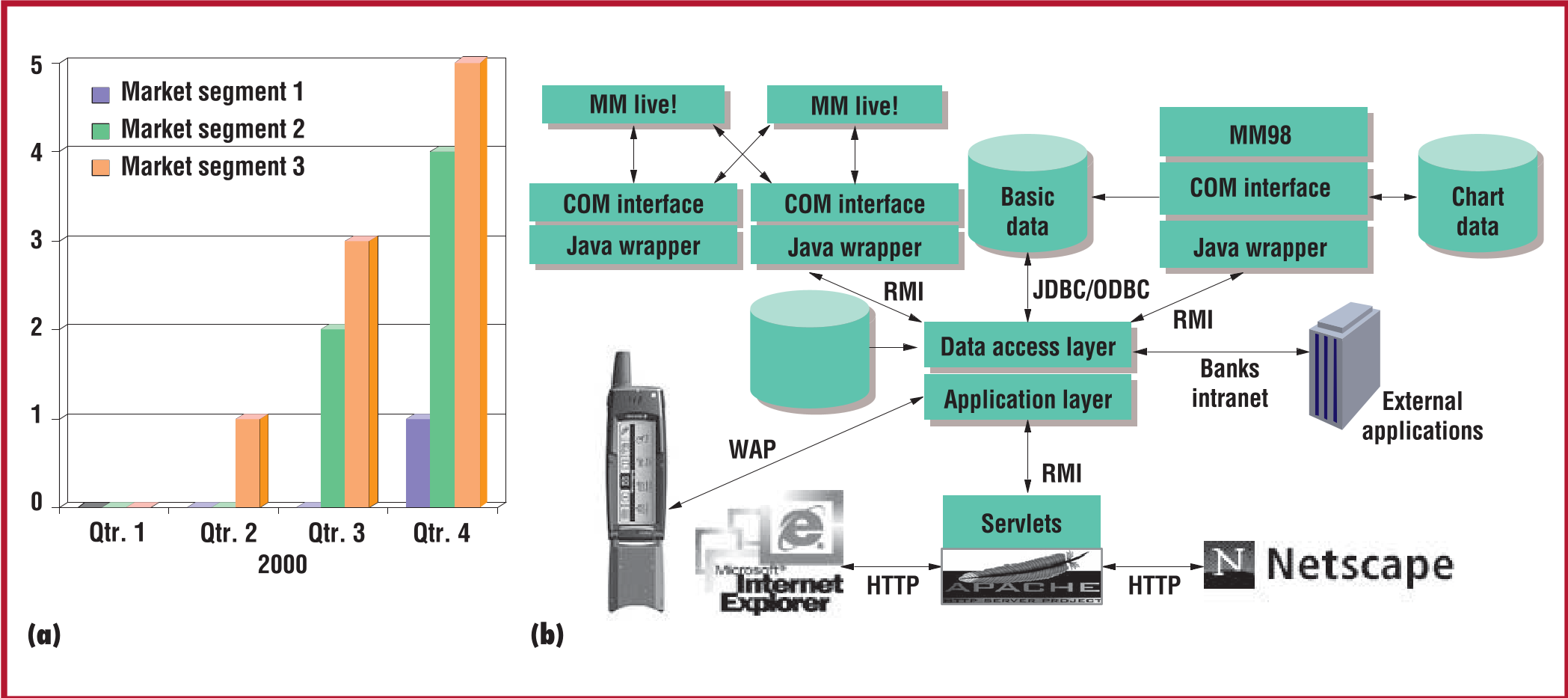 Figure 2: The architecture enabled Market Maker to scale to over 15 variants across 3 segments with exponential efficiency.
Critical Insight: Infrastructure-based Evolution
A common failure point in SPL is divergence. To combat this, the authors advocate for Infrastructure-based Evolution: when a new requirement arises for a specific product, it is immediately generalized into the core infrastructure. This ensures that the second product needing that feature gets it for "free," leading to the superlinear growth in productivity seen in successful companies.
Conclusion & Future Outlook
The shift to Product Line Engineering is compared to the Industrial Revolution. It’s not just about an assembly line (the architecture); it’s about a new way of doing business.
Takeaway for Tech Leaders: Don't build for the future in a vacuum. Use a "Project-integrating" or "Incremental" approach to lower the entrance barrier, but remain disciplined with Scoping to ensure your shared assets don't become a tangled mess of "half-reusable" code.
Limitations: The paper focuses heavily on the initial adoption phase. In today's landscape, the rapid pace of technology shifts (e.g., moving from Java to newer stacks) adds a layer of "infrastructure obsolescence" that requires even more dynamic evolution strategies than those discussed.