
The Economic Value of Online User Reviews: Better than Ad Spending?
The Economic Value of Online User Reviews with Ad Spending on Movie Box-Office Sales
This paper investigates the economic impact of online user reviews (valence and volume) compared to post-release advertising spending on movie box-office sales. Using a dataset of 304 movies and a social network-informed identification strategy, the authors demonstrate that improving rating metrics can achieve sales effects equivalent to substantial increases in ad spending.
TL;DR
In the high-stakes world of movie box-office sales, can a few thousand "armchair critics" on social media be worth more than a multimillion-dollar advertising campaign? This study proves they are. By analyzing weekly data from 304 movies, researchers found that a minor bump in user ratings (0.12 stars) or a doubling of review volume yields the same sales growth as spending half a million dollars on traditional ads.
The "Chicken and Egg" Problem in Movie Marketing
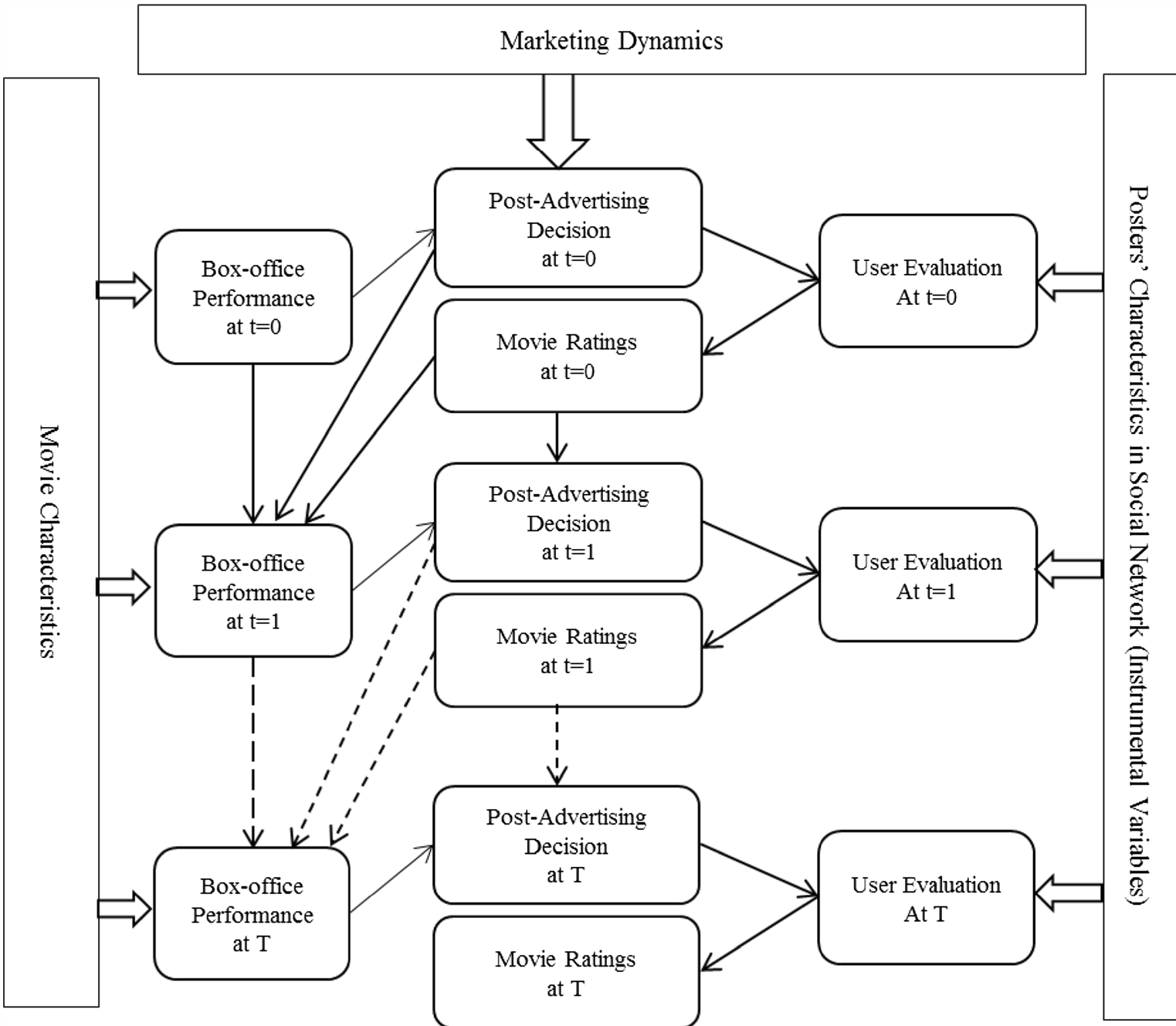
Economists have long struggled with a fundamental question: Do positive reviews cause sales, or do high-quality movies simply attract both high sales and positive reviews simultaneously? This is known as endogeneity.
Prior works often ignored the "Traditional Marketing Mix," focusing only on the reviews themselves. This paper argues that to find the true value of a star rating, one must account for:
- Movie Heterogeneity: Some movies are born "hits" regardless of reviews.
- Simultaneity: Post-release ad spending is often adjusted based on how a movie performed last weekend, creating a feedback loop.
Methodology: High-Dimensional Econometrics
The authors moved beyond simple correlations. They used a Fixed-Effects Two-Stage Least Squares (FE-2SLS) model. The "secret sauce" was their use of Instrumental Variables (IV).
To isolate the effect of reviews from the inherent quality of the movie, they looked at the characteristics of the reviewers themselves on Flixster. Variables like the average age, gender, and the number of friends a reviewer has served as instruments. The logic is elegant: a reviewer’s social network size affects their likelihood to post a review, but it doesn't directly influence the box-office attendance of the general public.
Key Findings: Quantifying the "Earned Media"
The study provides a direct exchange rate between social "buzz" and cold hard cash:
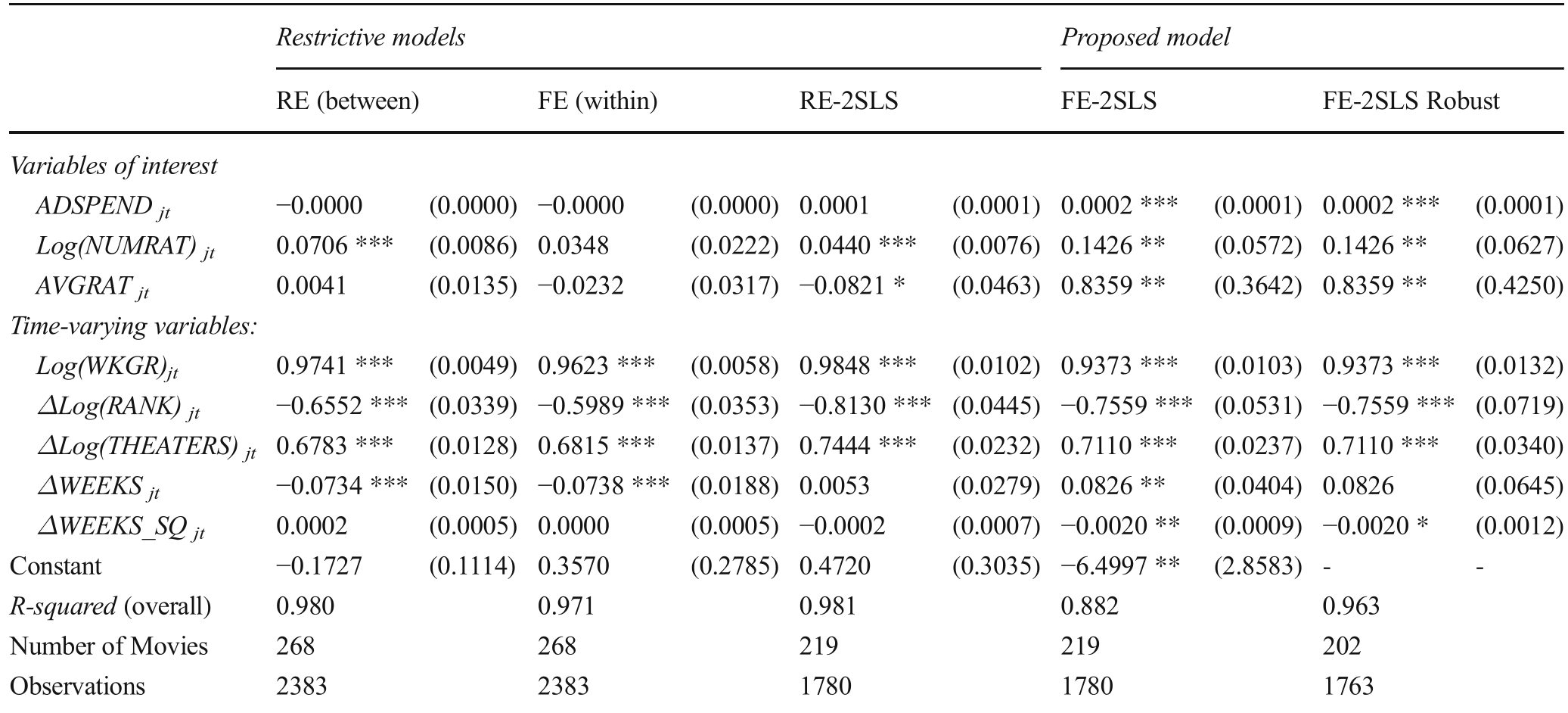
- The Valence Effect: A 0.12-star increase (on a 10-star scale) in the weekly average rating leads to a 10.5% boost in the following weekend's sales.
- The Volume Effect: Doubling the number of ratings provides an identical 10.5% boost.
- The Ad Spending Equivalence: To get that same 10.5% lift through traditional advertising, a studio would need to spend an additional $500,000 per week.
Table: Comparative Impacts on Sales
| Variable | Change | Sales Impact | Comparable Ad Spending |
|---|---|---|---|
| Ad Spending | +$500k | ~10.5% | - |
| Review Valence | +0.12 stars | ~10.5% | $500,000 |
| Review Volume | 2x (Double) | ~10.5% | $500,000 |
Deep Insight: Beyond Awareness
Why does this happen? The paper suggests that online reviews serve a dual purpose. Volume acts as a proxy for "Awareness" (the level of online buzz), while Valence acts as a proxy for "Attractiveness" (perceived quality).
Unlike pre-release ads, which are usually fixed budgets, post-release social media dynamics are fluid. The study notes that studios often advertise less when social media awareness is already high, effectively letting the "earned media" do the heavy lifting.
Strategic Conclusion & Limitations
For CMOs and marketing managers, the takeaway is clear: Earned social media is not just a side effect; it is a financial asset. Investing in community engagement or contests that stimulate user ratings can be more cost-effective than buying more TV spots.
Limitations: The study uses data from 2007-2008 (Flixster era). While the econometric principles remain robust, the modern landscape (TikTok, Letterboxd, and algorithmic feeds) likely has even shorter lag times and higher volatility, suggesting the "value" of a viral moment today might be even higher than what was captured here.