
Decentralizing Digital Health: A Federated Learning Framework for Edge-Assisted Analytics
A Framework for Edge-Assisted Healthcare Data Analytics using Federated Learning
This paper introduces a conceptual Edge-assisted healthcare framework that integrates Federated Learning (FL) to process user-generated data from wearables. By shifting model re-training to the network edge, the framework enables personalized health insights while strictly maintaining data privacy.
TL;DR
As the global population ages and chronic diseases like diabetes and heart disease rise, the current healthcare system is strained. This paper proposes a breakthrough conceptual framework that moves data analytics from the expensive, privacy-invasive Cloud to the "Edge" (smartwatches and local routers). By leveraging Federated Learning, the system helps diagnose and monitor conditions using personal data that never leaves the user's device.
Background: The Crisis of Centralized Healthcare
We are currently facing a "perfect storm" in healthcare: an aging population (1.5 billion over 65 by 2050) and a massive surge in chronic disease management costs. While wearables like Fitbits and Apple Watches generate gigabytes of useful behavioral data, two major "moats" prevent this data from saving lives:
- The Privacy Moat: Users are rightfully hesitant to upload every heartbeat and movement to a central corporate or government cloud.
- The Latency Moat: Moving massive time-series data from billions of IoT devices to the Cloud is slow and prohibitively expensive.
The Core Innovation: A Three-Tiered Architecture
The researchers propose a solution that breaks the dependency on centralized data processing. Unlike traditional AI, where data goes to the model, here the model goes to the data.
1. The Cloud Module (The Orchestrator)
The Cloud doesn't see your data. Instead, a Master Aggregator (MA) manages a "global model" trained on public datasets. It sends this general model down to the Edge. When it receives encrypted updates (not raw data) from users, it averages them to improve the global AI.
2. The Edge Module (The Engine)
This is the "brain" of the operation. Located on devices like smartphones or home routers, the Federated Learning (FL) server checks if the device is ready (e.g., has enough battery) and then re-trains the model using local samples.
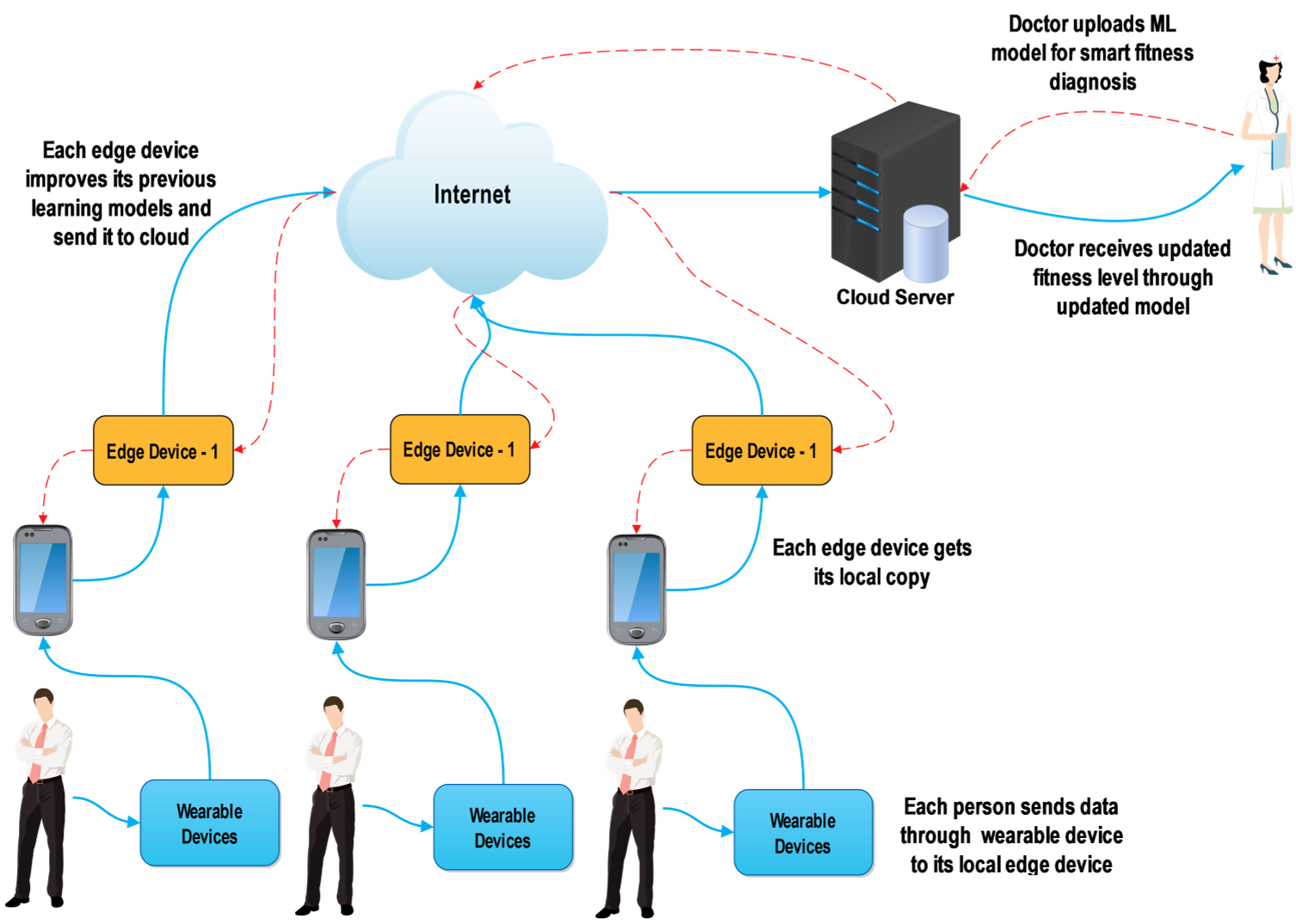 Fig 1: The ecosystem connecting fitness trackers, edge nodes, and centralized healthcare providers.
3. The Application Module (The Interface)
This layer interacts with the sensors. A Sensor Activity (SA) system detects meaningful movement or physiological changes (like a spike in glucose or a fall) and notifies the Edge module to start processing.
Technical Depth: Why it Works
The framework relies on Homomorphic Encryption. This mathematical "magic" allows the Cloud to sum up and average the updates from thousands of users without ever "decrypting" or seeing what the specific updates were. This ensures that even if the Cloud controller is compromised, the individual's raw health data remains invisible.
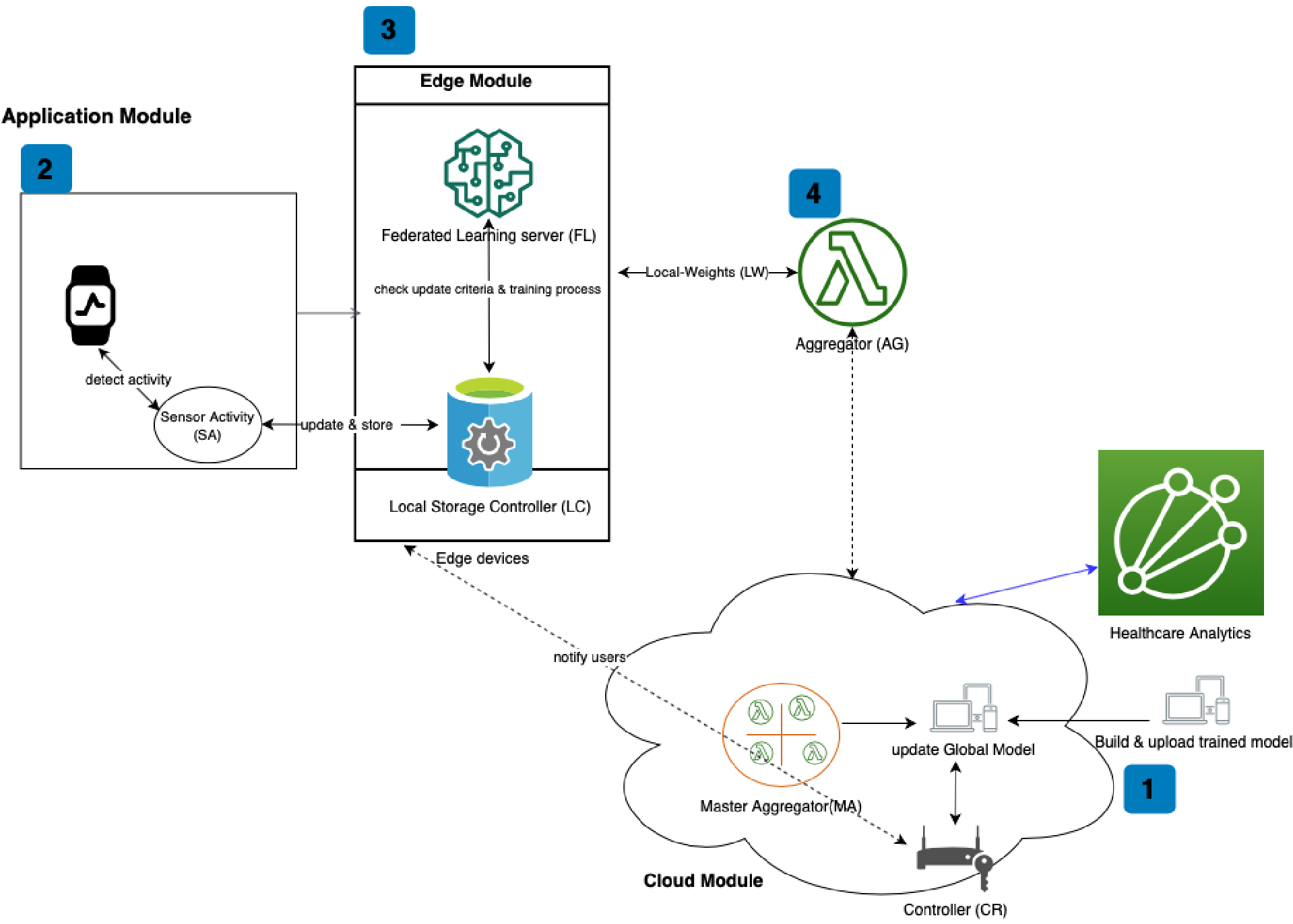 Fig 2: The granular breakdown of how local storage, aggregators, and the Cloud Controller interact.
Key Applications
- Disease Prevention: High-accuracy prediction of chronic disease onset by analyzing long-term sleep patterns and physical activity.
- Mental Health tracking: Using gamified apps to detect destructive behavioral patterns without the stigma of constant surveillance.
- Real-time Monitoring: Leveraging 5G to provide immediate intervention for acute events like heart attacks.
Critical Insight & Challenges
While the architecture is robust, the authors highlight a critical "Human Factor." Unlike automated systems, Federated Learning in healthcare requires User Compliance. If users don't engage with the apps or keep their devices charged, the local models become "stale," leading to a decay in predictive accuracy.
Furthermore, the threat of Model Poisoning (where a malicious user sends "bad weights" to corrupt the global AI) remains a frontier that requires more research into robust aggregation algorithms.
Conclusion
This work marks a significant step toward "accountable healthcare." By moving the logic to the edge, we stop treating users as passive data points and start treating them as active, protected participants in their own wellness journey. The future of medicine isn't just in the lab; it's in the pocket of every patient.