
BodyEdge: Re-architecting Healthcare IoT for Real-Time Edge Intelligence
An Edge-Based Architecture to Support Efficient Applications for Healthcare Industry 4.0
This paper introduces BodyEdge, a novel edge-based architecture designed for human-centric healthcare applications in Industry 4.0. It leverages a three-tier (Cloud/Edge/IoT) approach to provide real-time Heart Rate Variability (HRV) monitoring for stress detection, using a specialized mobile client and multi-radio edge gateways.
TL;DR
BodyEdge is a tiered architecture that brings high-performance computing to the network's periphery. By shifting Heart Rate Variability (HRV) analysis from the cloud to local Edge Gateways, it slashes latency by 50% and maintains robust performance for up to 100 simultaneous users even on low-cost hardware like a Raspberry Pi.
The "Cloud Bottleneck" in Healthcare 4.0
As the healthcare IoT market hurtles toward a projected $158 billion valuation, the "Cloud-First" paradigm is hitting a wall. In high-stakes environments—like monitoring factory workers for fatigue or athletes for overexertion—the latency introduced by sending raw sensor data to a distant data center isn't just a technical nuisance; it's a safety hazard.
Existing systems often treat the infrastructure between sensors and the cloud as a "dumb" pipe. This leads to three critical failure points:
- Latency: Real-time stress or heart failure detection cannot wait for a round trip to a public cloud.
- Bandwidth: Continuous streaming of high-frequency ECG or RR-interval signals saturates local networks.
- Privacy: Sensitive medical data stored in public clouds remains a major compliance and safety hurdle.
BodyEdge: A Three-Tiered Approach
The authors propose BodyEdge, which inserts a "smart" layer between the IoT devices and the Cloud. The architecture is divided into two primary software modules:
1. BE-MBC (Mobile Body Client)
Acting as a personal gateway (e.g., on a smartwatch), this module handles the heterogeneous nature of wearables. It manages Bluetooth, ZigBee, and Wi-Fi connections, ensuring that even if a sensor is out of range of the main gateway, the data is relayed reliably.
2. BE-GTW (BodyEdge Gateway)
This is the "brain" of the operation. It includes the CONCePT module, which manages:
- QoS Prioritization: Differentiating between "inelastic" traffic (real-time cardiac data) and "elastic" traffic (hourly temperature checks).
- Local Processing: Using the BodyEdge Manager to run HRV signal processing (time and frequency domain) locally.
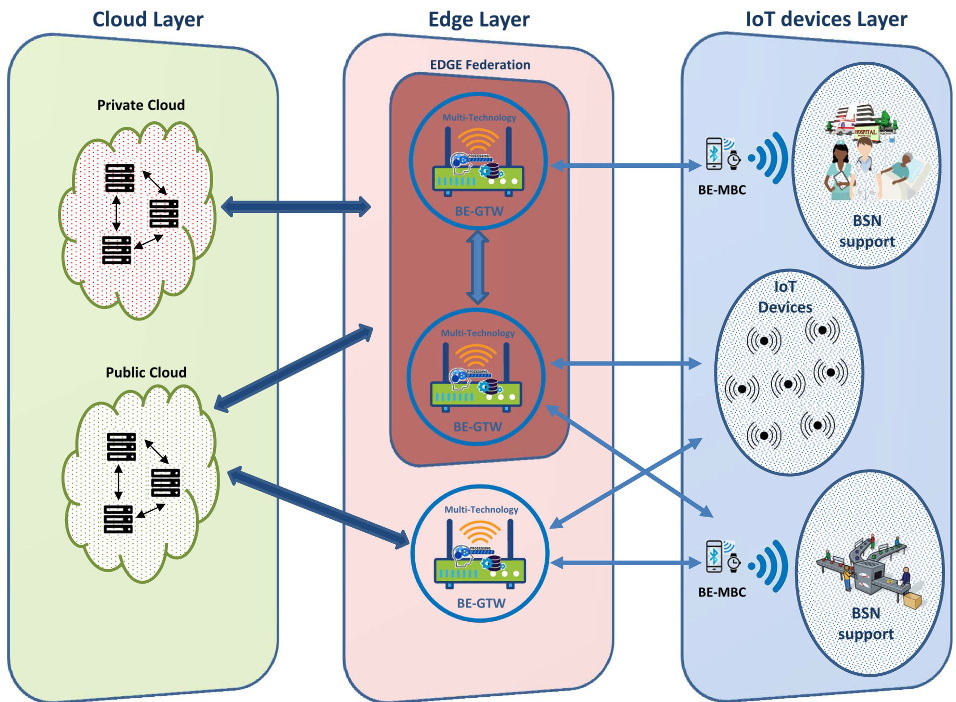 Figure 1: The BodyEdge framework distributed across Cloud, Edge, and IoT devices.
Methodology: From Raw Beats to Stress Detection
The core utility of BodyEdge was tested using Heart Rate Variability (HRV). By analyzing the time difference between successive R-waves (RR-intervals), the system can detect mental stress. The gateway calculates complex features such as:
- Time-Domain: pNN50 (intervals differing by >50ms).
- Frequency-Domain: Power Spectral Density (PSD) in Low Frequency (LF) and High Frequency (HF) ranges.
Crucially, these calculations happen on the gateway (e.g., a Raspberry Pi 3 or a Nano PC), not in the cloud.
Experimental Results: Edge vs. Cloud
The researchers conducted a head-to-head comparison between local edge platforms and a standard Microsoft Azure Virtual Machine.
1. Latency (RTT)
The Edge solutions (Raspberry Pi/Nano PC) achieved a Round Trip Time of ~120-150ms, while the Azure Cloud lagged at 244-338ms. In a clinical alert scenario, saving 200ms can be significant.
2. Scalability
One might assume a $40 Raspberry Pi would buckle under load. However, the study showed that even with 100 athletes (generating high-frequency data at 170 bpm), the processing time remained under 3.2 seconds—well within the requirements for standard 10-minute sliding window HRV analysis.
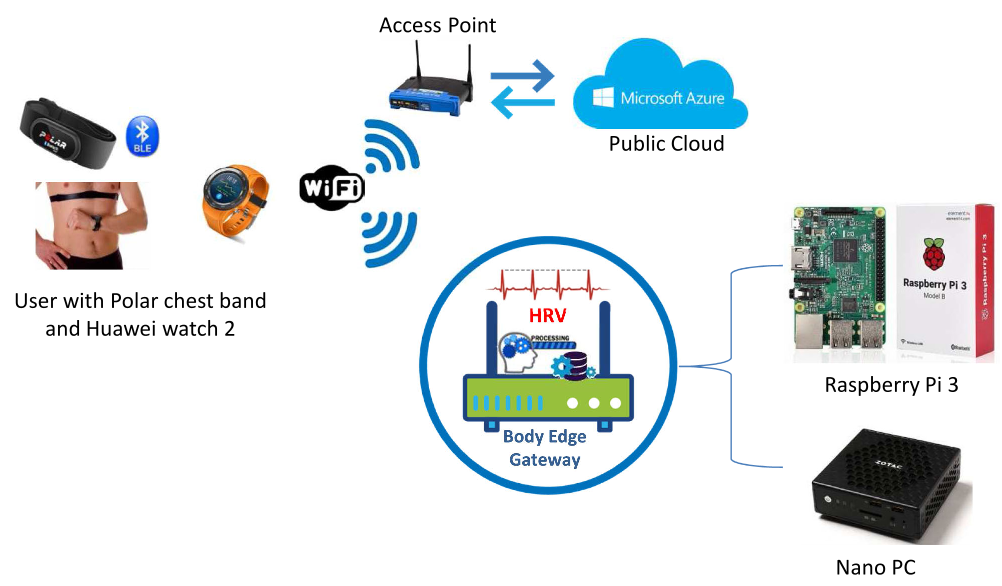 Figure 2: Processing time stays manageable on Edge platforms even as worker count increases to 100.
Critical Insight & Future Outlook
BodyEdge shifts the perspective of the Cloud from a "Primary Processor" to a "Global Coordinator." While the Edge handles high-speed, local decisions, the Cloud is still utilized for long-term statistical trends and cross-site data analytics.
Limitations: While the architecture is sound, the study notes that moving between environments (e.g., leaving a factory for home) remains a challenge for seamless execution. Future iterations will need to address "Edge Handoffs" as users move between different gateway jurisdictions.
Conclusion: This work provides a template for the future of Industrial Healthcare. By localizing compute, we don't just save bandwidth—we create a more resilient, private, and responsive ecosystem for human-centric monitoring.