
Smart HD Map Crowdsourcing: Solving the Redundancy-Latency Paradox at the Edge
3006_Brief Industry Paper An Edge-Based High-Definition Map Crowdsourcing Task Distribution Framework for Autonomous Driving.
This paper proposes an edge-assisted crowdsourcing framework for High-Definition (HD) Map generation and maintenance in autonomous driving. By leveraging an Adaptive Time Period Division mechanism and an Optimal Stopping Rule, the framework achieves efficient data collection while maximizing system utility and reducing operational costs.
TL;DR
Building High-Definition (HD) maps for autonomous vehicles is notoriously expensive. This paper introduces an edge-computing framework that uses dynamic time-slicing and optimal stopping theory to collect "just enough" data from crowdsourced vehicles. This prevents network congestion while ensuring maps are updated consistently throughout the day, improving coverage by up to 80% compared to traditional methods.
The "Greedy" Problem in HD Map Updates
Current HD map updates usually follow a "first-come, first-served" logic. When crowdsourcing vehicles enter a region, they immediately start uploading sensor data. However, the authors observed two critical flaws in this approach:
- Diminishing Marginal Utility: The first few vehicles provide the most information. As more vehicles record the same lane lines and signs, the incremental value of their data drops to near zero.
- Premature Convergence: In heavy traffic, the system hits its data quota within minutes. If a road change occurs later in the hour (e.g., a new construction zone), the system has already stopped collecting data, leading to a "blind spot" in time.
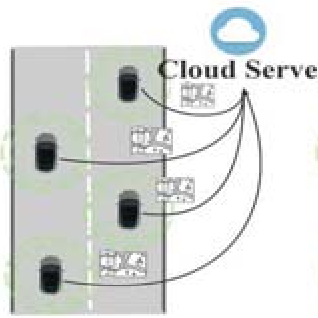 Fig 1: Comparison between traditional survey vehicles and the proposed edge-assisted crowdsourcing.
Methodology: Precision Timing at the Edge
The core of the paper is a two-pronged strategy managed at the Roadside Unit (RSU):
1. Adaptive Time Period Division
Instead of a fixed schedule, the system uses an LSTM (Long Short-Term Memory) network to predict traffic patterns. If traffic is heavy, the system stretches the collection window and divides it into smaller slices; if traffic is light, it compresses the window. This ensures that data collection is spread out across the entire sensing period rather than being exhausted in the first few minutes.
2. The Optimal Stopping Rule
This is the "brain" of the operation. The authors modeled the crowdsourcing task as an Optimal Stopping Problem. By calculating the Crowdsourcing Utility (), which balances the completion degree of the map against the energy and reward costs, the RSU can decide precisely when to tell vehicles to stop uploading.
The rule is defined as: In plain English: Stop once the expected new information from the next vehicle is lower than the cost of receiving it, provided a minimum map quality has been met.
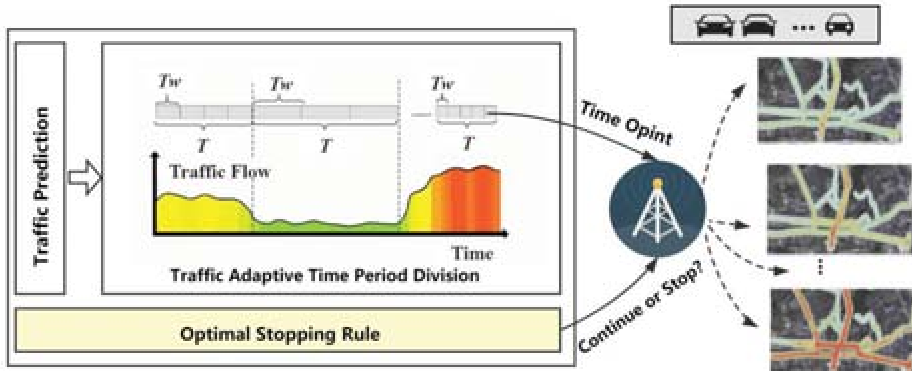 Fig 2: The Edge-based HD Map Crowdsourcing Framework.
Experimental Evidence: Consistency is Key
The researchers tested their framework against a baseline that simply stops when a fixed volume of data is reached.
- Time Coverage: In heavy traffic scenarios, the baseline method's coverage dropped toward 0% because it finished too early. The proposed adaptive method maintained coverage above 35%, ensuring the map stayed "fresh" throughout the window.
- Utility & Cost: By stopping at the "sweet spot" of information gain, the system avoided the high costs of processing redundant data, leading to a visible increase in net utility.
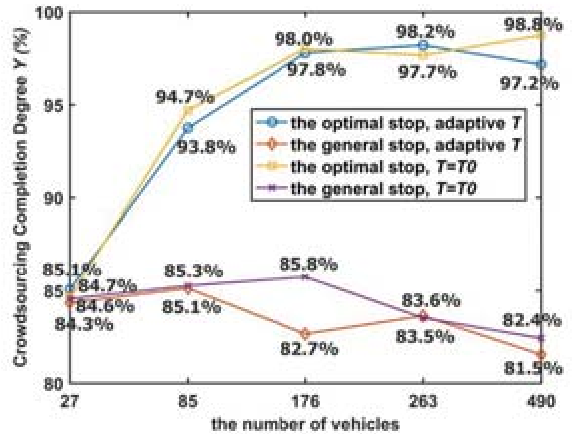 Fig 3: Performance comparison showing superior coverage and completion degrees.
Critical Insight & Future Outlook
This work demonstrates that for massive-scale IoT tasks like HD mapping, Edge Intelligence isn't just about faster processing—it's about smarter filtering.
Limitations: The current model assumes a somewhat uniform contribution from vehicles. In reality, a vehicle with high-end LiDAR contributes more than one with a basic camera. Future iterations could incorporate "quality-aware" rewards to prioritize the most accurate sensors.
Conclusion: By combining traffic prediction with mathematical stopping rules, this paper provides a robust blueprint for keeping HD maps updated in real-time without crashing the cellular network.