
Decoding Academic Success: A National-Scale EDM Analysis of Chinese Junior High Students
Educational Data Mining: Discovering Principal Factors for Better Academic Performance
This paper presents a comprehensive Educational Data Mining (EDM) study using the China Education Panel Survey (CEPS) dataset. By applying Linear Regression, Regression Trees, Random Forest, and Neural Networks, the authors identify key demographic, willingness, and interaction factors that influence the academic performance of Chinese junior high school students.
TL;DR
What truly drives academic achievement in a competitive landscape like China? This study moves beyond classroom hearsay to provide a data-driven autopsy of student performance. By mining the China Education Panel Survey (CEPS), researchers discovered that while parental education is a powerful engine, systemic barriers like the Hukou system and family structures (being an only child) significantly shape a student's trajectory.
The Motivation: Moving Beyond local Case Studies
Most Educational Data Mining (EDM) research focuses on specific universities or localized courses (e.g., "predicting grades in a C++ class"). While useful, these studies often miss the "big picture" of national educational inequality. The authors identified a gap: the need for a quantitative, national-scale investigation into how family background, personal willingness, and household registration interact to determine academic outcomes in China.
Methodology: A Multi-Model Approach
The researchers didn't rely on a single algorithm. Instead, they employed a pipeline of four distinct techniques to triangulate the "Principal Factors":
- Linear Regression: Used as a benchmark to identify positive/negative correlations through weights.
- Regression Tree: Provided a hierarchical visualization of importance, identifying which "decisions" (like parental degrees) sit at the root of success.
- Random Forest: Leveraged 900 de-correlated trees to handle high-dimensional questionnaire data without manual feature selection.
- Neural Network (MLP): Acted as the ultimate "judge" to evaluate which of the feature sets discovered by the other models held the highest predictive power.
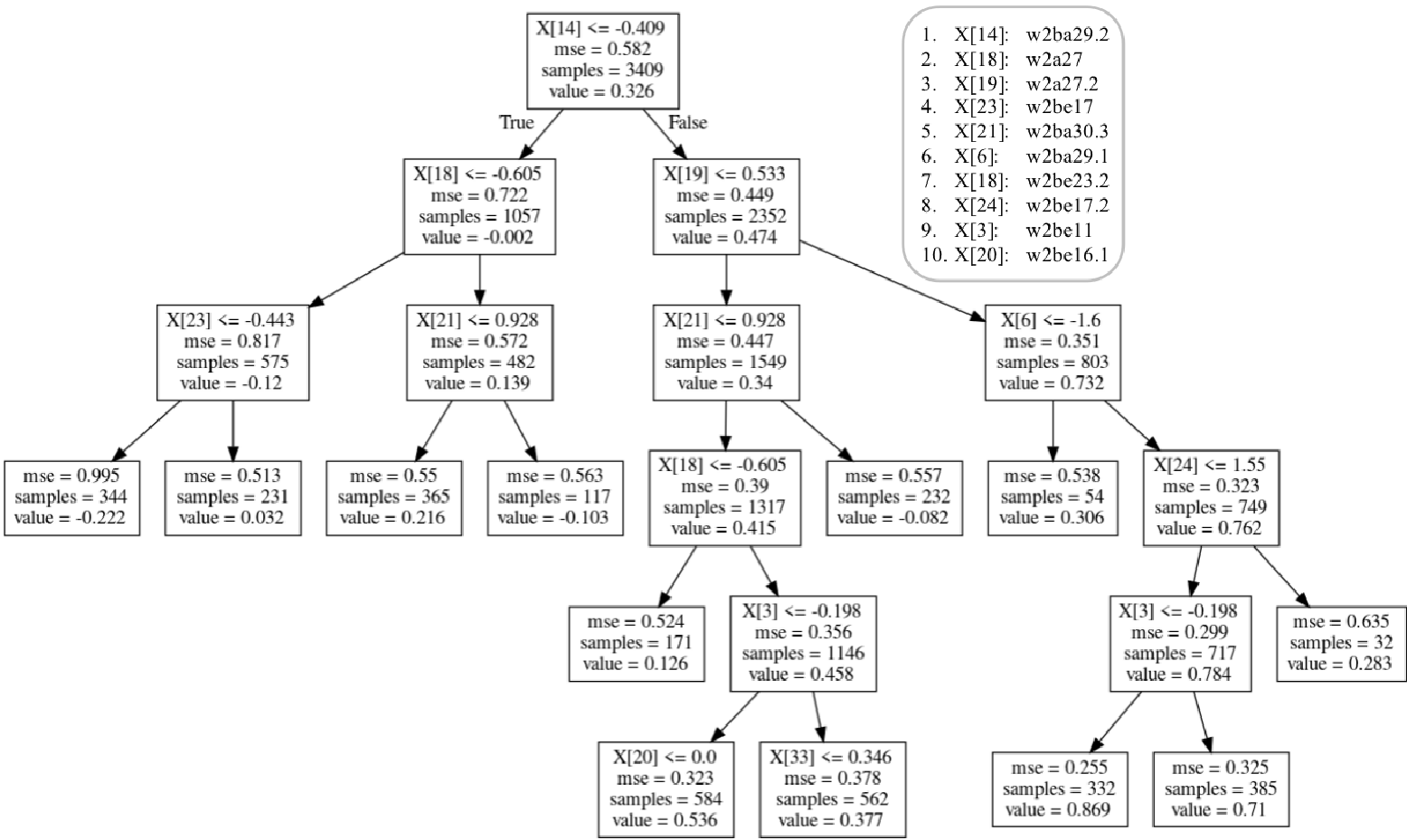 Figure 1: The Regression Tree structure reveals how parental expectations and educational background serve as primary split points for predicting scores.
Deep Dive into the Factors
The study categorized data into three clusters: Demographic, Willingness, and Interaction.
- The Parent Factor: Across all models, parental CCP membership, Bachelor's degrees, and high academic expectations (Master/PhD goals) were the strongest positive predictors.
- The Systemic Barrier: Modern China's Hukou (household registration) system surfaced as a critical hurdle. Students with non-local Hukou often face limited access to top-tier schools, directly impacting their standardized scores.
- The Only-Child Paradox: Interestingly, being an "only child" showed a negative correlation with performance in linear models, which the authors attribute to a potential lack of peer companionship and healthy competition within the household.
Experimental Results & Comparison
When the researchers tested their discovered factors using a Neural Network, they found a surprising result: Linear Regression features actually outperformed Random Forest features in terms of predictive accuracy (lowest test error).
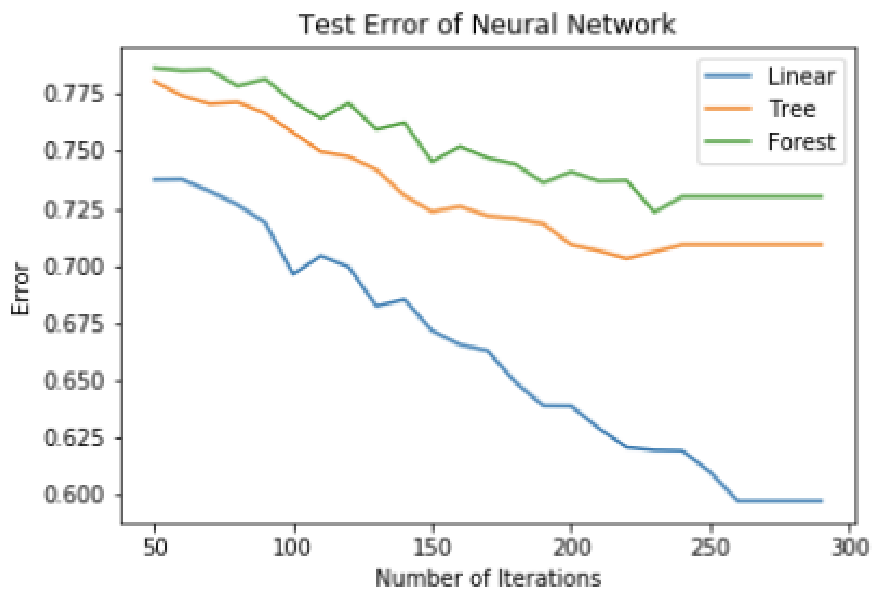 Figure 2: Comparison of predictive performance. The factors identified by Linear Regression (Blue) consistently achieved lower error rates than those from Random Forest (Green).
The study also found that different subjects are driven by different factors:
- Math: Heavily influenced by Demographic factors (family wealth and resources for tutoring).
- Language (Chinese/English): Driven by Interaction (family communication and practice).
- Cognitive Ability: Closely tied to the student's own Willingness and internal goals.
Critical Analysis & Future Outlook
The value of this paper lies in its empirical validation of socio-economic intuitions. It proves that "educational inequality" isn't just a buzzword but a measurable phenomenon linked to registration status and family heritage.
Potential Limitations:
- Temporal Relevance: The data is based on the 2013-2015 surveys; China's "Double Reduction" policy (2021) has likely shifted these dynamics, particularly the influence of wealthy demographics on math tutoring.
- Model Selection: While MLP was used for evaluation, more modern architectures (like Gradient Boosting Machines) might have provided even sharper insights into non-linear interactions.
The Takeaway:
To move toward equity, the authors advocate for two major policy shifts: increasing government subsidies for lower-income students and, crucially, decoupling school access from Hukou status. For researchers, this work serves as a foundational baseline for applying EDM to national sociopolitics.