
HCC-EDL: Reimagining the Digital Library as a Pedagogical Hub
18707_An educational digital library for human-centered computing.
This paper introduces the Human-Centered Computing Educational Digital Library (HCC-EDL), a specialized pedagogical repository designed to support the HCI and HCC academic communities. Developed at Georgia Tech, it leverages a community-driven requirements process to provide peer-reviewed, high-quality instructional resources for both undergraduate and graduate levels.
TL;DR
Human-Centered Computing (HCC) is a field of constant flux, making it a nightmare for educators to keep curricula fresh. The HCC-EDL project addresses this by moving beyond the "PDF dump" model of digital libraries. By using a rigorous user-centered design process involving faculty surveys and focus groups, the authors created a repository that prioritizes pedagogical structures—syllabi, schedules, and labs—over mere research papers, creating a "SOTA" for educational resource sharing.
The "Broken Link" Problem in HCI Education
In the mid-2000s, an HCI professor wanting to design a new course on "Mobile Interaction" faced a fragmented web. While research papers were accessible via the ACM Digital Library, the connective tissue of education—how to structure weekly lectures, what assignments work best, and how to grade them—remained hidden on private university servers. The authors identified that the "missing link" wasn't the information itself, but the community-validated context around that information.
Methodology: Building for the Classroom, Not the Archive
One does not simply build a digital library; one must understand the ecosystem. The authors conducted a multi-stage requirements gathering process:
- Faculty Surveys: Targeted 85 educators to rank the importance of different content types.
- Breadth vs. Depth Workshops: Conducted at the CHI conference to ensure the library's metadata schema reflected the taxonomy of the actual HCC practitioners.
- The "Syllabus-First" Insight: While many expected research papers to be the primary draw, the results showed that syllabi and course schedules were the "gold standard" for educators.
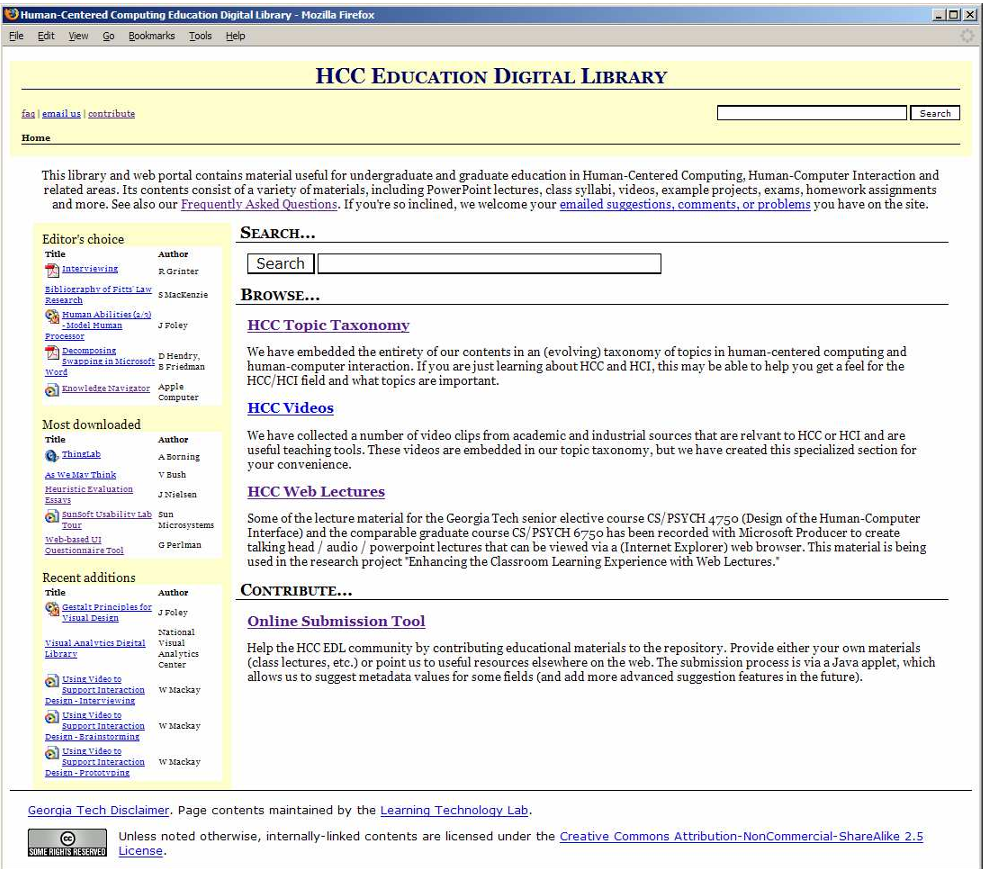 Figure 1: The hierarchical structure of HCC-EDL resources, emphasizing the move from broad topics to specific educational artifacts.
Key Results: Consensus over Complexity
The research revealed a surprising level of consensus among the HCC community. Key findings included:
- 90% of respondents prioritized "Course Syllabi" and "Class Schedules" as the most useful content.
- Structural Metadata: Users preferred a "narrow-and-deep" taxonomy rather than a flat keyword search. This allowed professors to see how a topic like "Usability Testing" fits into a 15-week semester vs. a 1-day workshop.
- Community Trust: The peer-review component was deemed essential to prevent the "garbage-in-garbage-out" problem prevalent in early web repositories.
 Figure 2: Statistical breakdown of the perceived value of different resource types (Syllabi, Projects, Exams).
Critical Insights & The Future of Educational Repositories
The HCC-EDL proves that technical infrastructure is secondary to social infrastructure. The project's success was not the result of a better database, but of a better understanding of the teacher's workflow.
Limitations: The paper briefly touches upon, but does not fully solve, the "incentive" problem. Why would a busy professor take the time to upload and tag their materials? Without a paradigm shift where "educational contribution" is valued as much as "research citation," such libraries risk becoming stagnant.
Takeaway for Today: In the age of LLMs and AI-generated curricula, the HCC-EDL's focus on peer-reviewed, human-curated structures is more relevant than ever. It suggests that the future of digital libraries isn't just about "finding facts," but about "learning how to teach."