
Beyond the Screen: How Pen-and-Paper Restored Educational Robotics During Distance Learning
Educational Robotics in Online Distance Learning: An Experience from Primary School
This paper presents a novel "pen and paper" framework for Educational Robotics (ER) in primary schools during online distance learning. By utilizing physical paper grids, triangle markers, and social media for feedback loops, the study successfully adapted the Bee-Bot robotics curriculum for 9-12-year-olds when physical hardware access was restricted.
TL;DR
When the pandemic locked students out of their classrooms, it also locked them away from the tangible "Learning Artifacts" of Educational Robotics (ER). This study details a resilient pivot: replacing expensive Bee-Bot robots with paper triangles and grids. By using a hybrid feedback model—where students "code" on paper and teachers validate on hardware—the researchers discovered that a slower feedback loop actually fosters better reflection and reduces mindless trial-and-error.
The "Artifact Gap" in Remote STEM
Educational Robotics is inherently "hands-on." It relies on what scholars call Educational Robotics Learning Systems (ERLS)—a triad of the robot, the programming interface, and the physical playground.
During school closures, primary school teachers faced a double-bind:
- Lack of Infrastructure: Students didn't have robots at home.
- Screen Fatigue: Young children (ages 9-12) struggle with long hours of synchronous online learning and unregulated screen time.
While remote labs (accessing a robot via a web interface) exist, they are often too complex for 9-year-olds and don't solve the problem of reduced attention spans.
Methodology: The Analogue Simulation
The authors proposed a "low-tech, high-concept" solution. Instead of a digital simulator, they provided students with a physical "Paper Kit":
- The Robot: Colored paper triangles.
- The Interface: Paper strips for writing command sequences.
- The Playground: A printed paper grid.
The Workflow (The Hybrid Loop)
- Independent Problem Solving: Students arranged paper triangles on the grid to solve logic puzzles (e.g., navigating a "pause-step" choreography without crashing).
- Submission: Students photographed their "paper code" and sent it to the teacher via common messaging apps (social media).
- The Validation: The teacher programmed the physical Bee-Bot using the student's instructions, filmed the result, and sent the video back.
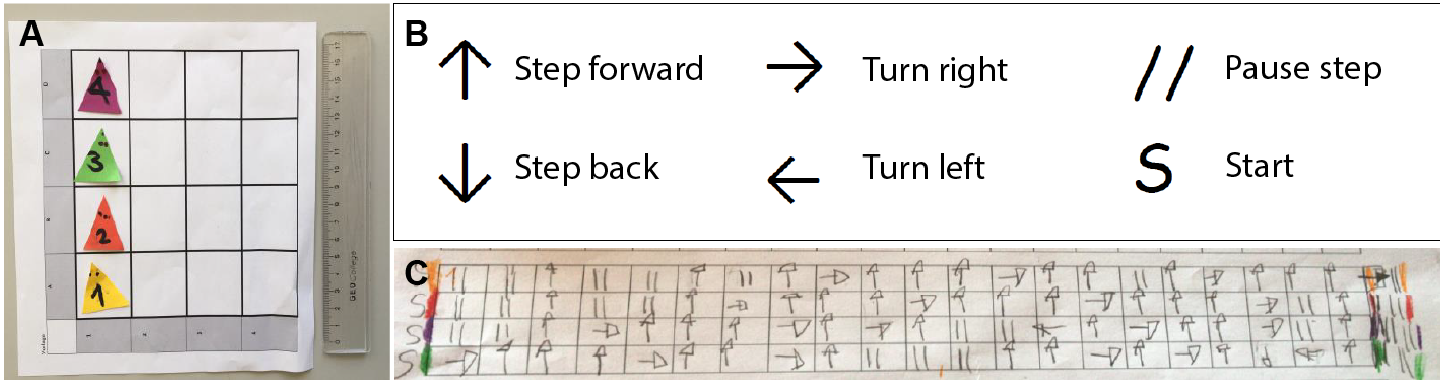 Fig 1: The paper grid and triangle setup used by students at home.
Deep Insight: The Value of "Decelerated Feedback"
One of the most profound takeaways from this study is the critique of Immediate Feedback.
In traditional ER, students often engage in "blind trial-and-error"—changing one command and hitting 'Go' repeatedly without thinking. The authors argue that the manual nature of the paper approach:
- Forces mental simulation before committing to a solution.
- Utilizes a strategic pause while waiting for the teacher’s video, which promotes reflection.
- Shifts the teacher's role from a lecturer to a facilitator/tutor.
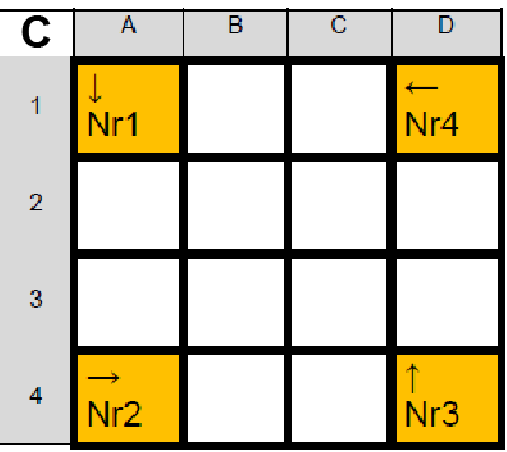 Fig 2: A student-teacher interaction via messaging and example tasks (B and C) requiring complex logic and pauses.
Performance and Engagement
- Engagement: Out of 13 students, 9 actively participated. Younger students (age 9) showed 100% retention through the 4-week program.
- The Age Gap: Older students (age 12) had a higher dropout rate. The authors hypothesize that the Bee-Bot’s limited command set (forward, back, turn, pause) was not sufficiently challenging for them in an analogue format.
- Technical Friction: By using familiar social media (WhatsApp/messaging), the "barrier to entry" was virtually zero, avoiding the common pitfalls of complex new software.
Critical Analysis & Conclusion
Takeaway
The success of Educational Robotics isn't in the "blinkliness" of the robot, but in the pedagogical design. By stripping away the hardware, the researchers exposed the core of computational thinking: logic, sequence, and reflection.
Limitations
- Scalability: The "Teacher-as-the-Robot" model is labor-intensive for the instructor who must film every solution.
- Complexity Cap: Paper-based methods struggle to represent more advanced sensor-based robotics (like obstacle avoidance or light sensing).
Future Outlook
This experience suggests that even in face-to-face classrooms, we should consider "unplugged" paper-based phases before giving students the actual robots. This could prevent the "trial-and-error" trap and ensure that when the robot finally moves, the student actually understands why.