
Balancing Privacy and Utility: Optimized Subspace Projection for Educational Data Mining
Educational Sensitive Information Retrieval: Analysis, Application, and Optimization
This paper introduces a privacy-preserving retrieval framework for educational data using Discriminant Component Analysis (DCA). It proposes an optimized data space projection algorithm designed to maximize the accuracy of non-sensitive classification tasks while simultaneously suppressing the leakage of sensitive personal information.
TL;DR
With the rise of student data analytics, protecting sensitive personal information (SIT) while maintaining high educational utility (IIT) has become a critical challenge. This paper presents a novel approach using Discriminant Component Analysis (DCA) and a specialized Classification Discriminant Criterion (CDC) to project data into a safe subspace. The result? A system that predicts student outcomes with over 88% accuracy while keeping sensitive identity data nearly as secure as a random guess.
Problem & Motivation: The Privacy-Utility Tug-of-War
In modern education, data is the new gold. Analyzing student habits, family backgrounds, and past grades can help educators intervene early to support at-risk students. However, this data is a double-edged sword. Sharing these high-dimensional datasets with third-party analysts exposes students to significant privacy risks—such as the unauthorized disclosure of socioeconomic status or personal identities.
Prior works like k-anonymity or perturbation (adding noise) often fail because:
- k-anonymity can be cracked with enough background knowledge.
- Noise addition often destroys the subtle correlations needed for accurate data mining.
The authors' insight is profound: we don't need to obscure all data; we simply need to project the data into a mathematical "blind spot" where sensitive features disappear, but useful features are sharpened.
Methodology: The Dual-Task Projection
The core of the paper is the Classification Discriminant Criterion (CDC). Unlike standard PCA, which tries to preserve all variance, the CDC views the problem as a signal-to-noise optimization.
1. Defining the Tasks
- Insensitive Information Task (IIT): The goal we want to achieve (e.g., predicting if a student will pass or fail based on study habits).
- Sensitive Information Task (SIT): The goal we want to block (e.g., identifying the specific student or their private household income).
2. The Mathematical Engine
The authors use scatter matrices— for desired utility and for privacy leakage. The optimization objective is defined by the following criterion:
By solving for the optimal projection matrix , the data is transformed into a subspace that acts as a "one-way filter" for information.
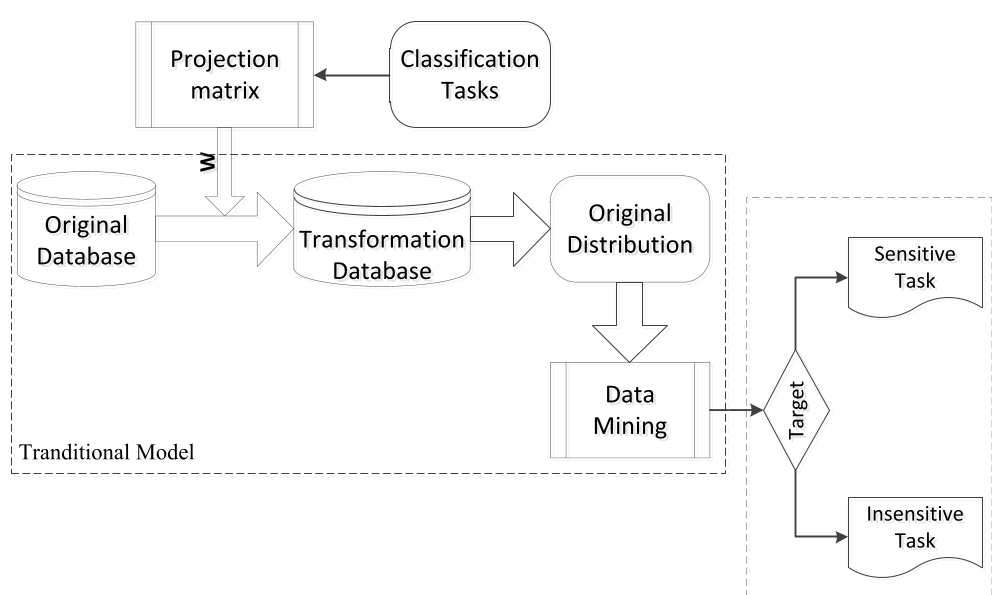 Figure 1: The proposed structure for transforming data into a secure public mining model.
Experiments: Performance in the Real World
The authors tested their method on a dataset of 744 students from Shaanxi Province, involving 32 attributes ranging from study time to alcohol consumption.
Breaking the Tradeoff
The experimental results demonstrate a clear advantage. While traditional PCA forces a hard tradeoff between utility and privacy, the proposed CDC-based projection manages to improve utility even as it enhances privacy.
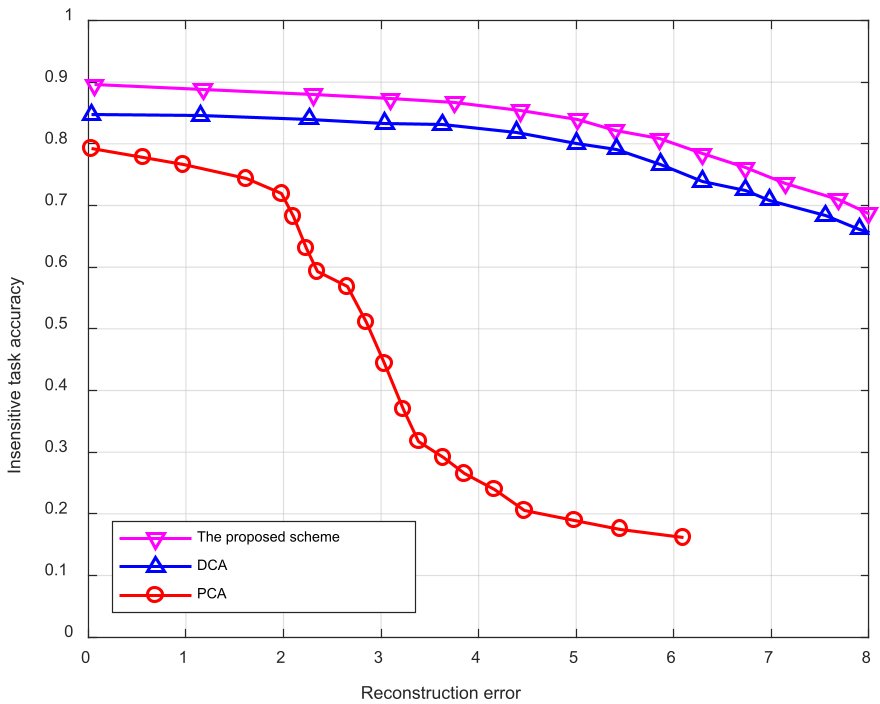 Figure 2: Performance comparison showing the effectiveness of the data projection as dimensions increase.
Key Findings:
- Optimal Dimension: The system reaches peak efficiency at a projection dimension of . Beyond this, "noise" (redundant sensitive data) begins to leak back in.
- Superiority over SOTA: The proposed method achieved 88.21% utility accuracy, significantly higher than the 85.53% achieved by standard DCA.
| Algorithm | Insensitive Utility (Higher is Better) | Sensitive Privacy (Lower is Better) |
|---|---|---|
| Random Guess | 15.82% | 10.54% |
| Proposed Method (d=6) | 88.21% | 11.74% |
| Standard DCA | 85.53% | 16.22% |
Critical Insight: The Reconstructability Factor
A fascinating part of the research is the Reconstruction Error (RE) analysis. The authors prove that an attacker attempting to reverse-engineer the original data from the projected subspace will face a mathematically guaranteed error margin. This ensures that even if the projection matrix itself is compromised, the sensitive raw data remains physically unrecoverable.
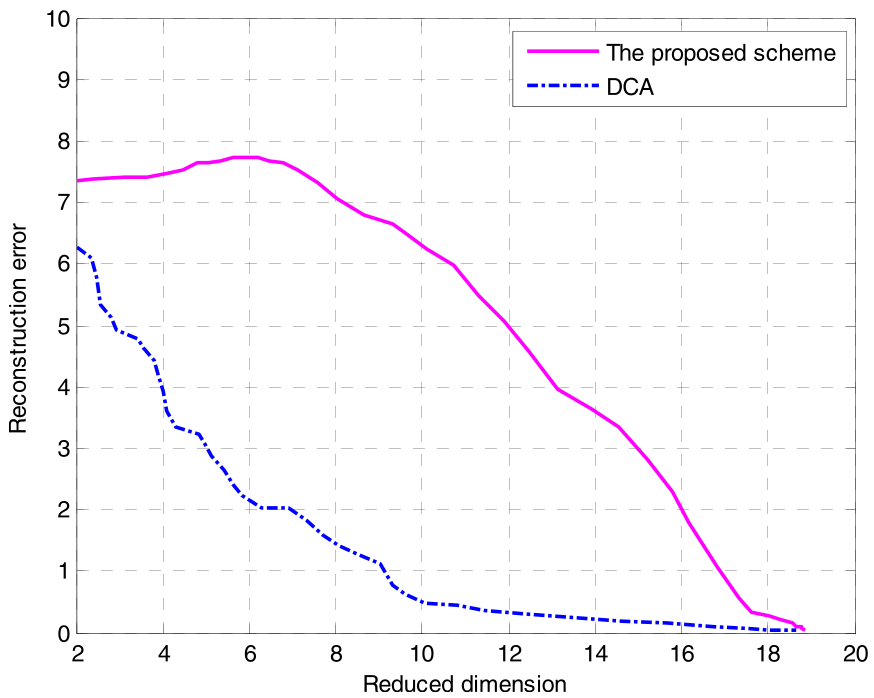 Figure 3: Higher reconstruction error for sensitive attributes ensures stronger privacy protection against attackers.
Conclusion
This work represents a significant step forward in Educational Sensitive Information Retrieval. By moving away from "blurring" data toward "strategically projecting" data, the authors have shown that we can have our cake and eat it too: high-performance AI analytics and robust student privacy.
Future Work: The transition from linear subspaces to more complex Kernel-based nonlinear projections remains a promising frontier, especially for datasets with highly non-linear relationships between educational outcomes and social backgrounds.