
Education 4.0: Machine Learning and the "Humanization" of EdTech
What Can You Do with Educational Technology that is Getting More Human?
The paper outlines the transition from Education 3.0 (Cloud-based) to Education 4.0, which is fundamentally driven by Machine Learning. It introduces a tripartite evolution focusing on Mixed Realities, Multimodal Interaction (voice assistants), and Mixed Social Networks to create more personalized and "human-like" instructional environments.
TL;DR
As we step beyond the "Cloud & MOOC" era (Education 3.0), the next frontier—Education 4.0—is defined by the integration of Machine Learning to restore the "human touch" to digital learning. By evolving videos into Mixed Realities, quizzes into Multimodal Interactions, and forums into AI-managed Social Networks, technology is moving from being a mere delivery tool to becoming an intelligent, intuitive partner in the learning process.
The Evolution: From Industry 4.0 to Education 4.0
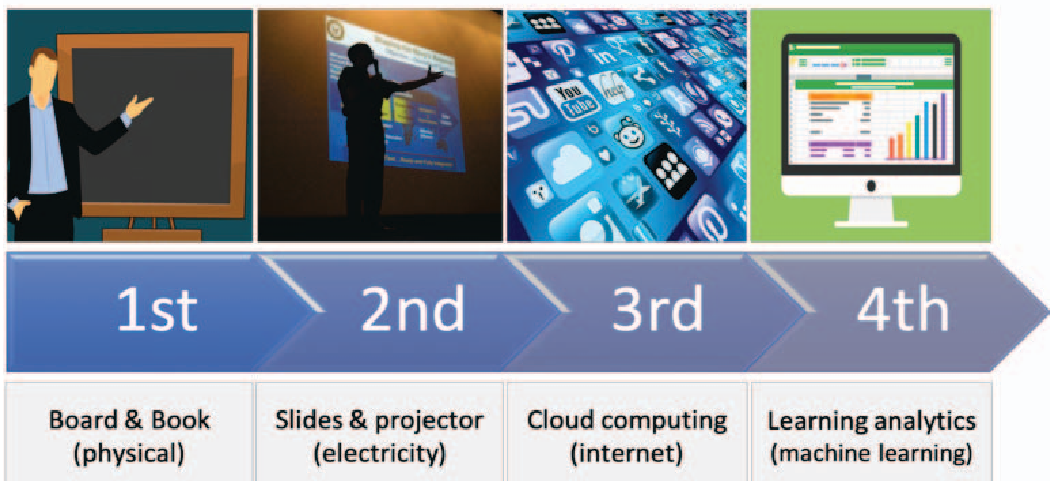
Just as Industry 4.0 transformed manufacturing through Big Data and AI, Education is undergoing its fourth major revolution. The journey from the printing press (1.0) and electricity/projectors (2.0) to the Cloud (3.0) has brought accessibility. However, it also brought isolation.
The authors argue that Education 3.0 focused on "What" (content delivery), while Education 4.0 focuses on "How" and "Deeply" (personalized, human-like interaction).
The Machine Learning Pivot
In the previous decade, Cloud Computing was the engine. Today, Machine Learning provides the "brain." The core shift is from Algorithm-driven (manual rules) to Data-driven (derived rules). This allows for:
- Skill Modeling: Predicting performance and identifying gaps before the student fails.
- Semantic Interoperability: Combining data from various IoT devices (voice assistants, web platforms) via standards like xAPI to create a holistic view of the learner.
Three Pillars of Educational Humanization
1. Mixed Realities (Evolved Discovery)
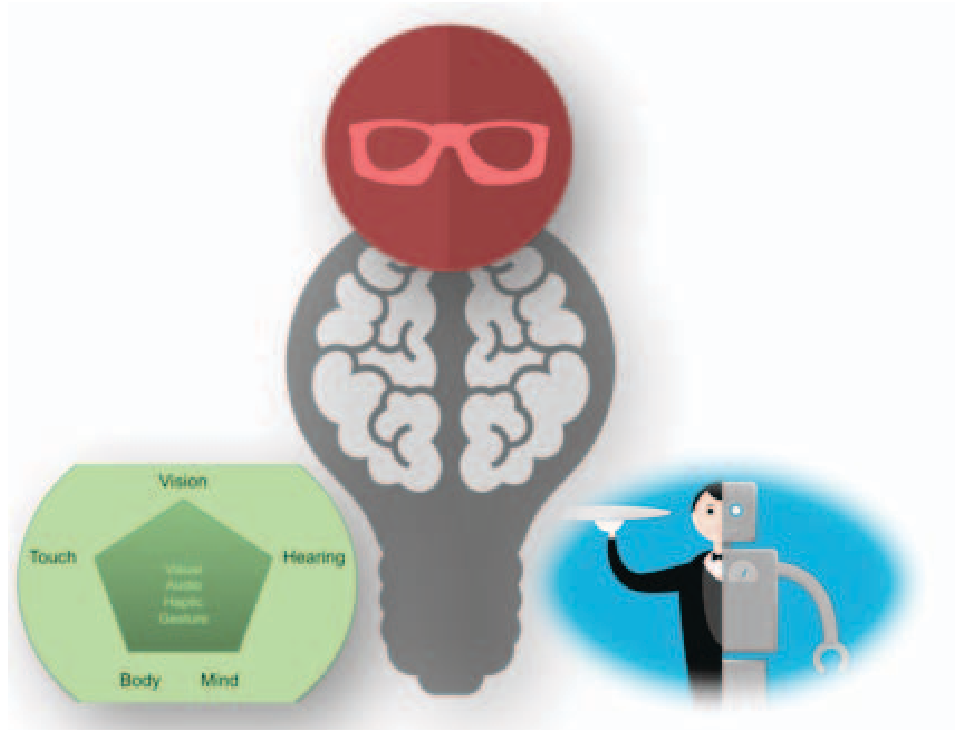
Moving beyond static videos, Mixed Reality (MR) allows students to interact with digital objects within their real-world context. This "active discovery" proves more motivating and cost-effective than fully digital 3D environments, as it leverages the physical world’s natural immersion.
2. Multimodal Interaction (Natural Voice)
"Speaking is a human activity from long ago." Voice assistants like JavaPAL (a protoype for learning Java) remove the barrier of the keyboard. They allow for an intuitive, faster, and more efficient communication channel, particularly for non-tech-savvy learners or multi-tasking students.
3. Mixed Social Networks (AI Teaching Assistants)
In massive courses, teachers are overwhelmed. The solution? Virtual Teaching Assistants like Jill Watson (built with IBM Watson APIs). These bots can "separate the wheat from the chaff" by identifying critical forum messages or providing immediate, high-quality answers, making the virtual social experience feel responsive and "supported."
Closing the Loop: Bridging Physical and Digital
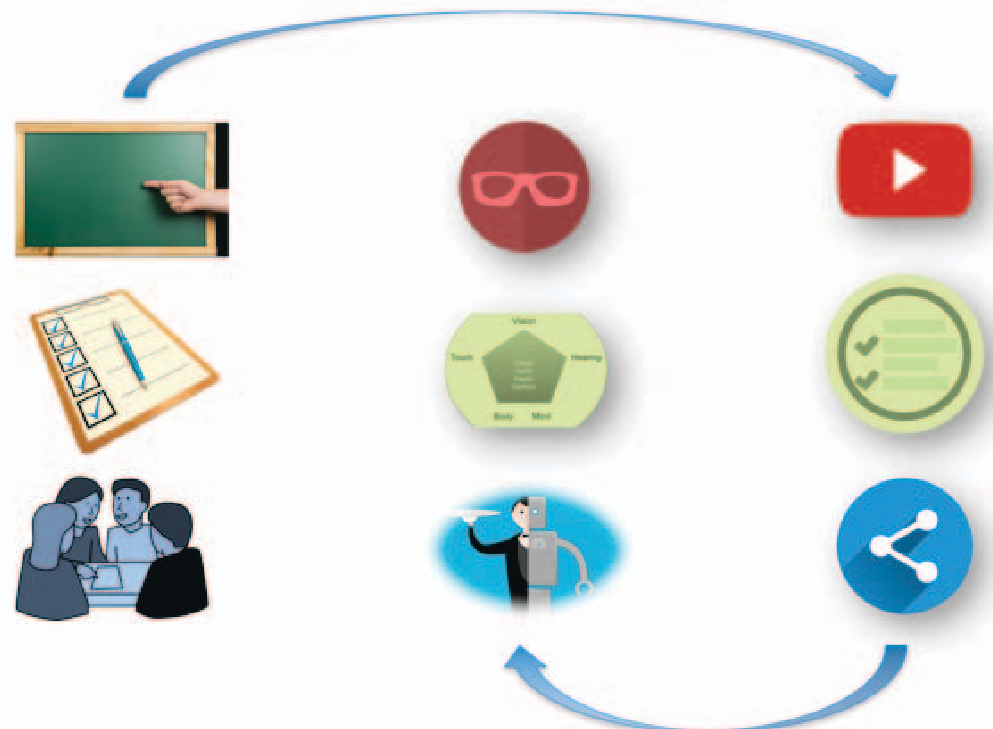
The ultimate vision of the paper is to use the data-gathering power of online environments to improve the face-to-face classroom. By "closing the loop," technologies developed for MOOCs—like predictive analytics and adaptive learning—can be brought back to traditional settings to personalize education for students who feel "at home" in physical spaces but need digital support.
Critical Insight & Future Challenges
While the "humanization" of technology offers immense psychological benefits and better learning outcomes, the authors rightly point out the Double-Edged Sword:
- Ethics & Privacy: With hyper-personalized data collection comes the risk of exploitation.
- Pedagogical Transparency: Teachers might become "unaware" of how the technology helping them actually operates.
- Data Volume: Managing the massive influx of semantic data across different learning platforms remains a technical hurdle.
In conclusion, Education 4.0 is not about replacing the teacher, but about using Machine Learning to scale the "human essence" of teaching—feedback, mentorship, and personalized guidance—to millions of learners worldwide.