
Decoding the Depth of Feeling: EEG-Based Intensity Classification
EEG-based Classification of the Intensity of Emotional Responses
The paper presents a comparative study of Support Vector Machines (SVM) and Convolutional Neural Networks (CNN) for EEG-based emotion recognition. It uniquely focuses on classifying not just emotional states (valence/arousal) but also the self-reported intensity of those emotions across 12 specific subcategories.
TL;DR
Researchers have moved beyond simple "Happy vs. Sad" binary classification to map the intensity of human emotions using brain activity. By comparing Support Vector Machines (SVM) and Convolutional Neural Networks (CNN), this study demonstrates that we can identify 12 distinct levels of emotional intensity with up to 70% accuracy, proving that our brains "feel" in high resolution.
Context: Why Stimulus-Based Labels are Not Enough
In the world of affective computing, the standard approach has been: "Show the user a scary picture, label their brain activity as Fear." However, this fails to account for individual subjectivity. What is terrifying to one person might be mildly unsettling to another.
The core insight of this research is a shift toward self-reported intensity. Instead of assuming the stimulus defines the emotion, the authors asked the participants to rate their own feelings. This introduces a significant challenge: how do we distinguish between "Low," "Medium," and "High" intensity for complex states like Negative Valence High Arousal (NVHA)?
Methodology: Engineering the Signal
The team used a 64-channel EEG system to capture brainwaves during exposure to images from the International Affective Picture System (IAPS).
The Two Architectures
- SVM (Support Vector Machine): Relies on frequency band extraction. The raw signal was transformed via STFT, and the power in the Beta and Gamma bands was averaged. PCA (Principal Component Analysis) was then used to reduce the data to 25 core components to prevent overfitting.
- CNN (Convolutional Neural Network): A 2D CNN was designed to learn hidden dependencies directly from the EEG spectrograms.
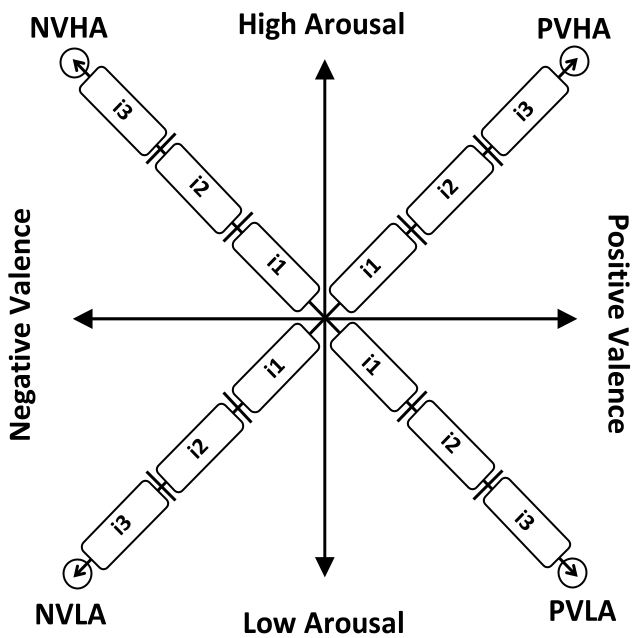 Fig 1: The proposed CNN architecture designed to process time-averaged EEG frequency features.
Experiments & Results: SVM Holds Its Ground
The study evaluated performance across two tasks:
- 4-Class Task: (Positive/Negative Valence) x (High/Low Arousal).
- 12-Class Task: Adding Intensity (Low, Medium, High) to each of the 4 quadrants.
Surprisingly, SVM slightly outperformed CNN in both scenarios. While deep learning is often touted as the superior solution, the authors found that for EEG data—where neurobiological knowledge already tells us that specific frequency bands (like Beta/Gamma) are critical—manual feature engineering for an SVM provides a more robust and faster-training model.
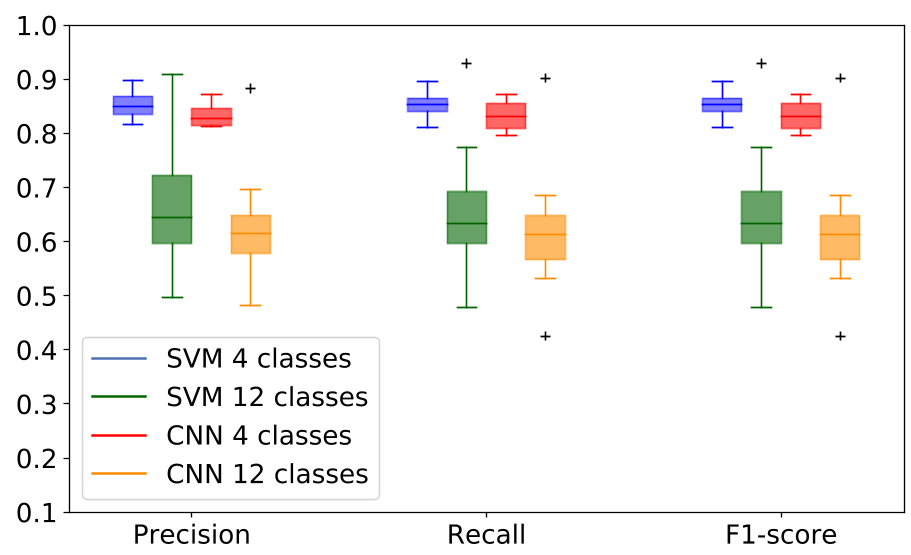 Fig 2: Comparison of Precision, Recall, and F1-score. SVM shows a consistent edge in classification performance.
The Intensity Imbalance
One of the most interesting findings was the "bias" in human reporting. Participants often struggled to distinguish between low and medium intensity, leading to an unbalanced dataset. Despite this, both models maintained strong recall for high-intensity negative states (NVHA), which are often the most physiologically distinct.
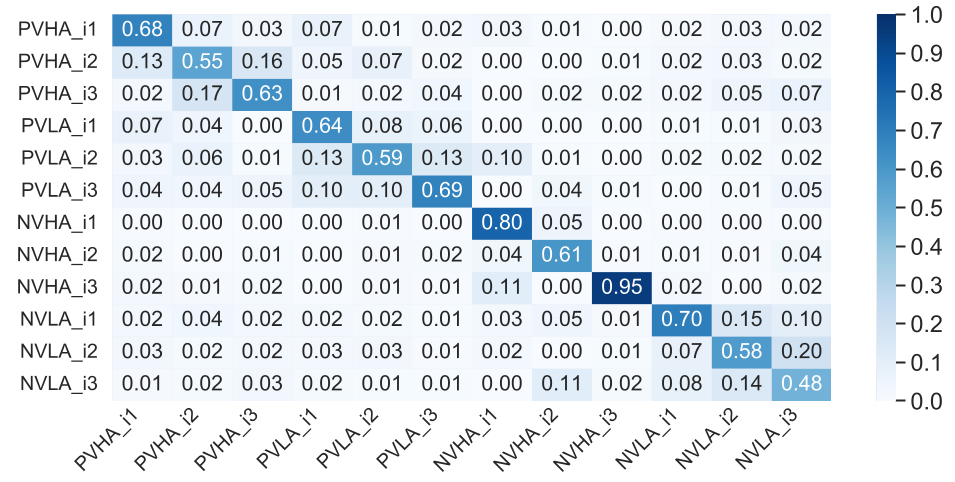 Fig 3: Confusion matrices for 12-class classification. Note the high precision for high-intensity negative emotional states.
Critical Insight & Future Outlook
This paper serves as a reminder that domain-specific knowledge (neuroscience) can sometimes outweigh the "black-box" power of deep learning. By targeting Beta and Gamma bands specifically, the SVM was able to filter out noise that the CNN arguably struggled with.
The Takeaway? Future affective interfaces—whether in healthcare or gaming—must move toward personalized, intensity-aware models. The next step will be moving from classification to regression, allowing machines to track the ebb and flow of human emotion as a continuous, quantitative value.
Limitations
- Dataset Size: Deep learning (CNN) typically thrives on much larger datasets than the 2,671 trials available here.
- Subjectivity: Self-reports are prone to participants' internal biases and varying "baseline" perceptions of intensity.