
EEG-based Emotion-Adaptive Advertising: The Era of Biologically Responsive Marketing
EEG-Based Emotion-Adaptive Advertising
This paper introduces an emotion-adaptive advertising framework that utilizes real-time EEG signals to personalize video content. The core method maps recognized discrete emotions to the 3D PAD (Pleasure-Arousal-Dominance) model to dynamically adjust scene elements like color, shape, and motion speed, achieving a closed-loop affective computing system for marketing.
TL;DR
Advertising effectiveness is often hit-or-miss because it assumes a static emotional response. This paper presents a system that reads your brainwaves (EEG) while you watch an ad and rewrites the movie in real-time to ensure you stay engaged, happy, and focused on the brand, using the 3D PAD model to bridge the gap between neuro-signals and cinematography.
The "Broken" Feedback Loop in Modern Ads
In the current attention economy, we are flooded with content. The industry's dirty secret? Most ads fail because they cannot adapt to the viewer's immediate mood.
- Self-Reports (Post-ad surveys) suffer from "recall bias"—people forget how they felt or lie to please the researcher.
- Facial Recognition can be masked or "faked" by the viewer.
The authors argue that EEG (Electroencephalogram) provides the only "honest" and high-temporal-resolution data stream that can be used to close the loop between the screen and the human subconscious.
Methodology: From Brainwaves to Film Direction
The architecture of this system involves a sophisticated three-step process:
1. Real-Time Emotion Classification
The system utilizes a 14-channel Emotiv headset. Raw signals are filtered (2-42 Hz), and two types of features are extracted:
- Higuchi Fractal Dimension (FD): Measures the complexity of the signal.
- Statistical Features: Captures the distribution of the data.
These are fed into a Support Vector Machine (SVM) classifier, which identifies one of eight discrete emotions (e.g., Happy, Sad, Angry).
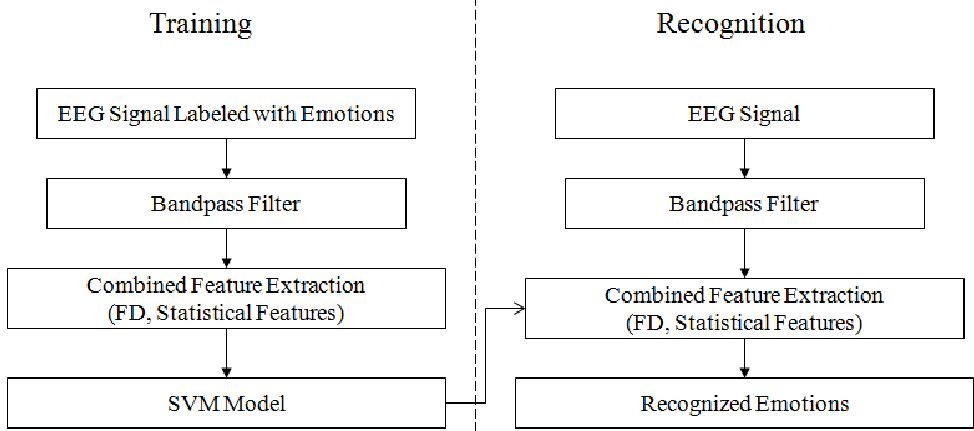 Figure 1: The training and recognition pipeline for EEG-based emotion detection.
2. The PAD Mapping
Since "Happy" is too generic for scene adjustment, the authors map discrete labels to the VAD (Valence-Arousal-Dominance) Model. This allows for granular control:
- Arousal: Excitement vs. Calm.
- Valence: Positive vs. Negative feelings.
- Dominance: Feeling in control vs. over-powered.
3. The Dynamic Optimization Loop
If the viewer’s brain state deviates from the advertiser’s "Target State," the movie changes its visual properties instantly.
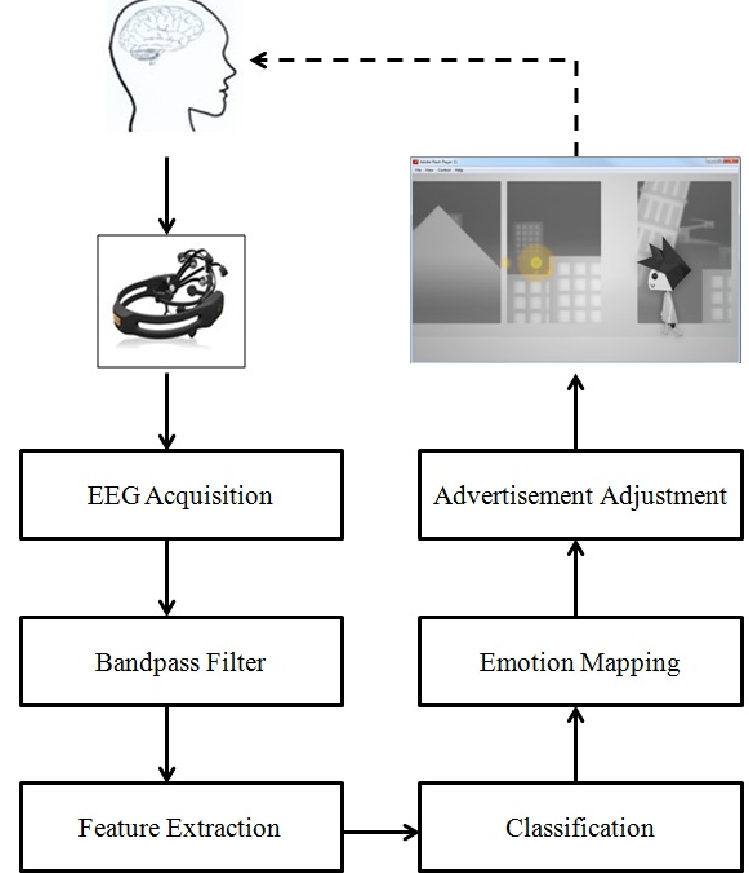 Figure 2: The feedback loop where recognized emotions trigger scene adjustments.
The Experiment: Customizing the Library Journey
In a prototype ad for a National Library, the system was programmed with specific "Target States":
- Immersive Phase: Target High Arousal (Red filters, high speed).
- Branding Phase: Target Low Arousal (Blue filters, calm environment) to improve brand memorization.
| Dimension | Adjustment Trigger | Visual Strategy |
|---|---|---|
| Valence | If Negative | Add curvy shapes, increase head size of characters to induce positivity. |
| Arousal | If too Low | Increase color saturation; add red filters to excite. |
| Dominance | If too Low | Slow down the animation speed to give a sense of control. |
 Figure 3: Scene variations (Basic vs. Arousal-boosted red/blue filters).
Critical Insight: The Physiological Reality of Ads
The most striking takeaway is the finding that Arousal and Memorization have an inverse relationship. High arousal is great for catching attention but bad for processing deep arguments. By using EEG, the system knows exactly when the user is too "hyped" to remember the brand name and can cool them down using blue color filters to ensure the message sticks.
Conclusion & Limitations
This work marks a significant step towards Affective Computing in the real world. However, the 53.7% accuracy for 8 emotions suggests room for improvement—likely through modern Deep Learning architectures. Furthermore, the "subject-dependent" nature of the model (requiring individual training) remains a hurdle for mass scalability.
As EEG hardware continues to shrink into everyday wearables, the ads of the future won't just be broad targeted; they will be neuro-personalized in real-time.