
SFMS-Net: Fusing Prior Knowledge and Data-Driven Insights for Advanced Emotion Recognition
EEG-Based Emotion Recognition Fusing Spacial-Frequency Domain Features and Data-Driven Spectrogram-Like Features
This paper introduces SFMS-Net, a multi-input Y-shaped deep neural network for EEG-based emotion recognition that achieves SOTA performance on the DEAP dataset. The model uniquely fuses manually crafted Spacial-Frequency Matrices (SFMs) with data-driven spectrogram-like features automatically extracted via scaling convolutional layers.
TL;DR
Recognizing human emotions via EEG signals is a cornerstone of next-generation Human-Computer Interaction (HCI). However, researchers often struggle to balance domain expertise (hand-crafted features) with feature discovery (deep learning). This paper presents SFMS-Net, a Y-shaped neural network that bridges this gap. By combining Spacial-Frequency Matrices (SFM) with a novel Scaling Convolutional Layer, the model captures time, space, and frequency information simultaneously, achieving SOTA results on the DEAP dataset.
Problem & Motivation: The Gap Between Manual and Automatic
The field of EEG analysis is currently divided into two "technical schools":
- Hand-extracted Features: Rely on prior knowledge (like Differential Entropy). While interpretable, they often lose subtle, hidden patterns in the raw signal.
- Fully Automatic Extraction: Deep networks (like CNNs or GRUs) can find complex patterns but often ignore the physical reality of EEG—specifically the spatial layout of electrodes on the human scalp.
The authors argue that a "onefold" feature approach is insufficient. To truly understand emotion, a model must respect the spatial positioning of the brain's electrical activity while remaining flexible enough to learn data-driven time-frequency representations.
Methodology: The Y-Shape Fusion
The core of the paper is the SFMS-Net architecture, which processes two distinct types of inputs.
1. Spacial-Frequency Matrix (SFM) - The "Prior Knowledge" Branch
EEG isn't just a list of numbers; it’s a map of the brain. The authors transform 1D signals into 2D maps by:
- Calculating Differential Entropy (DE) across five frequency bands (theta, alpha, etc.).
- Mapping the 32-channel signals into a 9x9 grid based on the international 10–20 electrode standard.
- This ensures the network "knows" which electrodes are neighbors, capturing spatial correlations effectively.
2. Scaling Convolutional Layer - The "Data-Driven" Branch
Unlike standard CNNs with fixed kernel sizes, the Scaling Layer acts like a spectrogram generator. It uses cross-correlation between the raw signal and various downsampled kernels to extract multiscale temporal features automatically.
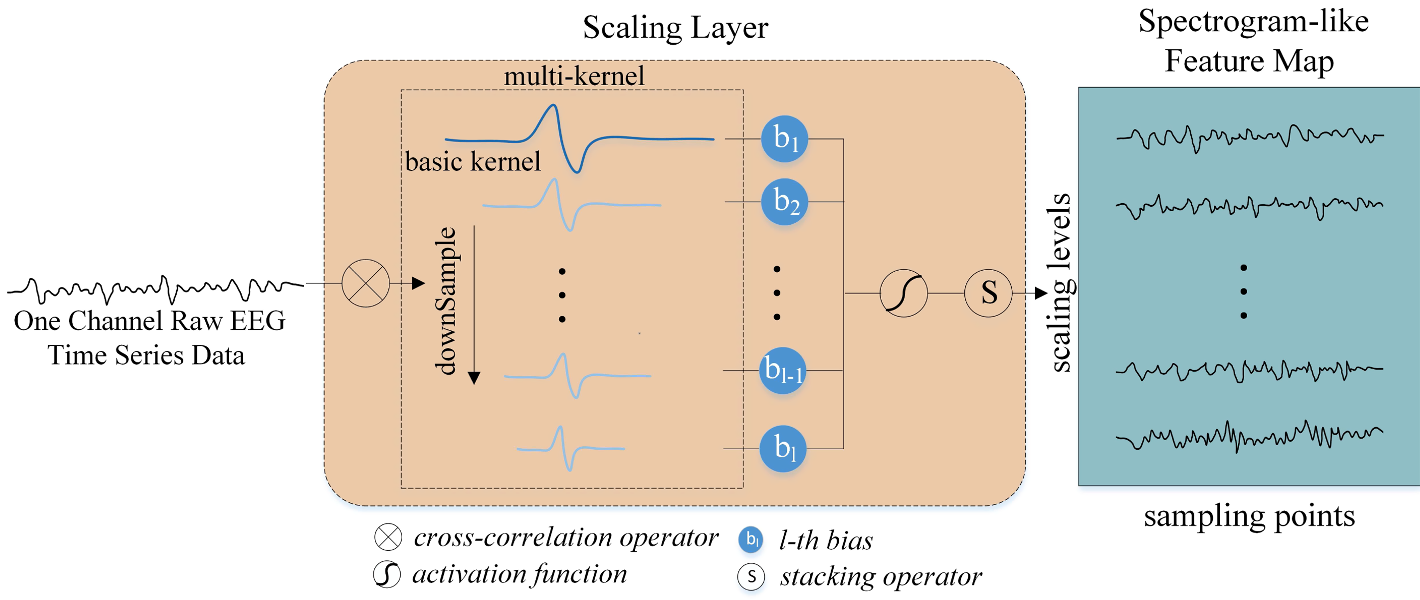 Figure 1: The SFMS-Net Architecture showing the fusion of SFM and Scaling Layers.
Experimental Triumphs
The model was rigorously tested on the DEAP dataset (32 subjects, 40 trials each).
- Performance: The model outperformed existing methods like CapsNet and VAE-SVM, reaching over 71% accuracy across all three emotional dimensions (Valence, Arousal, Dominance).
- Stability: Cross-validation results (visualized via box-plots) showed that SFMS-Net has lower variance than standard CNNs, making it more reliable for real-world applications.
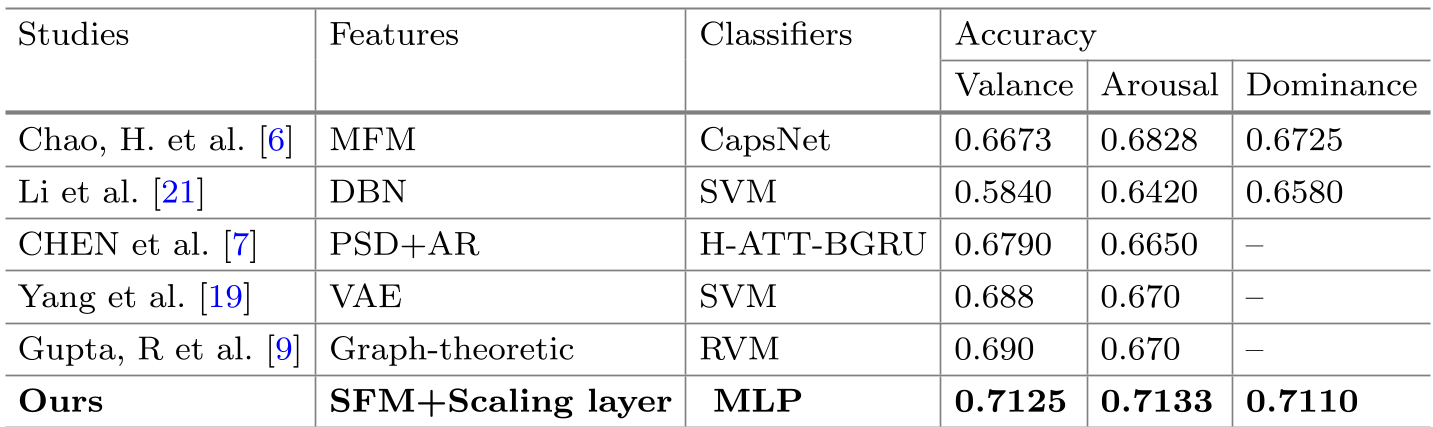 Table 1: Competitive comparison showing SFMS-Net surpassing prior benchmarks.
Ablation Study Insight
The researchers conducted "ablation" tests to see which part of the model did the heavy lifting. Interestingly, while the Scaling Layer provided the biggest jump in accuracy over a baseline CNN, the highest performance was only achieved when both the SFM (spatial knowledge) and Scaling (data-driven) modules were active. This proves that spatial context is a vital "inductive bias" for EEG tasks.
Deep Insight: Why Theta and Alpha Matter
The paper includes heat map visualizations showing that positive emotions correlate with significantly higher energy in the theta and alpha bands. This aligns with neurological studies that link alpha-wave activity to relaxed yet alert states, further validating that the SFMS-Net is learning biologically plausible features rather than just noise.
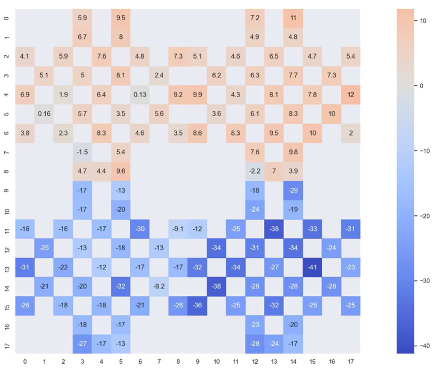 Figure 2: SFM feature heat maps showing clear distinctions between positive and negative emotional states.
Conclusion and Future Outlook
SFMS-Net demonstrates that the future of bio-signal processing isn't just "more layers," but smarter inputs. By fusing spatial prior knowledge with adaptive time-frequency extraction, the authors have set a new bar for subject-independent emotion recognition.
Limitations: The model currently assumes a static grid for spatial mapping. Future work involving Graph Neural Networks (GNNs) could potentially model the dynamic functional connectivity between brain regions even more accurately.
Keywords: EEG, Emotion Recognition, SFMS-Net, Deep Learning, Feature Fusion, DEAP Dataset.