
Pyraclostrobin: The Fine Line Between Plant Protection and Growth Inhibition
Effect of strobilurin fungicide on the initial growth of common bean plants
This study investigates the morphophysiological impact of Pyraclostrobin (PCL), a strobilurin fungicide, on the initial growth of common bean (Phaseolus vulgaris L.). By analyzing seed imbibition across various concentrations and times, the researchers demonstrate that while high PCL levels act as a stressor, a low concentration (112 mg L–1) can trigger a hormetic response, enhancing germination and photosynthetic performance.
TL;DR
Pyraclostrobin (PCL) is a cornerstone of fungal disease management, but its systemic nature means it interacts deeply with the plant host. This study reveals that PCL affects Phaseolus vulgaris (common bean) in a dose-dependent manner: high concentrations severely disrupt water transport tissues (xylem) and photosynthetic machinery, while low-dose treatments (112 mg L–1) can actually boost early growth through a phenomenon known as hormesis.
Background: A Systemic Paradox
As one of the world's most consumed pesticides, strobilurins like Pyraclostrobin operate by inhibiting mitochondrial respiration. However, because the target (Complex III) is conserved across eukaryotes, these fungicides can inadvertently interfere with the plant’s own energy production. Brazilian farmers have long observed crop stunting, but the "Why" and "How" remained locked behind anatomical and physiological barriers—until now.
The Anatomical Bottleneck: How Growth is Stunted
The study’s most striking finding lies in the "hydraulic architecture" of the seedlings. As PCL concentration increased, the researchers observed a dramatic reduction in the diameter of metaxylem vessel elements across leaves, stems, and roots.
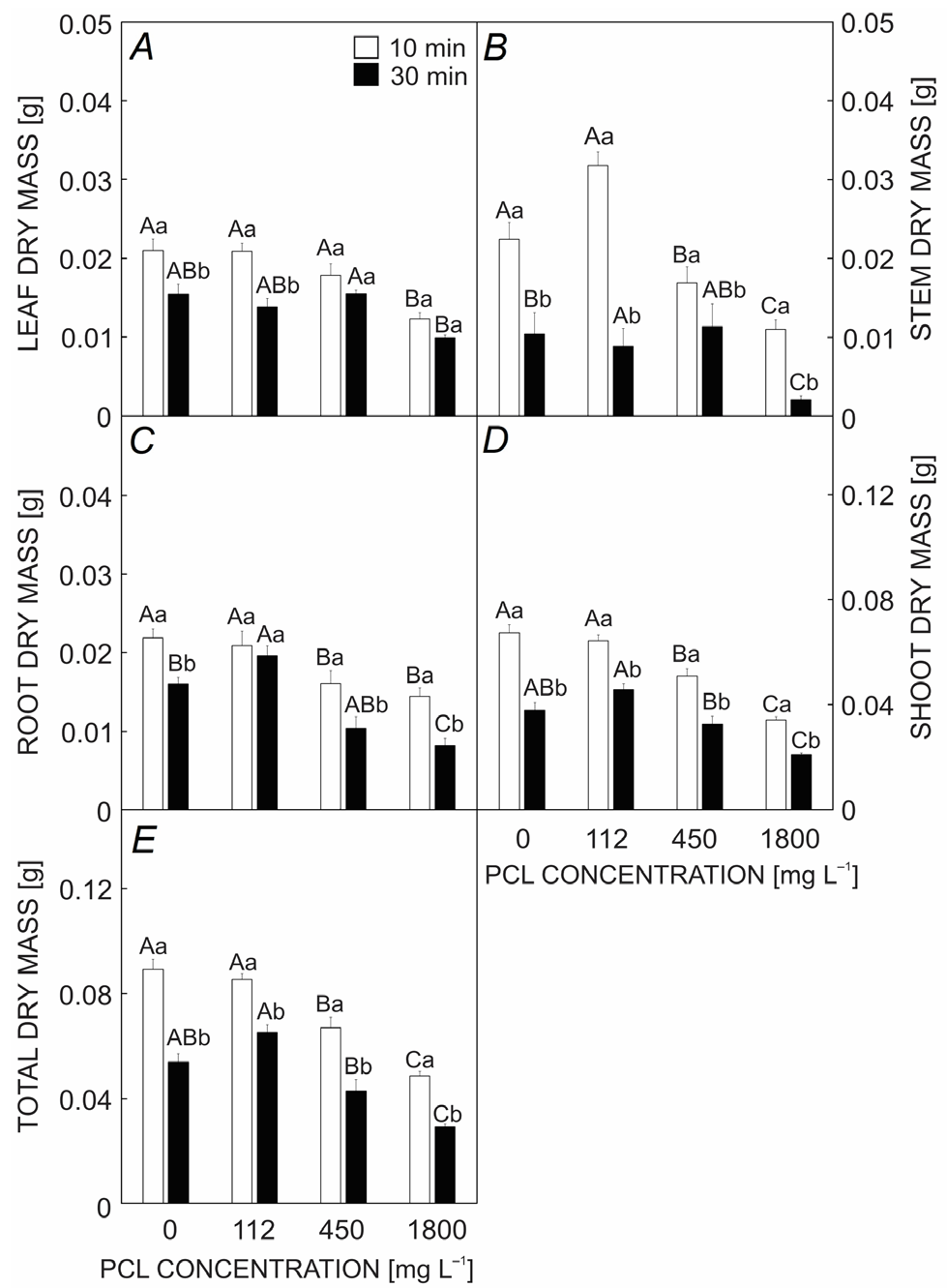 Figure 1: Morphological reduction in leaf, stem, and root length under increasing PCL stress.
According to the Hagen-Poiseuille law, water conduction efficiency is tied to the fourth power of the vessel radius. A ~44% reduction in diameter (as seen in the 1,800 mg L–1 treatment) doesn't just slow down water; it exponentially starves the plant of the hydraulic pressure needed for cell expansion and nutrient transport.
Photosynthetic Dysfunction: When Light Becomes a Burden
Using the JIP-test (Chlorophyll a fluorescence), the authors mapped the "energy flux" through the leaves. At high concentrations, the seedlings showed:
- Reduced Active Reaction Centers (RC/CSm): The engines of photosynthesis were shut down.
- Increased Energy Dissipation (φD0): Because the plant couldn't process the absorbed light, it had to "dump" it as heat to avoid damage, leading to massive efficiency losses.
- Structural Damage: High doses induced damage to the thylakoid membranes, effectively "clogging" the electron transport chain.
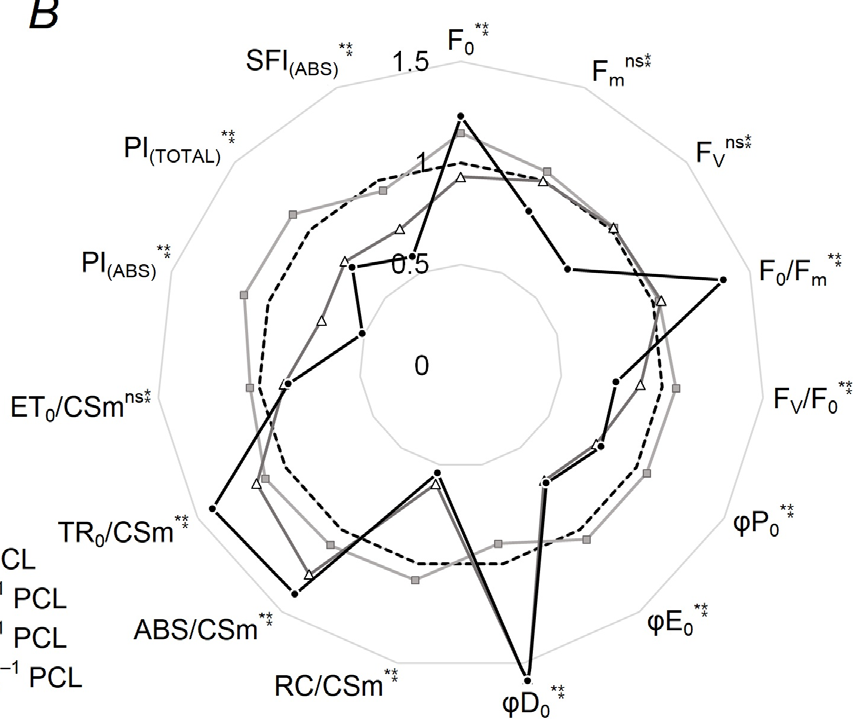 Figure 2: Normalized JIP-test parameters showing the collapse of energy flux (red lines) at high PCL concentrations.
The Silver Lining: The 112 mg L–1 "Sweet Spot"
Interestingly, the data supports the Hormesis Theory. At a concentration of 112 mg L–1 with 30 minutes of soaking, the bean plants showed better performance than the distilled water control.
- Biomass: Total dry mass increased by ~20%.
- Physiology: The researchers hypothesize that sub-toxic doses may activate antioxidant pathways or slightly alter osmotic potential, making water uptake more gradual and less damaging to delicate membranes.
Critical Insight & Conclusion
This paper proves that PCL is not a passive bystander in plant growth. The Takeaway is clear: seed treatment protocols must be meticulously calibrated. Over-application doesn't just waste money; it structurally re-architects the plant to be less efficient at transporting water and converting light.
Limitations: The study was conducted in a controlled growth chamber. Future research is needed to see if the "hormic boost" of the 112 mg L–1 dose holds up under field conditions where environmental stressors (drought, heat) might interact with the chemical stress.
Conclusion: Anatomical analysis is no longer just "nice to have"—it is essential for understanding the ecotoxicological footprint of modern agrochemicals. By looking through the microscope, we can finally explain why a "protected" crop might still fail to thrive.