
Beyond Words: Decoding Satire Through Emotional Ensemble Learning
Effective analysis of emotion-based satire detection model on various machine learning algorithms
2017-10-01
Summary
Problem
Method
Results
Takeaways
Abstract
This paper evaluates an emotion-based satire detection model across multiple machine learning algorithms, comparing base classifiers with ensemble methods. Specifically, it utilizes the BOSE (Bag-of Sorted Emotion) framework and EmoLex features to achieve a top F1-score of 0.724 using Random Forest.
## TL;DR
While satire is a staple of human humor and social critique, it remains a "black box" for traditional NLP. This paper moves beyond simple keyword matching to analyze **emotional signatures** using a suite of machine learning tools. The key finding? While individual algorithms struggle with the "fake" emotions in satire, **Ensemble Classifiers** (like Random Forest) can effectively bridge the gap, achieving superior accuracy by triangulating complex emotional cues.
## The Motivation: Why Lexical Analysis Fails
Most satire detection systems look for specific words—adjectives or interjections. However, satire is inherently "implicit." A satirical article might use words associated with "Trust" or "Joy" to mock a subject, which tricks a basic classifier into labeling it as positive or non-satire.
The author highlights a critical data paradox: nearly half of satirical articles are misclassified because they mimic the emotional profile of genuine news. To solve this, we need a method that can process the *ambiguity* of emotion rather than just the presence of words.
## Methodology: The Emotion-Based Model
The researchers utilized a corpus of 3,111 news articles and extracted a rich feature set using the **SÉANCE** (Sentiment Analysis and Social Cognition Engine) and **SenticNet** tools.
### Core Innovation: BOSE (Bag-of Sorted Emotion)
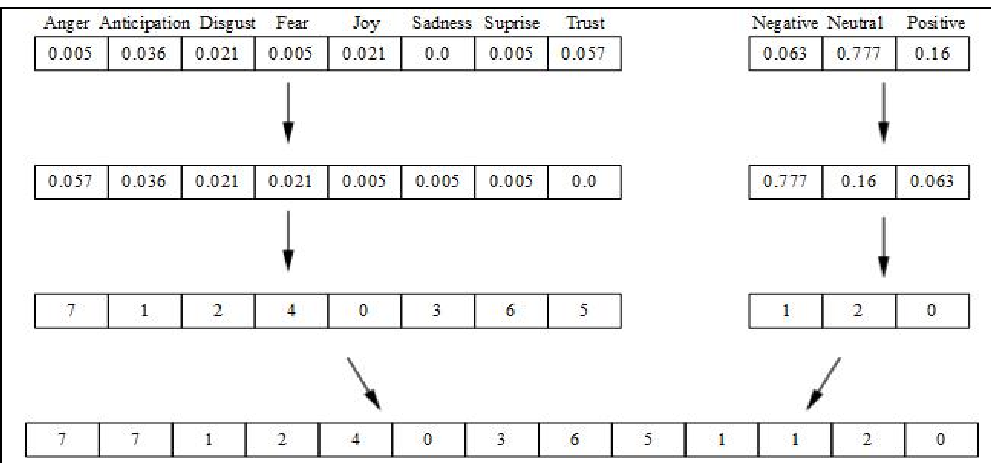
The paper introduces **BOSE**, a method to ensemble eight basic emotions (Anger, Anticipation, Disgust, Fear, Joy, Sadness, Surprise, Trust). By sorting and concatenating these emotional scores, the model captures the "rank" of emotions within a text, creating a more robust fingerprint of satirical intent.
## Performance: Why Ensembles Win
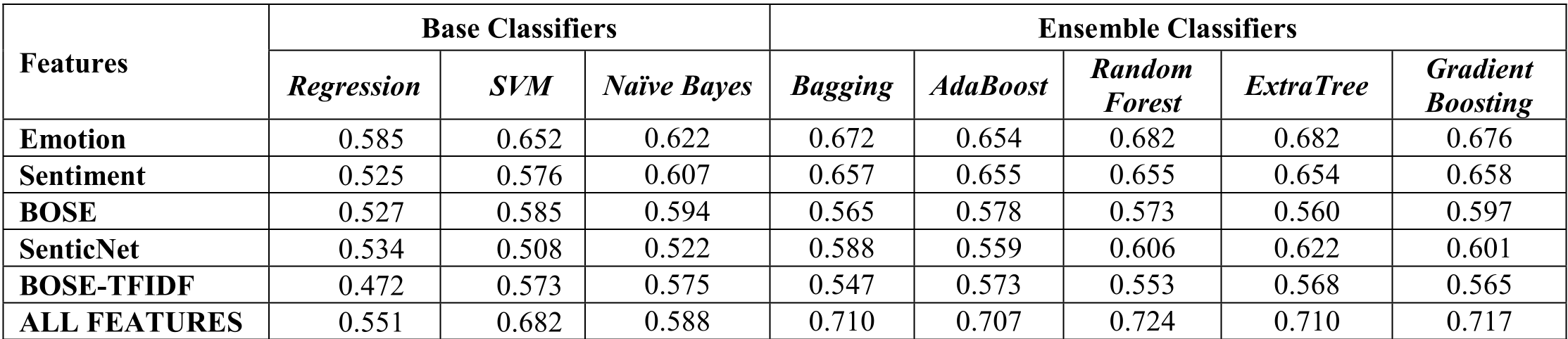
The study conducted a rigorous comparison between **Base Classifiers** (Regression, SVM, Naïve Bayes) and **Ensemble Classifiers** (Bagging, AdaBoost, Random Forest, Extra Tree, Gradient Boosting).
The results were conclusive:
* **Base Classifiers** are easily "confused" by satirical ambiguity. Regression, for instance, yielded a disappointing F1-score of 0.551.
* **Ensemble Classifiers** handle the noise significantly better. **Random Forest** emerged as the champion with an F1-score of **0.724**.
### Error Analysis and ROC Curves
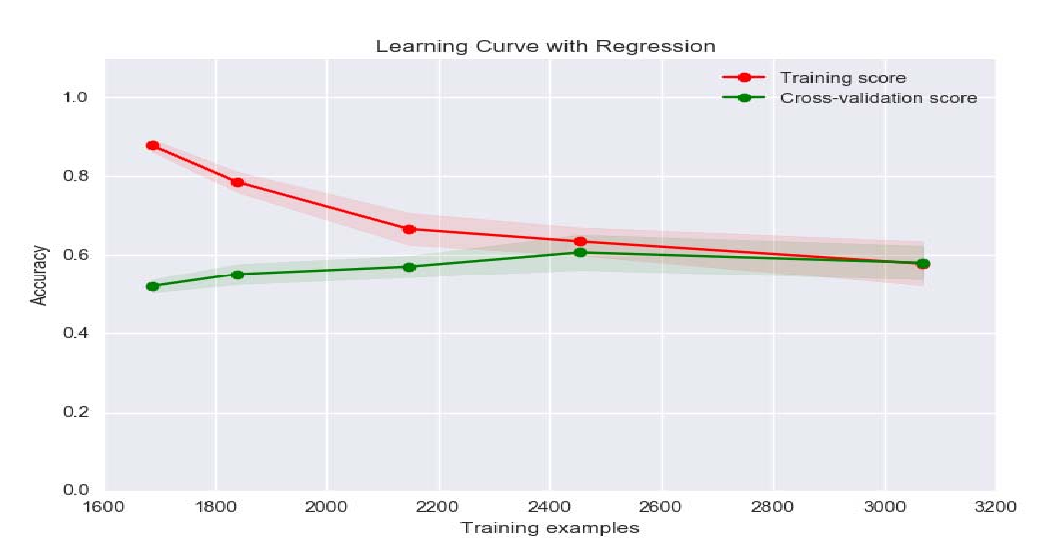
The error rate for ensemble methods hovered around 25%, a notable improvement over the 45% error rate seen in basic regression models. This suggests that the "voting" mechanism of ensemble learning is crucial for identifying the faint, often contradictory signals found in satire.
## Critical Insight & Future Outlook
This research confirms that **Satire Detection** is not just a linguistic puzzle, but an emotional one. However, the model currently peaks at ~73% accuracy. The "bottleneck" likely lies in the current generation of emotion lexicons, which struggle with the extremely nuanced irony found in high-level satire.
For developers and researchers, the takeaway is clear: when dealing with "deceptive" language (satire, irony, sarcasm), **Ensemble methods are non-negotiable**. Future work likely lies in combining these emotional ensembles with Deep Learning (LLMs) to better understand the contextual world-knowledge that makes satire "funny."
## Limitations
* **Lexicon Dependency**: The model is highly reliant on EmoLex and VADER; if the lexicon misses a word's emotional weight, the model fails.
* **Contextual Blindness**: Without external world knowledge, the system may never fully distinguish a "absurd but true" news story from a "realistic looking" satirical one.