
i-Alertor: Mastering Sophisticated Banking Fraud in the Age of Data Rarity
Effective detection of sophisticated online banking fraud on extremely imbalanced data
The paper proposes i-Alertor, a systematic framework for detecting sophisticated online banking fraud in extremely large and imbalanced datasets. It introduces ContrastMiner, an efficient contrast pattern mining algorithm, and combines it with Cost-Sensitive Neural Networks and Decision Forests to achieve high detection rates and low false alarm volumes.
TL;DR
Online banking fraud is increasingly sophisticated, acting as a needle in a haystack of millions of genuine transactions. This paper introduces i-Alertor, a framework that leverages sequential behavior analysis and a novel algorithm called ContrastMiner to detect fraud in real-time. By comparing current activities against historical user profiles using "Contrast Vectors," the system achieves significantly higher accuracy and lower manual investigation costs than traditional rule-based bank systems.
Background: The Wisdom Web of Things (W2T)
The authors view online banking fraud through the lens of the Wisdom Web of Things (W2T). This means fraud isn't just a cyber issue; it’s a synthesis of social intelligence (the fraudster's plan), cyber resources (malware/phish), and physical world abuse (money transfers). Detecting it requires a "complete data cycle" that bridges these worlds.
Why Modern Fraud Detection Fails
Most legacy systems rely on Expert Rules (e.g., "if amount > $X and location is Y, then alert"). However, modern fraud is:
- Dynamic: Fraudsters change tactics daily.
- Imbalanced: There might be only 5 frauds in 300,000 daily transactions (a 0.0016% ratio).
- Mimetic: Fraudulent behavior is designed to look exactly like genuine customer behavior.
The authors argue that looking at a single transaction in isolation is useless. The secret lies in the sequence. For instance, a Trojan might skip the "Home Page" or "Print Confirmation" steps that a human usually takes, or complete a payment in a superhuman 3 seconds.
The Core Innovation: Contrast Vectors and ContrastMiner
The heart of the paper is the Contrast Vector. Instead of just looking at raw features (amount, time), the system calculates a score for how "different" this feature is from the user's history.
1. The Contrast Vector
For every transaction, the system builds a vector that evaluates the support for current features against historical ones. If you've never sent money to account before, that feature's contrast score will be high.
2. ContrastMiner Algorithm
Traditional "Emerging Pattern" mining is an NP-hard problem—too slow for real-time banking where money disappears in seconds. ContrastMiner solves this by:
- Border Differentiation: Instead of checking every possible combination, it identifies the "borders" between genuine and fraudulent sets and calculates the difference.
- Heuristic Pruning: It skips low-value long patterns and uses a hash table for validation.
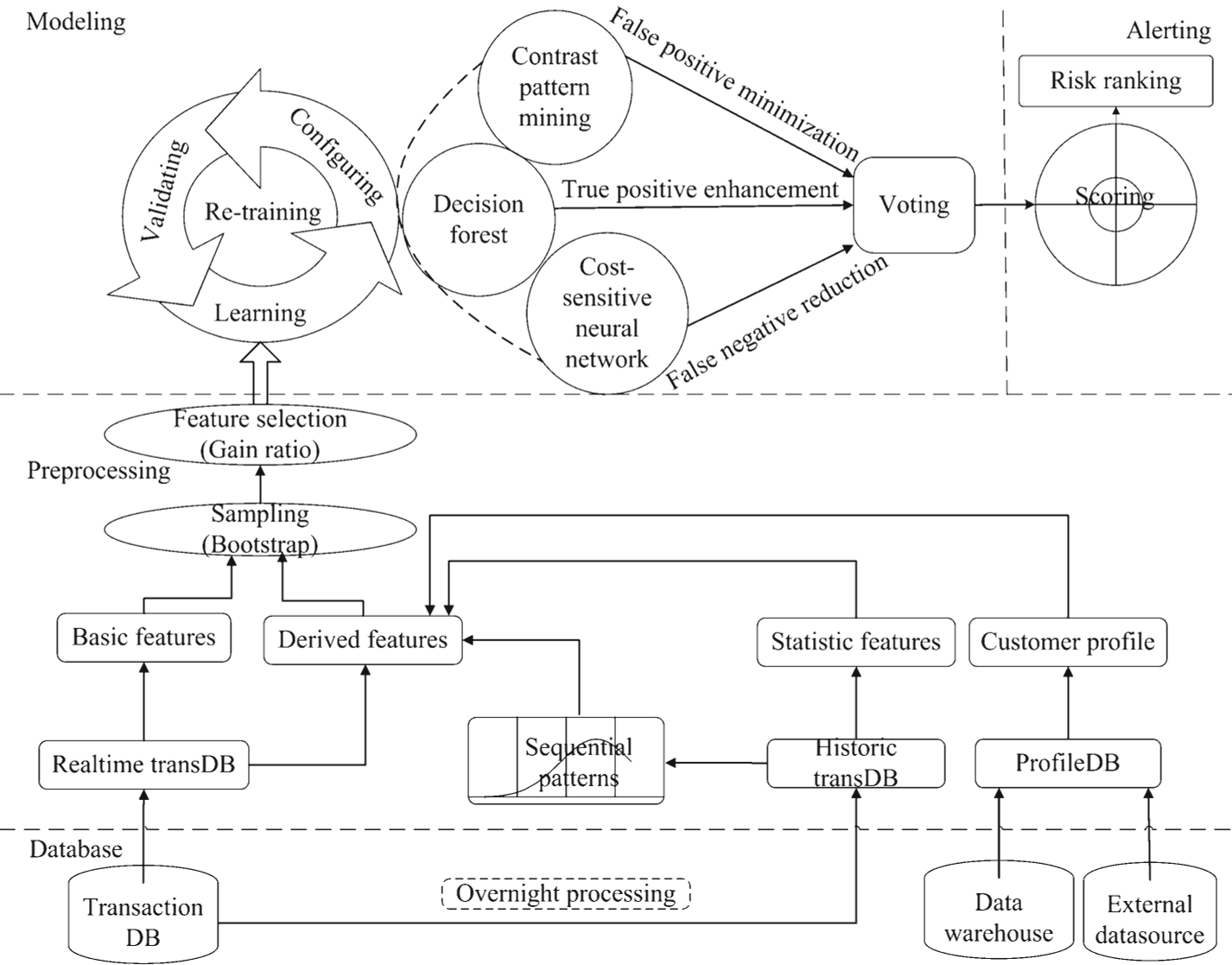 Figure 1: The Four-Tier i-Alertor Architecture (Database, Pre-processing, Modeling, Alerting).
The Power of the Ensemble
No single model is a silver bullet. i-Alertor combines three:
- ContrastMiner: Specializes in behavioral differences.
- Cost-Sensitive Neural Network (CNN): Unlike standard NNs, this one is penalized more heavily for missing a fraud (False Negative) than for a false alarm (False Positive).
- Decision Forest: A committee of decision trees that reduces overfitting on biased features.
Experimental Results: Benchmarking against the Big Four
The authors tested i-Alertor using data from a major Australian bank (8 million transactions).
- Higher Detection, Fewer Alerts: At a daily limit of 100 alerts, i-Alertor caught substantially more fraud than the legacy rule-based "ExpertSystem."
- Efficiency: ContrastMiner remained stable even as the "contrast rate" increased, whereas the previous SOTA method (MDB-LLborder) saw exponential jumps in CPU time.
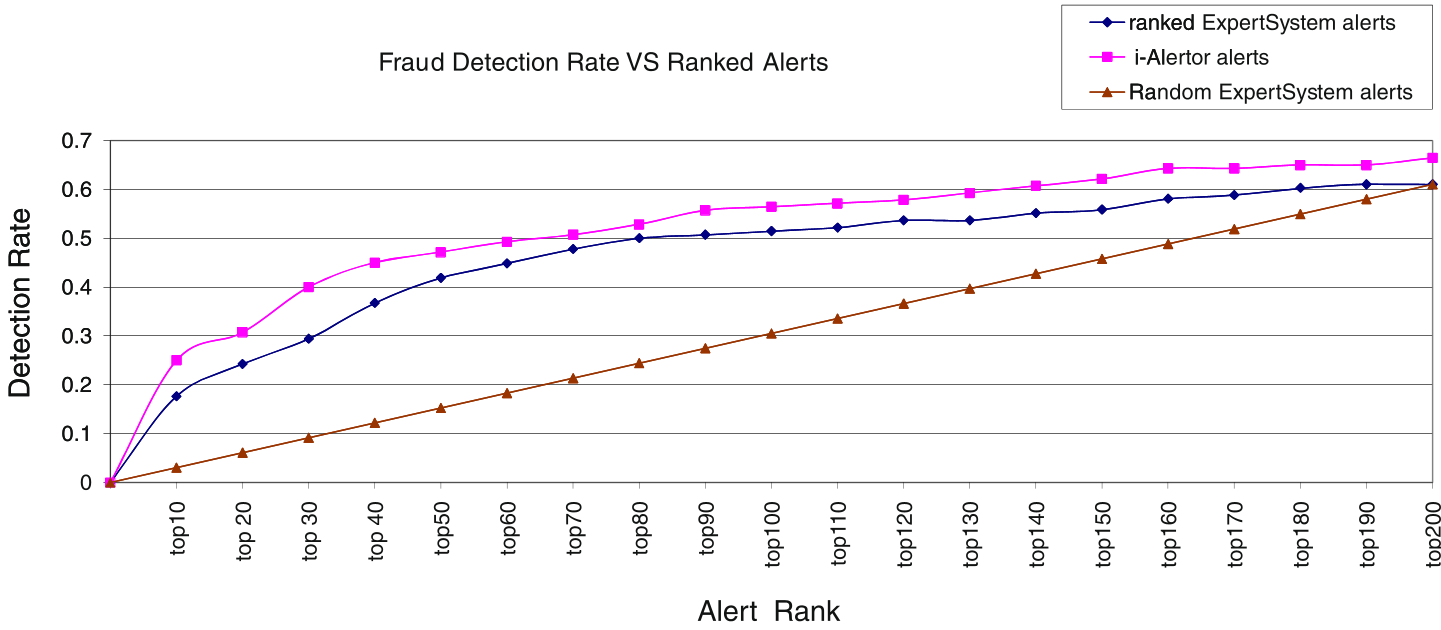 Figure 2: Performance gains of i-Alertor over traditional Expert Systems.
Final Insight
The brilliance of i-Alertor lies in its hybridity. It doesn't throw away human expertise; it uses it to refine a system that treats "behavioral sequences" as the primary signal. In an era where fraudsters use AI to mimic humans, systems that quantify the "contrast" of our digital footprints are our best line of defense.
Limitations: The system still requires some level of labeled data for supervision and may face challenges in "Cold Start" scenarios where a new user has no transaction history to contrast against.