
Data Posting: Revolutionizing Influence Spreading via Semantic Data Enrichment
Effective Information Spreading in Social Networks
This paper introduces a framework for efficient information spreading in social networks by combining unsupervised clustering with a novel "Data Posting" paradigm. It leverages Data Exchange theory and Count Constraints to enrich social interaction data, effectively identifying influential users (leaders) and tracking how new information dimensions propagate through the network.
TL;DR
Social network analysis often misses the "Why" behind information spread because it focuses strictly on graph topology. This paper introduces Data Posting, a framework that uses Count Constraints to inject new semantic dimensions (like food preferences or travel habits) into raw data streams. By treating data migration as an opportunity for enrichment rather than just replication, the authors identify influential "Leaders" and "Lurkers" with significantly higher accuracy than traditional centrality measures.
Background: Beyond the Graph
In the Big Data era, the "Big Three" (Volume, Velocity, Variety) make traditional SQL-based analysis inadequate. While we can see who is connected to whom, we often fail to see how specific concepts—such as a sudden interest in artisanal food in a specific city—migrate through these connections. The authors argue that influence spread is non-monotonic; people change their minds and backtrack. To model this, we need more than just nodes and edges; we need a way to enrich data as it moves.
The Core Problem: The Rigidity of Data Exchange
Traditional Data Exchange aims for "Universal Solutions"—minimalist schemas that preserve source data structure perfectly. However, this rigidity prevents us from adding new knowledge discovered during the process (e.g., categorizing a text comment into a "Price Range"). The authors identify that existing algorithms suffer when trying to predict non-progressive trends in purchase patterns or opinions because they lack the flexibility to handle emerging semantic dimensions.
Methodology: The Data Posting Challenge
The proposed solution rests on three pillars: Clustering, Data Exchange, and Count Constraints.
1. Unsupervised Context Discovery
Using the Lingo algorithm, the system processes textual traces (comments, posts) to find "discriminative cluster patterns." These patterns are weighted using a TF-IDF vector-space model:
This allows the system to discover new "dimensions" of users, such as "appetizer preferences," which weren't in the original schema.
2. Fact Table Materialization (Data Posting)
Instead of complex relational joins, the framework materializes results into a Flat Fact Table. This "Universal Relation" approach is designed for the high-speed querying typical of modern search engines (like the Google Search Appliance).
3. Count Constraints: The Engine of Enrichment
The breakthrough here is the use of Count Constraints. Unlike standard integrity constraints (EGDs and TGDs), Count Constraints allow for ranges. For example: "If a depot stores a product of a specific brand, it must store at least 4 other items of that same brand."
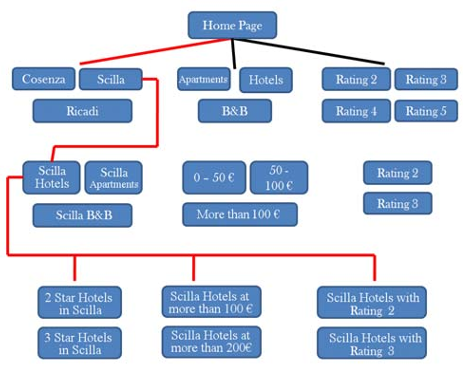 Fig 1: The workflow from raw search to faceted navigation, where Data Posting adds hidden dimensions on-the-fly.
Experiments and Insights
The authors tested their framework on a massive 30-million-tuple Yelp dataset regarding tourism in Calabria, Italy. They categorized users into three roles:
- Leaders: Those who introduce new dimensions that others eventually search for.
- Lurkers: Users whose search habits change based on others' suggestions.
- Neutral: Users unaffected by network shifts.
Quantifiable Performance
The "Data Posting" error rate (errDP) was consistently lower than traditional heuristics. In a network setting with 250 users, the error was 5%, compared to 11% for node degree and 16% for centrality.
 Table 1: Comparison of error rates and user roles across different node sizes. Note the superior performance of errDP.
Key findings showed that dimensions related to food opinions spread the fastest, likely because they are easily validated by other users in the social network.
Critical Analysis & Conclusion
This paper makes a compelling case for abandoning the "universal solution" dogma in favor of expressive, albeit uncertain, semantic enrichment.
Takeaways:
- Semantics > Topology: Identifying influencers is more effective when you track the content they spread, not just the number of friends they have.
- The Power of Denormalization: Flat fact tables combined with count constraints offer a scalable way to handle Big Data variety.
Limitations: The paper identifies that the data posting problem is NP-complete. While the authors suggest polynomial-time approximations for deterministic cases, the computational cost of managing complex count constraints on infinite domains remains a challenge for future work.
Future Outlook: Integrating these "bottom-up" enriched views with "top-down" data integration schemas could lead to more intelligent, self-evolving knowledge graphs.